


Pull to refresh
Logo
Databricks turns Genie agents into always-on autonomous workers

Databricks turns Genie agents into always-on autonomous workers

New Capabilities

Genie Ontology reaches general availability and Genie Search opens Google Drive, Jira and Confluence to agents, while the always-on mode itself stays in preview

Overview

Updated 49 minutes ago

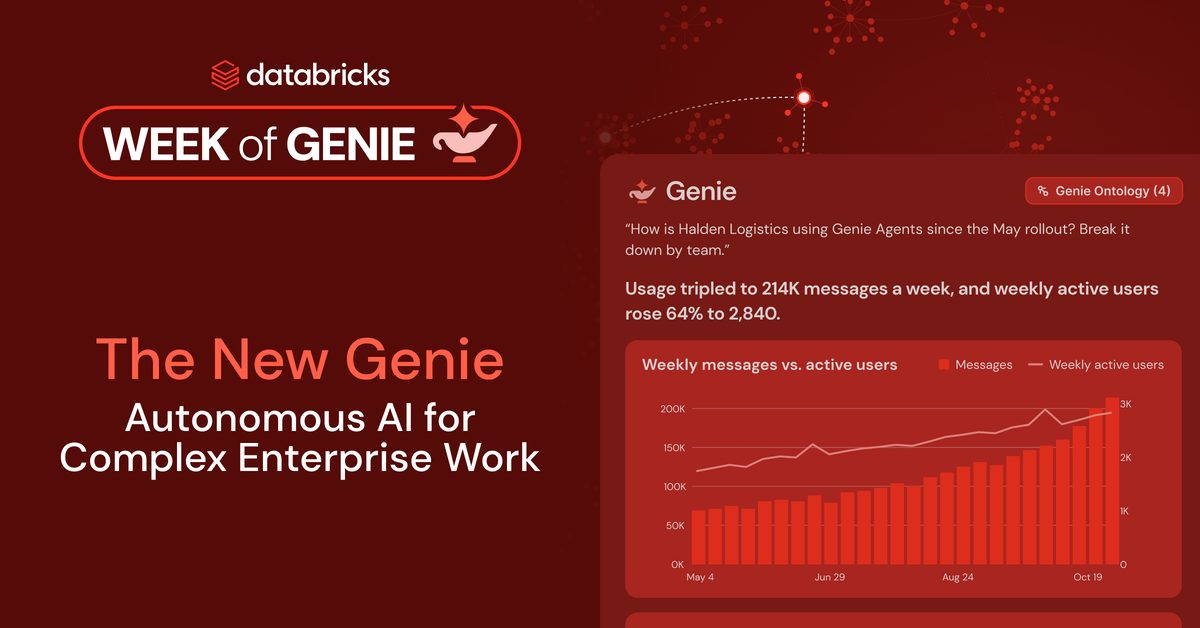
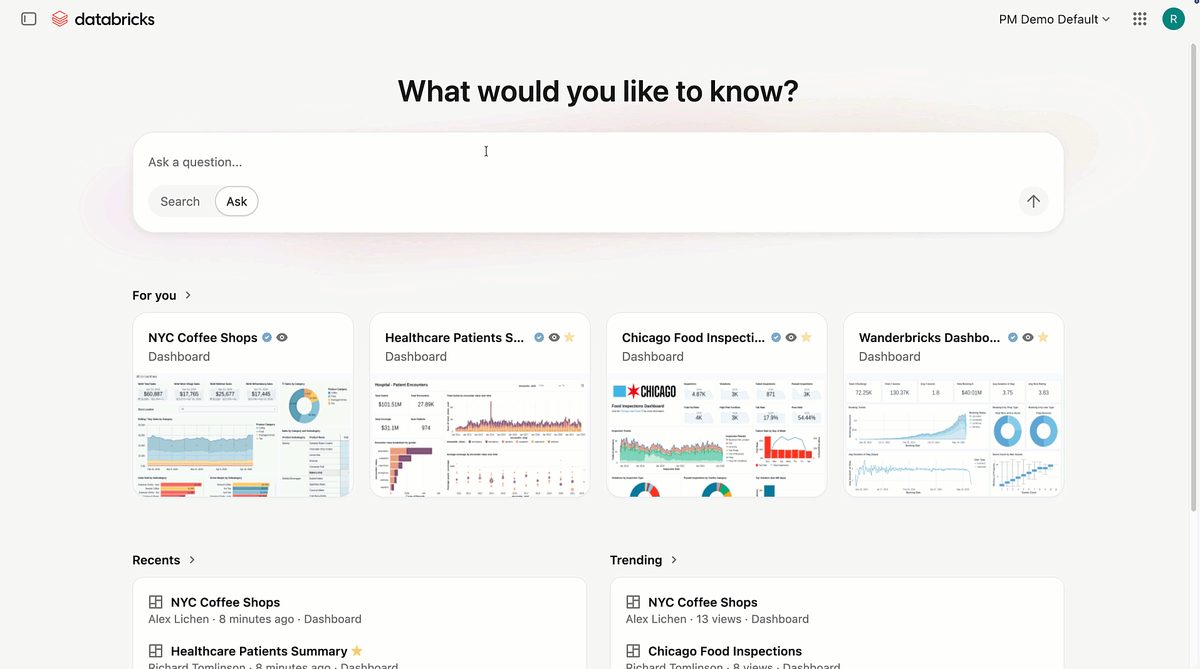
Since 2024, Databricks' Genie has answered questions when someone asked them. On Nov. 11 the company said Genie can now be handed a goal and left alone: it runs in the background on its own compute, splits work across sub-agents, and emails the user when a decision is needed.

The same announcement made Genie Ontology generally available, the layer that teaches agents what "active customer" or "trusted revenue" means at a particular company. It also introduced Genie Search, which indexes Google Drive, Jira and Confluence where they already sit. The always-on mode itself is not shipping yet; Databricks says it is coming to preview and beta programs.

Why it matters

An agent that acts without being asked turns permission settings into the real product decision.

Questions about this story

Free account needed to ask — your question is kept and asked for you right after sign-up. Answers are public.

No questions yet — be the first to ask.

Key Indicators

100+
Business-app connectors
Connectors behind Genie Search, which can ingest data, index it in place, or query the app live.
3
Capabilities announced Nov. 11
Always-on autonomous mode, general availability for Genie Ontology, and Genie Search.
Preview
Status of always-on Genie
Databricks says the autonomous mode, Genie Search and Ontology Manager are coming to preview and beta.

Voices

Curated perspectives — historical figures and your fellow readers.

Sign up to generate historical perspectives on this story.

People Involved

Organizations Involved

Timeline

June 2024 November 2026

3 events Latest: Yesterday
  1. Databricks announces always-on Genie, Ontology GA and Genie Search

    Latest Announcement

    Genie can take a goal, run in the background, delegate to sub-agents and email when a decision is needed. Ontology is now generally available; Genie Search indexes Drive, Jira and Confluence in place. The always-on mode is coming to preview and beta.

  2. Genie gets an ontology

    Product launch

    Databricks introduces Genie Ontology, a layer that records a company's definitions, metrics and processes so agents can use them.

  3. Genie arrives as a question-answering assistant

    Product launch

    Databricks launches Genie so employees can query lakehouse data in plain language. A person still has to ask.

Scenarios

1

Always-on Genie reaches general availability with approval rules in place

Likely Resolves by Q2 2027

Discussed by: Databricks product team statements; analyst Mike Leone

Databricks says the autonomous mode is coming to preview and beta programs, with general availability the next step. Leone and Sanjeev Mohan both describe the access controls as largely built, since the agent runs inside the customer's existing environment under Unity Catalog permissions and Unity Gateway approvals. If those approval rules ship alongside the agent, customers get background work with an audit trail.

2

Customers keep autonomous Genie on read-only work

Possible Resolves by Q1 2027

Discussed by: Sanjeev Mohan, SanjMo; Mike Leone, Moor Insights & Strategy

Mohan's test is whether Databricks governs what agents do, not just what they read. A customer that limits always-on Genie to summaries, alerts and meeting prep, with writes held for human approval, counts as this outcome. Leone's concern about a confident wrong answer arriving unprompted is the likeliest trigger for that caution.

3

A rival ships its own business-context layer

Possible Resolves by Q3 2027

Discussed by: Mike Leone, Moor Insights & Strategy

Leone says Snowflake, Amazon Web Services, Google Cloud and Microsoft are all building agents meant to act as coworkers, and that Databricks' lead is the ontology rather than the autonomy. A rival announcing a generally available business-context layer for agents would make ontology table stakes. Customers would then compare on price and existing cloud commitments.

Historical Context

3 moments from history that rhyme with this story — and how they unfolded.

1997-2007

Microsoft Office Assistant, "Clippy" (1997-2007)

Microsoft shipped an animated assistant that watched what users typed in Word and Office and offered help without being asked. It had no model of the user's actual job, so its suggestions were frequently irrelevant.

Then

Many users turned it off within minutes of first seeing it.

Now

Microsoft retired it by default in later Office versions, and it became shorthand for proactive software that does not understand context.

Why this matters now

Always-on Genie makes the same bet Clippy made, and answers the objection Clippy could not: the agent is grounded in a company's own definitions and metrics.

2016-2020

Unattended software robots in business process automation (2016-2020)

Robotic process automation vendors moved from bots a person triggers to bots that run on schedules and queues with no one watching. Enterprises discovered that unattended automation needs its own controls: identity for each bot, limits on what it can touch, and logs of what it did.

Then

Buyers demanded approval queues and audit trails before expanding unattended deployments.

Now

Control rooms and bot identity became standard parts of the category, and vendors that lacked them lost deals.

Why this matters now

Databricks is at the same threshold: the agent stops waiting for a person, and the question shifts from what it can read to what it is allowed to do.

2012

Google Knowledge Graph (2012)

Google moved search beyond matching strings on pages toward a store of entities and the relationships between them, so a query about a person returned facts rather than links.

Then

Answers in search results became more direct and less dependent on the phrasing of the question.

Now

Entity and relationship layers became standard infrastructure for systems that need to interpret language rather than match it.

Why this matters now

Genie Ontology and Genie Search apply that move inside one company, where the entities are its customers, products and metrics.

Sources

(5)