



Pull to refresh
Logo
MongoDB launches Atlas Agent Engine for production AI agents

MongoDB launches Atlas Agent Engine for production AI agents

New Capabilities

Unified execution, memory, and governance layer moves agents from demos to deployment

Today: Atlas Agent Engine enters public preview

Overview

Updated 36 minutes ago

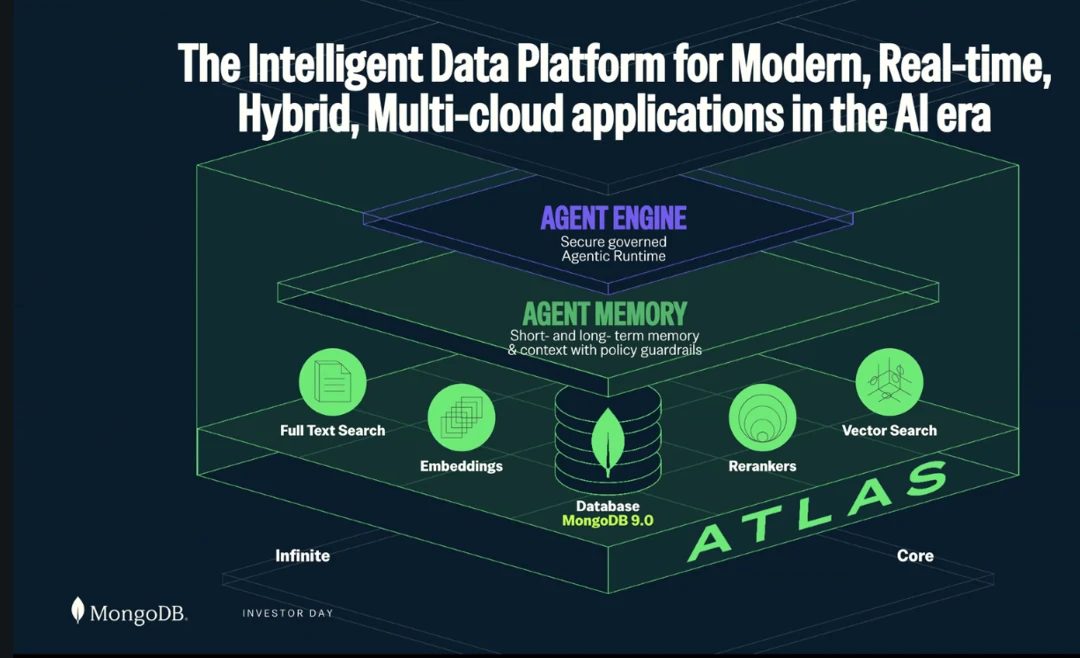
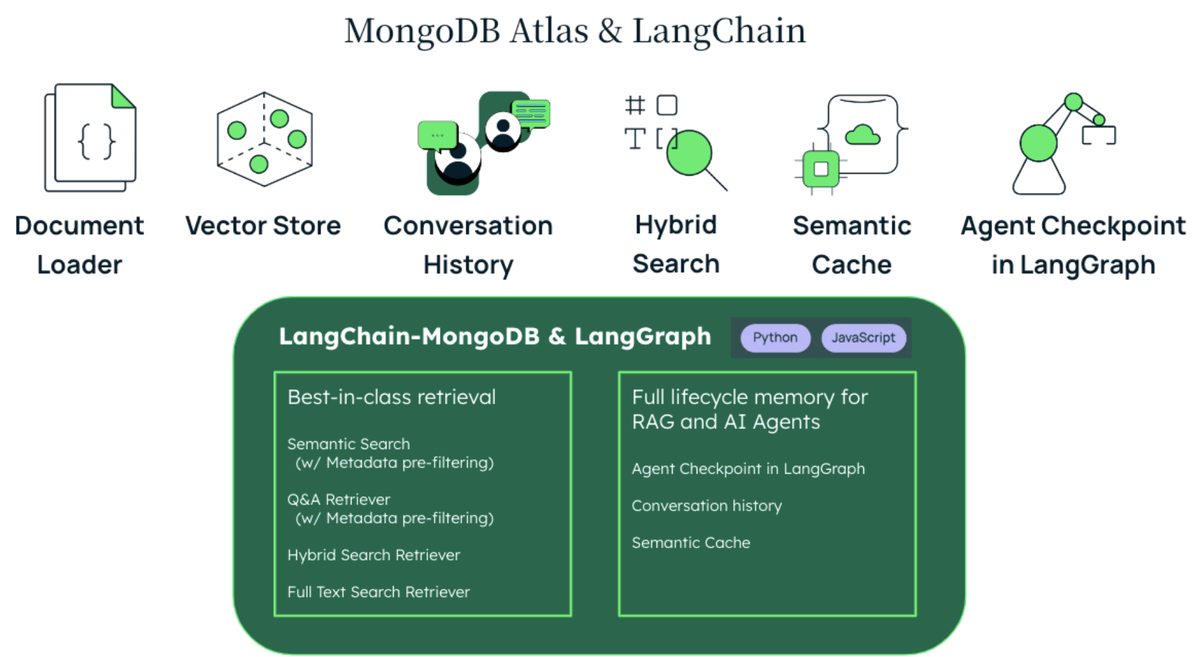
MongoDB introduced a platform designed to move AI agents out of the demo phase and into production. Atlas Agent Engine packages persistent memory, retrieval, and governance into one service that runs on top of MongoDB's existing database.

The launch targets a known pain point: teams wire together vector stores, caches, and policy tools to run agents, and that wiring breaks when models or frameworks change. Agent Engine is available in public preview now, with consumption-based pricing that draws on customers' existing Atlas commitments.

Why it matters

AI agents stall in production without memory and governance. Atlas Agent Engine gives 70,000 enterprises one platform to get them live.

Questions about this story

Free account needed to ask — your question is kept and asked for you right after sign-up. Answers are public.

No questions yet — be the first to ask.

Key Indicators

70,000+
MongoDB Atlas customers eligible for Agent Engine
Existing Atlas customers can adopt Agent Engine without a new contract.
75%
Share of Fortune 100 companies running MongoDB
MongoDB says more than three-quarters of the Fortune 100 already uses its platform.
3
Platform products launched at Investor Day
Atlas Agent Engine, MongoDB 9.0, and Atlas Infinite shipped together on September 29.

Voices

Curated perspectives — historical figures and your fellow readers.

Ever wondered what historical figures would say about today's headlines?

Sign up to generate historical perspectives on this story.

People Involved

Organizations Involved

Timeline

February 2025 September 2026

3 events Latest: Today
  1. Atlas Agent Engine enters public preview

    Today Product Launch

    Unified execution, memory, and governance layer for production agents launches at Investor Day.

  2. MongoDB 9.0 and Atlas Infinite debut

    Today Product Launch

    Database upgrade and elastic compute-storage option ship alongside the agent platform.

  3. MongoDB agrees to acquire Voyage AI

    Acquisition

    MongoDB brings embedding and reranking models in-house to power AI retrieval.

Scenarios

1

Atlas Agent Engine reaches general availability in 2027

Likely Resolves by Q1 2027

Discussed by: Constellation Research, which noted the integration of memory and governance in its launch coverage

Public preview runs through 2026 into early 2027. MongoDB moves Agent Engine to general availability, formalizes pricing tiers, and reports adoption among its existing Atlas customer base. The open-standards design, built on the Model Context Protocol and A2A, lets early customers keep their current models and frameworks. Paysafe, named as an early enterprise building toward production, becomes the first public reference.

2

Preview stalls as teams pick model-specific agent runtimes

Possible Resolves by Q2 2027

Discussed by: Competing cloud and model providers that bundle agent orchestration with their own models

Enterprise teams choose runtimes tied to OpenAI, Microsoft, or Google, the vendors whose models they already use. Atlas Agent Engine stays in preview or sees narrow adoption outside MongoDB's database customer base. MongoDB shifts focus to selling Agent Engine mostly as memory and governance infrastructure rather than a full runtime.

3

Agent Engine wins as memory and governance layer, not runtime

Possible Resolves by End of 2027

Discussed by: MongoDB's own modular positioning, which lets customers adopt memory and governance independently of the runtime

Enterprises keep their existing frameworks but replace stitched-together memory and policy tools with Atlas Agent Engine's native versions. MongoDB captures the memory and governance market even where competitors own the runtime. Revenue grows, but the product's role in the market differs from the launch vision of a full agent runtime.

Historical Context

3 moments from history that rhyme with this story — and how they unfolded.

2007-2012

Heroku and the platform-as-a-service wave (2007-2012)

Heroku launched a platform that managed application deployment, databases, and add-on services as one system. Developers stopped assembling their own servers, caches, and databases, and instead pushed code to a platform that ran it.

Then

Startups shifted deployment to managed platforms and cut infrastructure teams.

Now

Platform-as-a-service became a standard way to run web applications.

Why this matters now

Atlas Agent Engine makes the same consolidation pitch for AI agents: one governed layer instead of wired-together tools that break when the stack changes.

2014

Serverless computing with AWS Lambda (2014)

Amazon introduced Lambda, letting developers run code without provisioning servers. Scaling, monitoring, and orchestration moved into the platform, so teams no longer managed the infrastructure underneath event-driven applications.

Then

Teams stopped managing infrastructure for stateless workloads.

Now

Serverless became the default for event-driven applications.

Why this matters now

A similar shift is underway for stateful agent workloads, with memory, retrieval, and governance moving into the platform layer rather than custom code.

2010s

The integrated data platform shift (2010s)

Web-scale companies ran separate databases, caches, and search indexes wired together by custom glue code. Document databases like MongoDB absorbed those roles as teams abandoned the stitching work and consolidated on one operational store.

Then

Teams removed custom integration layers from their applications.

Now

Document databases became a default for operational workloads.

Why this matters now

Atlas Agent Engine repeats the playbook: absorb the wiring an agent stack currently needs, and let teams give up the glue code that breaks on every model upgrade.

Sources

(7)