




Pull to refresh
Logo
Democrats win Congress, stalling crypto's market structure bill

Democrats win Congress, stalling crypto's market structure bill

Rule Changes

Sherrod Brown's Ohio win blunts more than $60 million in crypto PAC spending and shifts Congress from legislation to oversight.

Overview

Updated 1 hour ago

Crypto spent the 2026 midterms trying to keep Congress friendly. On Nov. 3, Democrats won the House and Senate anyway. Sherrod Brown, an Ohio Democrat the industry reportedly spent more than $60 million trying to defeat, won back a Senate seat.

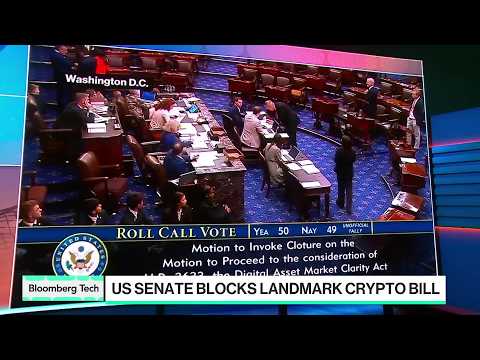
The immediate casualty is the Clarity Act, a market-structure bill the House passed and the Senate let stall in September. TD Cowen's Washington analyst expects it to stay stuck for two years, while Democratic committee chairs use subpoena power to investigate President Trump's crypto businesses.

Why it matters

Crypto's U.S. rules will now be written by regulators and prosecutors, not by the market-structure law the industry spent $154.5 million chasing.

Questions about this story

Free account needed to ask — your question is kept and asked for you right after sign-up. Answers are public.

No questions yet — be the first to ask.

Key Indicators

$154.5M
Fairshake spending in the 2026 cycle
The crypto super PAC's outlay across primaries and the general election.
$60M+
Crypto PAC spending against Sherrod Brown in Ohio
Reported spending in the Ohio Senate race, which Brown won.
226
Pro-crypto House members elected
Stand With Crypto's count of House lawmakers it labels pro-crypto.
19
Pro-crypto senators elected
Stand With Crypto's count of Senate lawmakers it labels pro-crypto.
106
Anti-crypto House members elected
Stand With Crypto's count of House lawmakers it labels anti-crypto.
8
Anti-crypto senators elected
Stand With Crypto's count of Senate lawmakers it labels anti-crypto.

Voices

Curated perspectives — historical figures and your fellow readers.

Sign up to generate historical perspectives on this story.

People Involved

Organizations Involved

Fairshake
Fairshake
Political action committee
Spent $154.5 million in the 2026 cycle; says it will spend again in 2028.

A crypto-industry super PAC that backs candidates it considers friendly to digital assets.

Stand With Crypto
Stand With Crypto
Industry Advocacy Group
Counts 19 pro-crypto senators and 226 House members elected.

An advocacy group that grades lawmakers on crypto policy and endorsed candidates in the 2026 midterms.

Coinbase Global
Coinbase Global
Publicly traded cryptocurrency exchange and financial infrastructure company
Publicly pushing a bipartisan message after the Democratic sweep.

One of the largest U.S. crypto exchanges and a major political donor through industry committees.

Anchorage Digital
Anchorage Digital
Crypto bank
Advising the industry to expect a focus on taxes and security.

A federally chartered crypto bank that provides custody and other services to institutional clients.

TD Cowen
TD Cowen
Investment bank
Forecasts no crypto market-structure bill for two years.

The Washington research arm of investment bank TD Cowen, which advises investors on policy risk.

The Digital Chamber
The Digital Chamber
Crypto trade association
Calls Brown's win the most consequential unfavorable result for crypto.

A trade group representing crypto businesses in Washington.

SB
U.S. Senate Banking Committee
Congressional committee
Set to be chaired by Elizabeth Warren in the new Congress.

The Senate committee with jurisdiction over banking, securities and digital assets.

World Liberty Financial
Cryptocurrency Company
Expected target of Democratic committee investigations.

A crypto business affiliated with President Donald Trump and his family.

Timeline

November 2024 November 2026

8 events Latest: 2 days ago
Tap a bar to jump to that date
  1. Crypto industry rethinks its Washington strategy

    Latest Industry

    Industry figures call crypto bipartisan while conceding legislation faces headwinds.

  2. TD Cowen forecasts a two-year stall

    Analysis

    Analyst Jaret Seiberg says Clarity is unlikely to advance and expects Trump crypto investigations.

  3. Industry groups react to the sweep

    Statement

    Stand With Crypto releases lawmaker counts; the Digital Chamber flags Brown's win.

  4. Democrats win House and Senate

    Election

    Democrats take both chambers; Brown defeats Husted in Ohio.

  5. Binance loses over $6 billion in hack

    Security

    The largest crypto hack on record hits Binance days before the election.

  6. Clarity Act stalls in the Senate

    Legislation

    The Senate leaves the market-structure bill without a vote.

  7. Clarity Act passes the House

    Legislation

    The House passes a crypto market-structure bill; the Senate does not take it up.

  8. Brown loses Ohio Senate seat

    Election

    Sherrod Brown loses to Bernie Moreno after crypto PACs spend heavily against him.

Scenarios

1

No crypto market-structure bill becomes law before 2028

Likely Resolves by Jan 1, 2028

Discussed by: TD Cowen's Jaret Seiberg, CNBC

Democratic committee chairs prioritize oversight of the Trump administration and crypto firms over writing new market rules. The Clarity Act stays in the Senate without a vote, and the industry's legislative priorities wait for the next election.

2

Democrats advance a tougher bill with more SEC authority

Possible Resolves by Jan 1, 2028

Discussed by: Decrypt, Charles Schwab's Mike Townsend

Democrats write their own market-structure bill that expands Securities and Exchange Commission supervision of crypto and limits the Commodity Futures Trading Commission's role. It would revive consumer-protection provisions left out of the Clarity Act. Passing it would require winning over enough Republicans or moderate Democrats.

3

Congress subpoenas World Liberty Financial and crypto firms

Likely Resolves by Q2 2027

Discussed by: TD Cowen's Jaret Seiberg, The Digital Chamber

Democratic committee chairs use subpoena power to investigate President Trump's crypto holdings and the industry's political spending. Hearings and document requests consume the calendar, and crypto legislation gets no floor time.

4

Regulators write crypto rules while Congress stalls

Possible Resolves by End of 2027

Discussed by: CoinDesk, CNBC

With legislation frozen, the Securities and Exchange Commission, Commodity Futures Trading Commission and Office of the Comptroller of the Currency keep issuing rules and guidance. The industry gets partial clarity from agency rulemaking instead of a statute, and the rules can shift with each administration.

Historical Context

3 moments from history that rhyme with this story — and how they unfolded.

July 2010

Dodd-Frank after the financial crisis (2010)

After the 2008 financial crisis, Democrats controlled the White House and both chambers of Congress. They passed the Dodd-Frank Act, which created the Consumer Financial Protection Bureau and expanded federal oversight of banks and derivatives.

Then

Banks and financial firms fought the new rules through lobbying and lawsuits.

Now

Parts of the law were rolled back in 2018, but its core agencies and oversight structure remained.

Why this matters now

It shows what a Democratic sweep tends to produce in financial policy: tougher oversight and new agencies, not the industry-friendly framework crypto wanted.

November 2024

Fairshake's 2024 Ohio spending (2024)

Crypto PACs spent heavily against Sherrod Brown in his 2024 Senate race. Brown lost to Republican Bernie Moreno, and Democrats lost the Senate seat.

Then

Republicans took the seat, and crypto interests counted the race as a win.

Now

Brown returned in 2026 through a special election, showing that crypto money can decide one race without retiring an opponent.

Why this matters now

The 2026 Ohio race was a rematch of sorts. This time the crypto money lost, and Brown is positioned to shape digital asset oversight.

November 1994

Republican Revolution and committee subpoenas (1994)

Republicans won both chambers of Congress for the first time in 40 years. New committee chairs used subpoena power to investigate the Clinton White House, and legislative agendas slowed as oversight hearings multiplied.

Then

Washington shifted toward investigations and budget fights, including two government shutdowns.

Now

Committee subpoena power became a standard tool for opposing-party majorities to set the agenda.

Why this matters now

It shows how a new majority can redirect Congress from lawmaking to oversight, which is the path TD Cowen expects crypto legislation to follow.

Sources

(6)