


Pull to refresh
Logo
Detroit's largest community benefits package clears hurdle for RenCen redevelopment

Detroit's largest community benefits package clears hurdle for RenCen redevelopment

Built World Detroit, MI local

Resident council approves two-month negotiation with Bedrock and GM; City Council vote next

Overview

Updated Yesterday

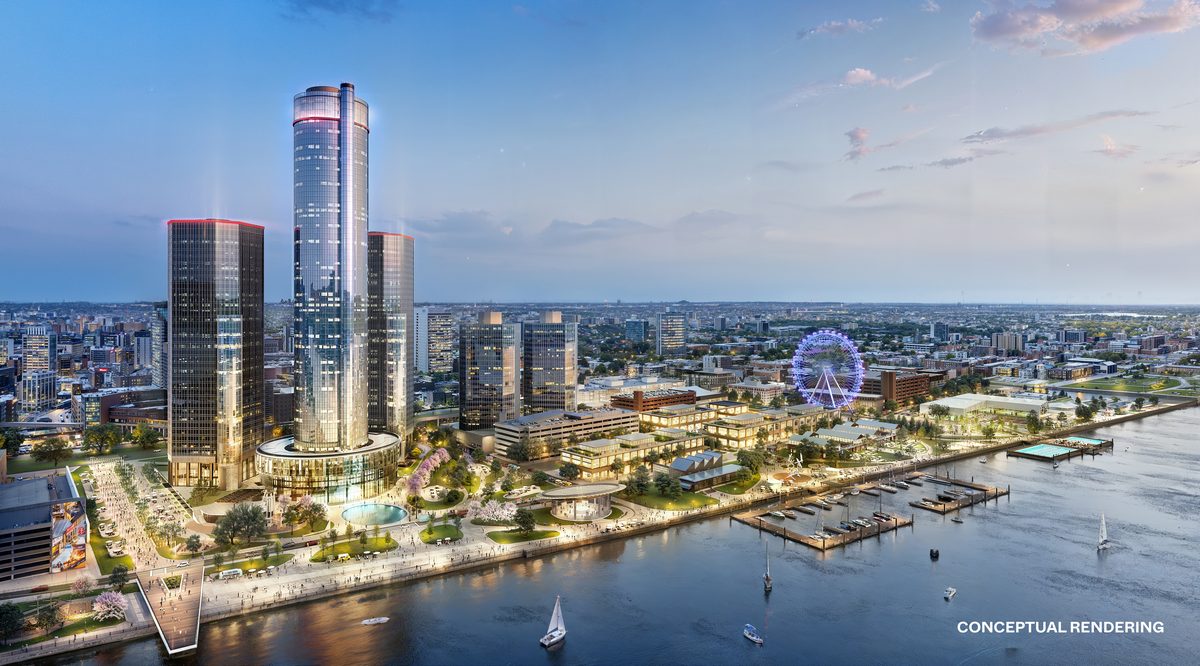
A resident panel approved the largest community benefits package in Detroit history, clearing a key hurdle for the redevelopment of the iconic Renaissance Center. The deal, negotiated with developers Bedrock and General Motors, covers more than 40 acres of riverfront land.

The package now heads to Detroit City Council for a final vote. Its scale sets a new benchmark for the city's 2016 Community Benefits Ordinance, which requires developers of large projects to negotiate benefits with affected residents before construction begins.

Why it matters

If the council approves, the largest-ever community benefits deal sets a new floor for what Detroit developers must offer residents to build on coveted land.

Monday: what changed in Detroit, MI

One short email a week with the openings, closings, permits and council votes we covered. Free. Unsubscribe in one click.

Questions about this story

Free account needed to ask — your question is kept and asked for you right after sign-up. Answers are public.

No questions yet — be the first to ask.

Key Indicators

934
New mixed-income residential units
The redevelopment plan includes below-market and market-rate housing across the riverfront district.
858
Hotel rooms in the renewed hotel
The existing RenCen hotel will be rebuilt with meeting rooms, event facilities, and an observation deck.
470,000 sq ft
Retail, dining, and entertainment space
New commercial space planned across the 40-acre district.
500+
Public comments submitted since August
Residents weighed in during the two-month CBO process that produced the final package.

Voices

Curated perspectives — historical figures and your fellow readers.

Sign up to generate historical perspectives on this story.

People Involved

Organizations Involved

Timeline

August 2026 October 2026

6 events Latest: Yesterday
Tap a bar to jump to that date
  1. BridgeDetroit reports NAC approval of largest-ever package

    Latest Report

    Media report confirms the NAC approved the largest community benefits package in Detroit history.

  2. NAC finalizes community benefits package

    Negotiation

    The final Community Benefits Agreement Matrix is shared, completing the negotiation.

  3. Bedrock and GM respond with benefits proposal

    Negotiation

    Developers present a benefits proposal matrix responding to the NAC's impact list.

  4. NAC presents impacts and proposed benefits

    Negotiation

    The resident council lays out project impacts and its initial list of community benefits and mitigations.

  5. Residents elect two NAC members

    Election

    Impact-area residents vote in Gail Perry-Mason and Teron Haynes Jr. at the second CBO meeting.

  6. City opens CBO process for RenCen project

    Public Meeting

    Detroit holds the first community benefits meeting, introducing the project and the negotiation process to residents.

Scenarios

1

City Council approves CBA by year-end, RenCen moves to 2027 groundbreaking

Likely Resolves by End of 2026

Discussed by: BridgeDetroit; Detroit Planning and Development Department

The package goes to City Council for a vote in November or December. Council can accept it as-is or propose amendments. The city's project page says developers seek approvals before the end of Q4 2026, with the first construction phase targeted for 2027. Approval would lock in the largest community benefits commitment in the city's history.

2

Council sends package back for renegotiation

Possible Resolves by End of 2026

Discussed by: Potential council amendments; community advocates

Some council members may push for more affordable housing units or additional mitigations before signing off. A return would delay the developers' target of starting construction in 2027 and extend the negotiation season into early 2027. The council has rarely rejected a negotiated CBA outright, but modifications have happened in past Detroit projects.

3

GM and Bedrock scale back project scope before construction

Unlikely Resolves by Q2 2027

Discussed by: Construction industry analysts watching rising costs

If the benefits package proves more expensive than projected, or financing conditions worsen, the developers could trim residential or retail components from the first phase. The project's current scope includes 934 residential units, 470,000 square feet of retail, and an 858-room hotel. A scale-back would shrink the benefits package proportionally.

Historical Context

3 moments from history that rhyme with this story — and how they unfolded.

1977

Renaissance Center construction (1977)

Henry Ford II and a consortium of 51 business leaders built the Renaissance Center to counter downtown Detroit's decline. The five-tower complex along the river was the largest private construction project in the US at the time, a monument to corporate faith in a shrinking city.

Then

The center opened with offices and a hotel, but its fortress-like design facing the river — not the city — drew decades of criticism for turning its back on downtown.

Now

GM bought the complex in 1996 and made it the company's headquarters. The RenCen became the most recognizable shape in Detroit's skyline, a symbol of both the city's ambition and its struggles.

Why this matters now

The current redevelopment aims to undo the original design's isolation by opening the riverfront to the public with parks, a marina, and pedestrian connections — the same gaps the community benefits package now addresses.

November 2016

Detroit Community Benefits Ordinance (2016)

Detroit voters approved a Community Benefits Ordinance in November 2016, four years after the city filed the largest municipal bankruptcy in US history. The law requires developers of large Tier 1 projects to negotiate a benefits agreement with a resident advisory council.

Then

The ordinance created the Neighborhood Advisory Council mechanism, with residents electing members to negotiate directly with developers on housing, jobs, and community space.

Now

The RenCen deal is the largest package negotiated under the law to date, making it the benchmark for future Tier 1 developments in Detroit.

Why this matters now

The CBO process produced this week's approval. The RenCen package tests whether the ordinance can deliver meaningful benefits on the city's most prominent development site.

2001

LAX Community Benefits Agreement (2001)

A coalition of 30 Los Angeles labor and community groups negotiated the first major community benefits agreement in the US, covering the expansion of LAX airport. The deal included local hiring guarantees, job training, and a community investment fund.

Then

The LAX agreement created a template for later CBA negotiations across the country, pairing development approvals with measurable neighborhood benefits.

Now

The model spread to dozens of cities and informed Detroit's 2016 ordinance, which institutionalized the process as a legal requirement rather than a voluntary negotiation.

Why this matters now

The RenCen package is the latest and largest expression of the CBA model that began at LAX, showing how far the mechanism has come from its voluntary origins.

Sources

(2)