
Pull to refresh
Logo
Diplodocus fossils found in Spain, first outside North America

Diplodocus fossils found in Spain, first outside North America

New Capabilities

Fourteen tail vertebrae from a Teruel quarry push the iconic sauropod's known range across the proto-Atlantic

3 days ago: Diplodocus identified in Spain

Overview

Updated Yesterday

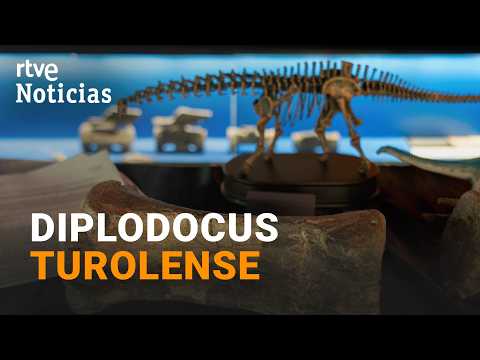
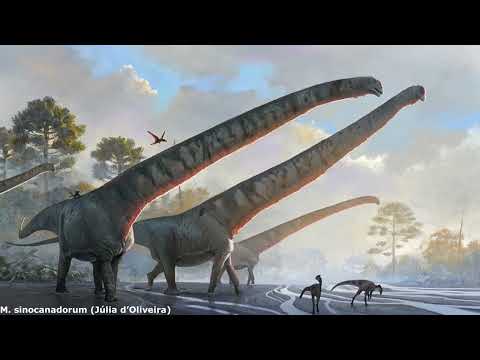
For a century and a half, every Diplodocus skeleton on Earth came from one geological formation in the western United States. On September 15, paleontologists announced the first exception: 14 tail vertebrae from a quarry at La Tejería near El Castellar in eastern Spain, dated to roughly 150 million years ago. That places the most famous long-necked dinosaur in Europe for the first time.

The find, published in the Journal of Vertebrate Paleontology, challenges the assumption that Diplodocus was exclusively North American. It also strengthens the case that temporary land bridges across the developing Atlantic let dinosaurs walk between North America and Europe during the Late Jurassic, when animals like Allosaurus and Stegosaurus made the same crossing.

Why it matters

The dinosaur most associated with the American West apparently ranged across the Atlantic, which redraws the map of Jurassic migration routes.

Questions about this story

Free account needed to ask — your question is kept and asked for you right after sign-up. Answers are public.

No questions yet — be the first to ask.

Key Indicators

14
Well-preserved tail vertebrae recovered
Middle and rear caudal vertebrae plus chevron bones from the La Tejería site.
150
Age of the fossils (millions of years)
Dated to the end of the Jurassic Period, roughly 150 million years ago.
0
Previous Diplodocus finds outside the Morrison Formation
Every confirmed Diplodocus specimen came from one US deposit before this discovery.

Voices

Curated perspectives — historical figures and your fellow readers.

Ever wondered what historical figures would say about today's headlines?

Sign up to generate historical perspectives on this story.

People Involved

Organizations Involved

Timeline

2008 September 2026

4 events Latest: 3 days ago
Tap a bar to jump to that date
  1. Diplodocus identified in Spain

    Latest Publication

    Journal of Vertebrate Paleontology study places the El Castellar specimen within Diplodocus, first outside North America.

  2. Excavation completes at 14 vertebrae

    Research

    Final campaign recovers the remaining bones, plus chevron elements from the tail.

  3. Second excavation campaign

    Research

    Fieldwork at La Tejería yields additional vertebrae from the same skeleton.

  4. La Tejería site discovered

    Discovery

    Paleontologists find five tail vertebrae at a quarry near El Castellar, Teruel.

Scenarios

1

More complete European Diplodocus confirms the genus

Possible Resolves by End of 2028

Discussed by: Lead author Sánchez Fenollosa and the Teruel-Dinópolis team

Further fieldwork at La Tejería and other Iberian sites recovers skull, neck, or limb bones from Diplodocus. Those would let researchers confirm the genus assignment and determine whether the European animal belongs to a known North American species or a new one. Sánchez Fenollosa said more complete specimens are essential to resolve this.

2

Spanish fossils reassigned to another sauropod genus

Possible Resolves by End of 2028

Discussed by: Fabien Knoll, National Museum of Natural Sciences, Madrid

Knoll argues the tail vertebrae are compatible with Diplodocus but not diagnostic. Further analysis could show they belong to Supersaurus, Dinheirosaurus, or an entirely new genus. He noted that Iberian diplodocid remains have long been suspected to overlap with these genera.

3

Complete skeleton reveals a new European Diplodocus species

Possible Resolves by End of 2030

Discussed by: Sánchez Fenollosa, who said it may be 'a previously unknown species'

If more complete fossils show anatomical differences from North American species, researchers could name a new species within the genus. This would make the Spanish Diplodocus the first recognized European member of the genus at the species level.

Historical Context

3 moments from history that rhyme with this story — and how they unfolded.

Late Jurassic, ~150 mya

Allosaurus and Stegosaurus found in Portugal (Late Jurassic)

Allosaurus, the apex carnivore of the Morrison Formation, turned up in Portugal along with Stegosaurus. Both were genera long thought exclusive to the western United States.

Then

Established that the Morrison dinosaur fauna extended into Iberia.

Now

Built the case for faunal exchange between North America and Europe across the developing Atlantic.

Why this matters now

Diplodocus now joins Allosaurus and Stegosaurus in Spain. Together they suggest a recurring pattern of transatlantic dinosaur migration during the Late Jurassic.

Late Cretaceous, ~68 mya

Bering Land Bridge (about 68 million years ago)

A temporary land bridge connected Asia and what is now Alaska, letting an Asian ancestor of Tyrannosaurus rex walk into North America.

Then

Enabled a major predator to cross between continents.

Now

Demonstrated that ephemeral land bridges allowed dinosaur movement between separated landmasses.

Why this matters now

It is the best-documented precedent for how Diplodocus could have crossed to Europe: a brief land connection, not continuous open-ocean dispersal.

Unknown

Supersaurus–Iberia hypothesis (ongoing)

Paleontologists have long suspected that Supersaurus, another large sauropod, was shared between the Iberian Peninsula and the United States, though fossils on both sides remain fragmentary.

Then

Remains unconfirmed because European diplodocid fossils are rare and incomplete.

Now

Highlights the same identification problem now facing the El Castellar specimen.

Why this matters now

Knoll's caution that the new fossils might belong to Supersaurus or a related genus stems from the same fragmentary-record problem that has dogged this hypothesis for decades.

Sources

(9)