



Pull to refresh
Logo
Netherlands builds sovereign Linux workspace to replace Microsoft for government

Netherlands builds sovereign Linux workspace to replace Microsoft for government

New Capabilities

DAWO project moves civil servants to NixOS, Nextcloud, and open-source tools, with pilots running now

Today: DAWO community site and Sextant device-management pilot launch

Overview

Updated 2 hours ago

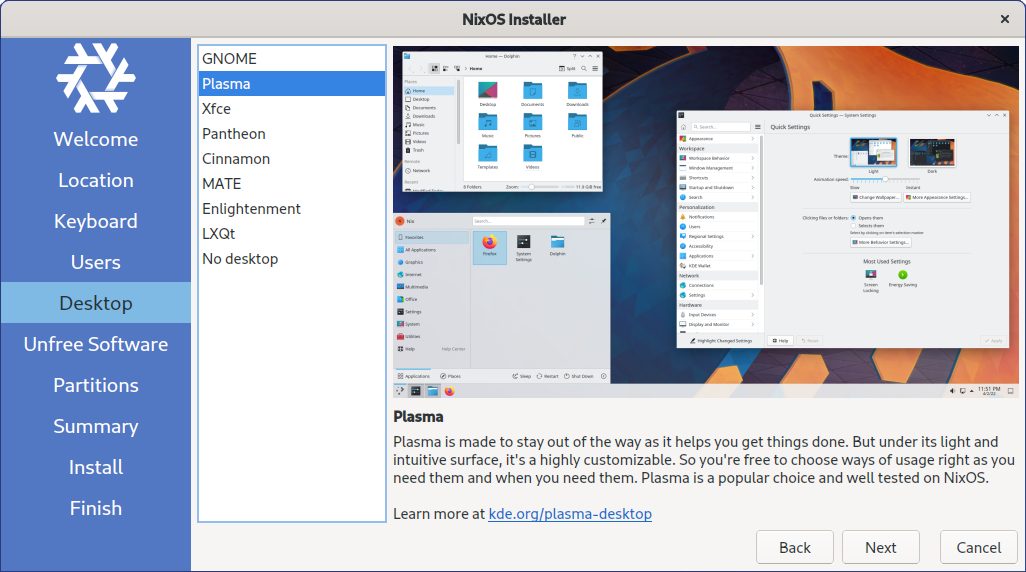
The Dutch government is building its own Linux-based replacement for Windows and Office. The project, called DAWO, runs on NixOS, a Linux distribution with Dutch origins, and is meant to end the state's reliance on Microsoft and other US software firms.

The push started after the United States sanctioned the International Criminal Court in early 2025 and Microsoft shut off services for its chief prosecutor. That event showed Dutch officials that access to essential online tools depended on American policy, so three federal IT agencies were tasked in July with building a sovereign workspace. Pilots now run at several municipalities, and developers target version 1.0 for 2027.

Why it matters

If DAWO succeeds, the Dutch government no longer depends on US software firms' policies for its core digital infrastructure.

Questions about this story

Free account needed to ask — your question is kept and asked for you right after sign-up. Answers are public.

No questions yet — be the first to ask.

Key Indicators

120,000
Civil servants targeted for Nextcloud migration
The interior ministry chose Nextcloud in February 2026 as the collaboration platform across central government.
€45M
Estimated annual savings from open-source switch
Government estimate of licensing fees saved by leaving Microsoft 365.
73,000
Workstations at the two lead pilot agencies
SSC-ICT runs 57,000 workspaces and DICTU 16,000, the first to move to the sovereign stack.
2027
Target year for DAWO version 1.0
Developers expect the first full release sometime next year, with no formal deadline set.

Voices

Curated perspectives — historical figures and your fellow readers.

Ever wondered what historical figures would say about today's headlines?

Sign up to generate historical perspectives on this story.

People Involved

Organizations Involved

Timeline

February 2025 September 2026

6 events Latest: Today
Tap a bar to jump to that date
  1. DAWO community site and Sextant device-management pilot launch

    Today Launch

    The project's public community site goes live and the Sextant fleet-control tool for rolling out secure laptops begins trials at municipalities.

  2. Nextcloud selected as government collaboration platform

    Decision

    The interior ministry chooses Nextcloud for file storage, video calls, and communication for about 120,000 civil servants.

  3. code.overheid.nl soft-launches

    Launch

    A Forgejo-based repository gives Dutch public bodies a self-hosted alternative to GitHub for publishing open-source code.

  4. NixOS chosen as the workspace base

    Decision

    The team drops openSUSE and Fedora for NixOS, avoiding distributions tied to SUSE and IBM-owned Red Hat.

  5. Dutch government officially tasks the DAWO project

    Decision

    The ICBR assigns the three federal IT service providers to build a sovereign digital workspace, making DAWO an official task.

  6. US sanctions the International Criminal Court

    Trigger event

    American sanctions on the ICC lead Microsoft to cut off services for the court's chief prosecutor, exposing Dutch dependence on US firms.

Scenarios

1

DAWO ships version 1.0 and the government begins mass migration in 2027

Likely Resolves by End of 2027

Discussed by: DAWO developers and project lead Victor Gevers, who predicts 2027 will be 'the year of Linux on the desktop'

The team reaches the version 1.0 milestone next year as planned. Central government agencies then begin moving civil servants off Windows onto the NixOS workspace, with Nextcloud handling collaboration and code.overheid.nl hosting the open-source development. Success depends on NixOS's low hardware demands, since it runs on aged laptops, and on ministers maintaining political support through the election cycle.

2

Rollout slips past 2028 and Windows keeps its foothold

Possible Resolves by Q2 2028

Discussed by: Skeptics who point to the cost and compatibility problems that undid Munich's LiMux Linux migration

Application incompatibility, security certification delays, or a change of government stalls the project. Microsoft contracts renew at key ministries, and the sovereign workspace remains a small pilot running on spare hardware. The team has no formal deadline, which leaves room for the program to lose momentum.

3

Partial adoption — pilot agencies move, other ministries keep Microsoft

Possible Resolves by End of 2028

Discussed by: The structural reality that separate agencies run separate IT estates with different legacy applications

SSC-ICT and DICTU, which together run about 73,000 workspaces, migrate to the sovereign stack while other ministries keep Microsoft for line-of-business software that cannot easily move. The result is a hybrid federal IT estate in which Dutch sovereignty applies to the core workplace but not to every application.

Historical Context

3 moments from history that rhyme with this story — and how they unfolded.

2005–2015

France's Gendarmerie migration (2005–2015)

The French Gendarmerie moved roughly 70,000 desktops from Windows to Ubuntu, building its own open-source email and office tools and bargaining with vendors.

Then

The force cut IT costs and reduced per-seat licensing expenses, with tens of millions of euros saved annually.

Now

The migration held and became proof that very large government fleets can run on Linux.

Why this matters now

It is the counter-example to Munich: a government of comparable scale kept Linux working, showing DAWO's ambition is feasible if executed well.

2006–2017

Munich's LiMux migration (2006–2017)

Munich moved about 15,000 city desktops from Windows to a Linux distribution called LiMux to escape Microsoft licensing costs. Officials spent years adapting custom applications and training staff.

Then

In 2017 the city council voted to return to Windows, citing software incompatibilities and higher-than-expected maintenance costs.

Now

The reversal became a cautionary tale for governments attempting large Linux migrations.

Why this matters now

DAWO faces the same risks: application compatibility and long-term maintenance costs will decide whether the Dutch project avoids the Munich outcome.

2019–present

Denmark's Danish Road Traffic Authority on NixOS (2019)

Danish IT provider Semaphor moved the Danish Road Traffic Authority's office Linux distribution onto NixOS, using the same declarative configuration model DAWO now employs.

Then

NixOS proved itself in a working government desktop deployment long before the Dutch chose it.

Now

It gave DAWO a practical precedent for using NixOS in critical public-sector environments.

Why this matters now

The Danish deployment is the technical grounding that convinced Dutch developers that NixOS could handle government workloads.

Sources

(8)