




Pull to refresh
Logo
FDA approves Lucamzi, fifth ranibizumab biosimilar, after two rejections

FDA approves Lucamzi, fifth ranibizumab biosimilar, after two rejections

New Capabilities

Swedish biotech Xbrane clears years of regulatory setbacks to enter a US eye-drug market that already has four competitors

Overview

Updated 1 hour ago

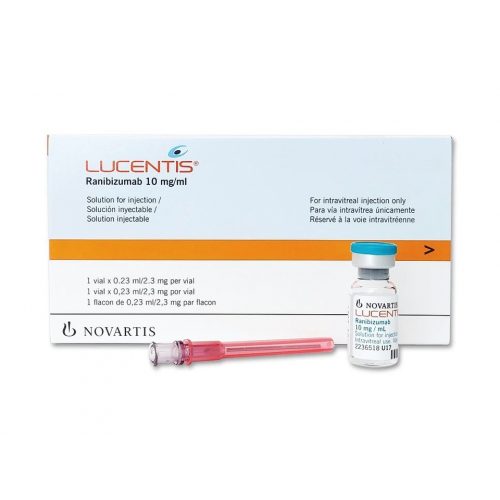
After four years and two FDA rejections, Xbrane Biopharma has US approval for its copy of Lucentis, one of the world's best-selling eye drugs. The regulator cleared Lucamzi (ranibizumab-blrz) two days before its own October 29 review deadline.

The approval is Xbrane's first in the US. But Lucamzi is the fifth ranibizumab biosimilar cleared for that market, and it lacks the 'interchangeable' label two rivals hold — meaning pharmacists cannot substitute it for Lucentis without a new prescription.

Why it matters

US wet-AMD patients gain a fifth biosimilar option, adding price pressure to a roughly €9 billion eye-drug market.

Questions about this story

Free account needed to ask — your question is kept and asked for you right after sign-up. Answers are public.

No questions yet — be the first to ask.

Key Indicators

5
US-approved ranibizumab biosimilars
Lucamzi is the fifth; Byooviz, Cimerli, Nufymco and Ranluspec came first.
2
Complete Response Letters before approval
FDA rejections in April 2024 and October 2025, both tied partly to manufacturing-site issues.
582
Patients in Lucamzi phase 3 equivalence trial
The trial showed equivalent efficacy and comparable safety to Lucentis in wet AMD.
20M
Americans living with age-related macular degeneration
The disease that drives most anti-VEGF eye-drug use.

Voices

Curated perspectives — historical figures and your fellow readers.

Sign up to generate historical perspectives on this story.

People Involved

Organizations Involved

Timeline

2018 October 2026

10 events Latest: Today
Tap a bar to jump to that date
  1. FDA approves Lucamzi

    Today Regulatory

    Agency clears Xbrane's ranibizumab biosimilar two days before the October 29 review deadline.

  2. FDA approves interchangeable biosimilar Ranluspec

    Regulatory

    Lupin wins approval with interchangeability; FDA accepts Xbrane's resubmission the same week.

  3. Xbrane resubmits the biologics license application

    Regulatory

    The second resubmission aims to resolve the remaining site-inspection issues.

  4. FDA issues second CRL

    Regulatory

    Rejection cites unresolved observations at one production site after re-inspections.

  5. Xbrane resubmits its US application

    Regulatory

    The company addresses the first Complete Response Letter and refiles.

  6. FDA issues first CRL to Xbrane

    Regulatory

    Rejection cites analytical methods for the reference standard and pre-approval site inspections.

  7. Ximluci launches in Europe

    Commercial

    Xbrane begins selling the biosimilar in EU markets.

  8. Ximluci approved in EU and UK

    Regulatory

    Xbrane's ranibizumab biosimilar wins European approval as a Lucentis copy.

  9. FDA approves Byooviz, first ranibizumab biosimilar

    Regulatory

    Samsung Bioepis wins US approval for Byooviz as the first Lucentis biosimilar.

  10. Xbrane and STADA sign co-development agreement

    Agreement

    The two companies agree to develop a ranibizumab biosimilar together.

Scenarios

1

Lucamzi launches in the US during 2027

Likely Resolves by End of 2027

Discussed by: Xbrane management and company press releases

Xbrane says it is finalizing launch preparations with its partners for a 2027 US launch, building on EU experience with Ximluci and Valorum's US commercialization role. If manufacturing and pricing come together, the product reaches US patients this year.

2

FDA names Lucamzi interchangeable

Possible Resolves by Q2 2028

Discussed by: Industry analysts citing Ranluspec and Cimerli precedent

The FDA granted interchangeable status to Lupin's Ranluspec in June 2026 and to Sandoz's Cimerli in 2022. That label lets pharmacists substitute the product for Lucentis without a new prescription, a significant advantage Lucamzi currently lacks. Xbrane could file a supplement seeking the designation after launch data accumulates.

3

US launch slips past 2027

Unlikely Resolves by Q1 2028

Discussed by: Investors recalling Xbrane's two CRLs; Redeye analysis

Xbrane's track record shows approvals can stall: the program took from 2018 to 2026 to reach FDA sign-off, with two rejections along the way. The second CRL stemmed from manufacturing-site observations. If unresolved issues resurface or pricing negotiations drag with Valorum, the planned 2027 launch could slide into 2028 or later.

Historical Context

2 moments from history that rhyme with this story — and how they unfolded.

September 2021

Byooviz, first ranibizumab biosimilar (2021)

The FDA approved Samsung Bioepis' Byooviz as the first biosimilar to Lucentis for wet AMD and other eye conditions. Agency officials framed it as part of a push to expand patient access to biological products.

Then

Byooviz entered a market then dominated by Genentech's Lucentis and Regeneron's Eylea.

Now

It opened the US regulatory path that four more ranibizumab biosimilars have since followed.

Why this matters now

Lucamzi follows the precedent Byooviz set. Xbrane is the fifth entrant through that door.

2023

Humira biosimilar wave (2023)

A wave of adalimumab biosimilars launched in the US after long patent delays, targeting AbbVie's Humira, then the world's top-selling drug. Several companies entered at deep discounts to the reference price.

Then

Prices fell, but AbbVie retained most US market share through rebates and restrictive contracting.

Now

It showed that many biosimilar entrants do not guarantee rapid share gains for any single one.

Why this matters now

A fifth ranibizumab biosimilar entering a crowded US market faces the same dynamic: more choices, but incumbent share is sticky and pricing power decides the winners.

Sources

(9)