


Pull to refresh
Logo
Implantica begins U.S. launch of RefluxStop after FDA approval

Implantica begins U.S. launch of RefluxStop after FDA approval

New Capabilities

The GERD implant, already used on roughly 1,800 patients in Europe, enters the world's largest medical device market against Johnson & Johnson's Linx.

Today: U.S. launch kicks off at AFS annual meeting

Overview

Updated 1 hour ago

The Food and Drug Administration approved Implantica's RefluxStop device on August 20, clearing the way for the first new anti-reflux implant to enter the U.S. market since Johnson & Johnson's Linx. On September 29, the company kicked off its commercial launch at the American Foregut Society's annual meeting in Washington, drawing an over-capacity crowd of more than 120 surgeons and gastroenterologists. The launch venue was chosen to put the device in front of the specialists who decide which reflux patients get surgery.

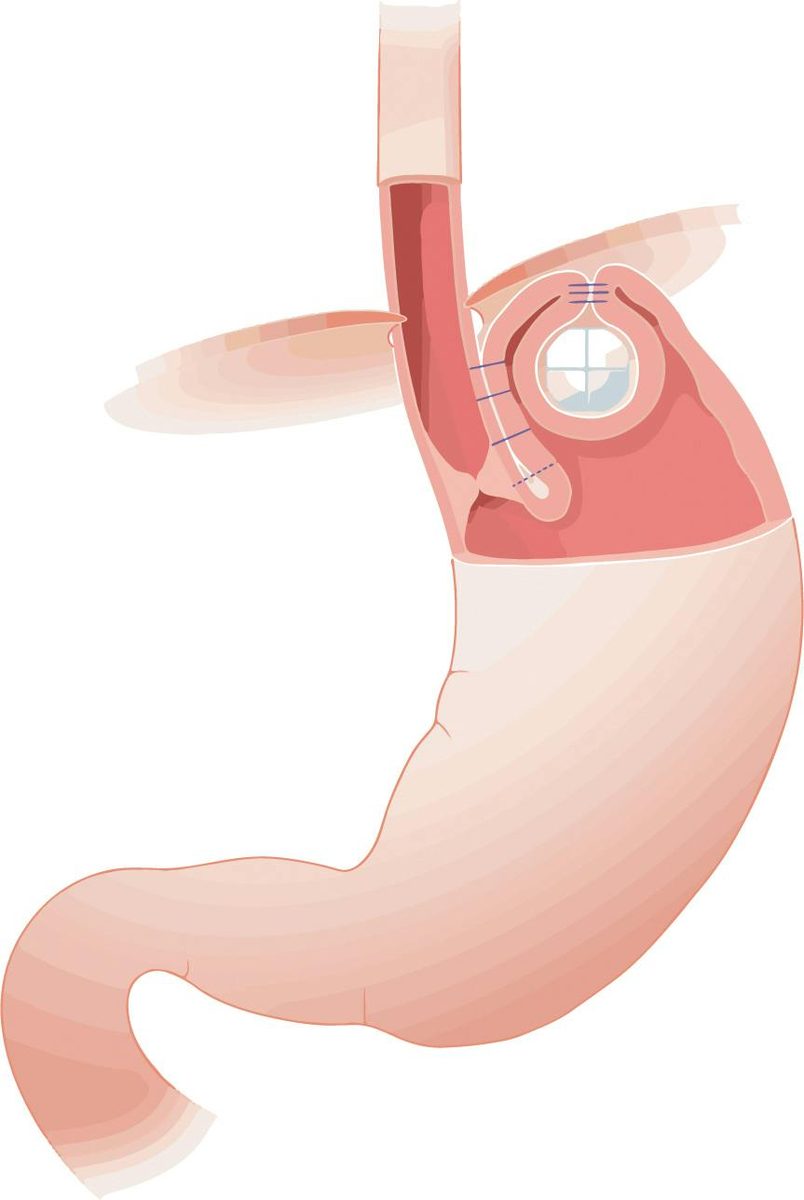
RefluxStop treats gastroesophageal reflux disease, or GERD, which affects an estimated 78 million Americans. Unlike the traditional Nissen fundoplication that wraps the esophagus, the device holds the lower esophageal sphincter in position below the diaphragm. The company says this restores natural anatomy without encircling the esophagus, avoiding common side effects like difficulty swallowing and the inability to belch or vomit.

The launch pits Implantica against J&J's Linx, a magnetic ring device, in the U.S. market. J&J has withdrawn Linx from all markets outside the U.S., a move it described as commercial rather than safety-related. Implantica CEO Peter Forsell said he would not be surprised if J&J exits the U.S. market as well, which would leave RefluxStop as the main device-based alternative to traditional reflux surgery.

Why it matters

Millions of U.S. GERD patients could get reflux surgery that avoids swallowing problems common after traditional wraps — if surgeons adopt it and insurers cover it.

Questions about this story

Free account needed to ask — your question is kept and asked for you right after sign-up. Answers are public.

No questions yet — be the first to ask.

Key Indicators

78 million
Americans with GERD
Estimated number of U.S. adults affected by gastroesophageal reflux disease.
1,800
Patients treated with RefluxStop in Europe
Total implants across nine European countries before the U.S. launch.
60+
European Centers of Excellence
Sites across nine countries with RefluxStop commercial experience.
40%+
GERD patients with symptoms despite medication
Share of U.S. patients who continue experiencing symptoms while on daily medication.
13,000
Units produced for U.S. launch
Devices Implantica says it is producing ahead of the U.S. rollout.

Voices

Curated perspectives — historical figures and your fellow readers.

Ever wondered what historical figures would say about today's headlines?

Sign up to generate historical perspectives on this story.

People Involved

Organizations Involved

Timeline

September 2025 September 2026

5 events Latest: Today
Tap a bar to jump to that date
  1. U.S. launch kicks off at AFS annual meeting

    Today Launch

    Over-capacity panel of 120+ surgeons and gastroenterologists marks RefluxStop's U.S. entry.

  2. Capital Markets Day in Stockholm

    Corporate

    Implantica details its U.S. rollout plans to investors in Stockholm.

  3. FDA grants Premarket Approval for RefluxStop

    Regulatory

    FDA clears RefluxStop for commercial sale, opening the U.S. market for the first time.

  4. J&J pulls Linx from non-U.S. markets

    Market

    First reports say J&J withdraws Linx from all non-U.S. markets; a commercial decision, not safety.

  5. AFS 2025 meeting draws strong interest in RefluxStop

    Milestone

    Surgeons show enthusiasm for RefluxStop ahead of the pending FDA decision.

Scenarios

1

RefluxStop scales past 100 U.S. centers within two years

Possible Resolves by End of 2028

Discussed by: Company statements cite more than 100 U.S. surgeons expressing interest and 20 already trained, suggesting pent-up demand.

Implantica says it will target leading centers and reflux surgeons first, then expand as training capacity grows. The company reports more than 100 U.S. surgeons have expressed interest, and 20 have completed training, some by observing procedures in Europe and practicing on cadavers in Chicago. If that pipeline converts into activations, RefluxStop could quickly become the leading implant for GERD.

2

J&J withdraws Linx from the U.S. market

Uncertain Resolves by End of 2027

Discussed by: Peter Forsell publicly stated he would not be surprised if J&J exits the U.S. market, following its withdrawal of Linx outside the U.S.

J&J has already pulled Linx from all markets outside the U.S., a move it described as commercial rather than safety-related. A U.S. exit would leave the implant-based reflux field largely to RefluxStop. Forsell has said such a move would open a new market for Implantica.

3

U.S. adoption starts slowly amid surgeon training constraints

Possible Resolves by End of 2027

Discussed by: Company itself warns adoption will be gradual; each new site requires physician training and activation before procedures begin.

Implantica CEO Peter Forsell has emphasized quality over speed, saying the company will not try to run 2,000 centers at once. If training capacity, site activation, and reimbursement approvals lag, the first year could see only a small number of U.S. centers treating patients.

Historical Context

2 moments from history that rhyme with this story — and how they unfolded.

1956

Nissen fundoplication (1956)

Rudolf Nissen described the anti-reflux operation that bears his name. The procedure wraps the upper part of the stomach around the lower esophagus to strengthen the valve that prevents acid from rising.

Then

It produced durable reflux control for many patients but created well-known side effects including difficulty swallowing and gas-bloat syndrome.

Now

Fundoplication became the standard surgical treatment for severe GERD for decades, and its wrap-and-encircle approach defined the field.

Why this matters now

RefluxStop's pitch is that it restores anatomy without the wrap, targeting the exact side effects that led some patients to avoid or delay reflux surgery.

March 2012

Linx FDA approval (2012)

The Linx reflux management system won U.S. FDA approval, using a flexible ring of magnetic beads to keep the lower esophageal sphincter closed. The device, now sold by Johnson & Johnson, became the leading implant-based alternative to fundoplication.

Then

Linx gave surgeons a less invasive, device-based option and built a commercial market for anti-reflux implants.

Now

J&J has since withdrawn Linx from markets outside the U.S., a move it described as commercial rather than safety-related, leaving the implant-based reflux field concentrated in the U.S.

Why this matters now

Linx is RefluxStop's main competitor and the precedent for how a device-based anti-reflux therapy enters and dominates the U.S. market.

Sources

(7)