

Pull to refresh
Logo
Daily Brief
Following
Why
Private prison companies face wave of forced-labor lawsuits from immigration detainees

Private prison companies face wave of forced-labor lawsuits from immigration detainees

Rule Changes
By Newzino Staff |

Supreme Court unanimously rejects GEO Group's immunity bid, clearing the path for a decade-old class action representing 60,000 detainees

3 days ago: Supreme Court rules 9-0 against GEO Group

Overview

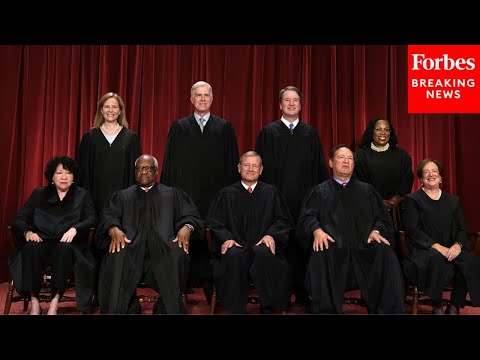
For more than a decade, private prison operator GEO Group has fought to avoid a trial over allegations that roughly 60,000 immigration detainees at its Aurora, Colorado facility were forced to perform janitorial work for one dollar a day — or nothing at all — under threat of solitary confinement. On February 25, the United States Supreme Court shut down GEO's last procedural escape route, ruling 9-0 that the company cannot claim government-contractor immunity to skip ahead of a final verdict. Justice Elena Kagan wrote that GEO "must wait" for trial before appealing.

Key Indicators

~60,000
Detainees in class
Approximate number of people detained at GEO's Aurora facility over ten years who are represented in the lawsuit
$1/day
Alleged wage rate
What detainees were paid under GEO's Voluntary Work Program; many received nothing at all for mandatory sanitation duties
9-0
Supreme Court vote
All nine justices agreed GEO cannot immediately appeal the denial of its government-contractor immunity defense
$23.2M
Washington state verdict
Amount a jury ordered GEO to pay in a parallel detainee-labor case at its Tacoma, Washington facility
$2.9–3.1B
GEO projected 2026 revenue
Nearly half comes from ICE contracts, making the company heavily exposed to detention-labor litigation

Interactive

Exploring all sides of a story is often best achieved with Play.

Ever wondered what historical figures would say about today's headlines?

Sign up to generate historical perspectives on this story.

Sign Up

Debate Arena

Two rounds, two personas, one winner. You set the crossfire.

People Involved

Alejandro Menocal
Alejandro Menocal
Lead plaintiff and former detainee (Lead named plaintiff in class action)
Elena Kagan
Elena Kagan
Associate Justice, United States Supreme Court (Authored the majority opinion in GEO Group v. Menocal)
John L. Kane
John L. Kane
Senior United States District Judge, District of Colorado (Presiding over the underlying class action)
George C. Zoley
George C. Zoley
Founder, Chairman, and incoming Chief Executive Officer of GEO Group (Returning as CEO effective March 1, 2026)

Organizations Involved

The GEO Group, Inc.
The GEO Group, Inc.
Private prison and detention services company
Status: Defendant in multiple forced-labor lawsuits

Florida-based company that operates private prisons and immigration detention facilities under government contracts, generating roughly half its projected $3 billion in 2026 revenue from ICE.

Towards Justice
Towards Justice
Nonprofit legal advocacy organization
Status: Lead counsel for plaintiffs

Colorado-based nonprofit law firm representing the class of detainees in Menocal v. GEO Group, alongside co-counsel Outten & Golden and several other firms.

U.S. Immigration and Customs Enforcement
Federal law enforcement agency
Status: Federal agency that contracts with GEO Group

The federal agency responsible for immigration enforcement that contracts with private companies like GEO Group to operate detention facilities.

Timeline

  1. Supreme Court rules 9-0 against GEO Group

    Legal

    Justice Kagan writes that the Yearsley doctrine provides a defense to liability, not immunity from suit, meaning GEO cannot skip to an immediate appeal and must face trial. Justice Alito concurs separately; Justice Thomas joins most but not all of the opinion.

  2. Supreme Court hears oral arguments

    Legal

    A majority of justices express skepticism toward GEO's argument that it should be allowed to immediately appeal the denial of its government-contractor immunity.

  3. Ninth Circuit upholds $23.2 million Washington verdict

    Legal

    The Ninth Circuit affirms the jury verdict against GEO in the Washington state case, rejecting arguments that federal immigration policy preempted state wage law.

  4. CoreCivic settles Georgia forced-labor lawsuit

    Legal

    CoreCivic, the other major private prison operator, settles the Barrientos lawsuit at Stewart Detention Center in Georgia, agreeing to a "Detained Worker Bill of Rights" informing detainees they can refuse to work.

  5. Judge Kane rejects GEO's immunity defense

    Legal

    In a 76-page ruling, Judge Kane holds that ICE never directed GEO to adopt the challenged labor policies, so the company cannot claim derivative sovereign immunity. He chastises GEO for its "tone and arrogance" and deceptive citation practices.

  6. Washington jury orders GEO to pay $23.2 million

    Legal

    A federal jury finds GEO liable for violating Washington's minimum wage law, awarding $17.3 million to over 10,000 detainees, with a judge adding $5.9 million for unjust enrichment.

  7. Supreme Court declines GEO's first appeal

    Legal

    The Supreme Court declines to hear GEO's challenge to the Tenth Circuit's class certification ruling.

  8. Tenth Circuit upholds class certification

    Legal

    The U.S. Court of Appeals for the Tenth Circuit affirms the class certification, keeping the case on track as a large-scale class action.

  9. Washington state sues GEO over detainee wages

    Legal

    Washington Attorney General files suit against GEO Group for violating the state's minimum wage law at the Northwest ICE Processing Center in Tacoma.

  10. Class of approximately 60,000 detainees certified

    Legal

    Judge John Kane certifies two classes: all detainees held at the Aurora facility in the prior ten years (for the forced-labor claim) and all who worked in the Voluntary Work Program in the prior three years (for unjust enrichment).

  11. Class action filed against GEO Group

    Legal

    Alejandro Menocal and other former detainees file suit in the U.S. District Court for the District of Colorado, alleging GEO's labor practices violate the Trafficking Victims Protection Act and Colorado unjust enrichment law.

  12. Aurora detention facility opens

    Background

    The Immigration and Naturalization Service (predecessor to ICE) awards GEO Group a contract to operate a 150-bed detention facility in Aurora, Colorado.

Scenarios

1

GEO found liable at trial, ordered to pay hundreds of millions

Discussed by: Legal analysts at Mayer Brown and Gibson Dunn; Towards Justice attorneys

With the immunity defense resolved, the case proceeds to trial in Colorado on the merits. The class of 60,000 detainees prevails on the forced-labor claim under the Trafficking Victims Protection Act, resulting in damages that dwarf the $23.2 million Washington verdict. GEO's proven business model of using low-cost detainee labor becomes a quantifiable liability. The verdict triggers settlements in parallel cases in California and elsewhere, and prompts GEO to overhaul its detention labor practices nationwide.

2

GEO settles before trial to contain legal exposure

Discussed by: Government contracts attorneys at Covington and Womble Bond Dickinson; financial analysts covering GEO stock

Facing the prospect of a trial with 60,000 class members and no immunity shield, GEO negotiates a settlement — potentially modeled on CoreCivic's "Detained Worker Bill of Rights" agreement at Stewart Detention Center, but with a significant monetary component. This path becomes more likely if GEO's stock price continues to decline or if its ICE contract negotiations are affected by the litigation overhang. A settlement would limit precedent-setting but still reshape industry labor practices.

3

GEO wins at trial on the merits, vindicating its labor program

Discussed by: The Federalist Society's analysis of the case; GEO Group's investor communications

GEO prevails at trial by arguing its sanitation requirements were standard facility maintenance obligations, not forced labor, and that the Voluntary Work Program was genuinely voluntary. The company demonstrates that ICE detention standards permit such programs and that detainees were not coerced within the legal definition of the Trafficking Victims Protection Act. A win would reinforce the existing detainee labor model across the private detention industry.

4

Ruling triggers legislative or regulatory action on detainee labor standards

Discussed by: Georgetown Immigration Law Journal; the Southern Poverty Law Center; American Immigration Council

The Supreme Court ruling, combined with verdicts and settlements in parallel cases, generates enough public attention that Congress or ICE itself revises detention labor standards. This could mean mandatory minimum wage requirements for detainee work programs, clearer limits on what constitutes "voluntary" labor in detention settings, or requirements for independent oversight of private facility labor practices. Such action would fundamentally alter the economics of private immigration detention.

Historical Context

Yearsley v. W.A. Ross Construction Co. (1940)

1940

What Happened

The Supreme Court ruled that a private construction company building levees on the Missouri River under a federal Army Corps of Engineers contract could not be sued for erosion damage to a neighboring landowner's property. The Court held that when a contractor acts under valid government authorization without exceeding its scope, it shares the government's own immunity from suit.

Outcome

Short Term

The contractor avoided liability for property damage caused during federally directed construction work.

Long Term

Created the doctrine of "derivative sovereign immunity" that government contractors have relied on for 86 years to shield themselves from lawsuits. The doctrine has been invoked by military contractors, healthcare providers, and — as in this case — private prison operators.

Why It's Relevant Today

GEO Group built its entire defense on this 1940 precedent, arguing it should inherit the government's immunity because it operates under an ICE contract. The Supreme Court's 2026 ruling did not overturn Yearsley but sharply limited its procedural power: it is a defense to be argued at trial, not a get-out-of-court card.

Nwauzor v. GEO Group — Washington state verdict (2021)

September 2017 – January 2025

What Happened

Washington's Attorney General sued GEO Group for paying detainees at the Northwest ICE Processing Center in Tacoma as little as $1 per day, violating state minimum wage law. Lead plaintiff Goodluck Nwauzor, a Nigerian-born asylum seeker, worked cleaning showers for $1 per day during his eight months in detention. A federal jury unanimously found GEO liable and awarded $17.3 million in back wages to over 10,000 detainees, with a judge adding $5.9 million in unjust enrichment damages.

Outcome

Short Term

GEO was ordered to pay $23.2 million and to pay all workers at least Washington's minimum wage going forward.

Long Term

The Ninth Circuit upheld the verdict in January 2025, establishing that federal immigration policy does not shield private operators from state wage laws. Nwauzor was granted asylum and permanent residency.

Why It's Relevant Today

This is the closest precedent for what GEO faces in the Colorado case — but the Colorado class is six times larger (60,000 versus 10,000 detainees) and brings federal anti-trafficking claims rather than state wage claims, potentially yielding far greater damages.

Barrientos v. CoreCivic — Stewart Detention Center settlement (2025)

January 2018 – January 2025

What Happened

Detainees at CoreCivic's Stewart Detention Center in Lumpkin, Georgia sued under the Trafficking Victims Protection Act, alleging they were forced to work in the kitchen cooking meals for up to 2,000 people daily for as little as $4 to $5 per shift. Plaintiff Wilhen Hill Barrientos was placed in solitary confinement for over a month after filing a grievance about being forced to work while sick.

Outcome

Short Term

CoreCivic settled on the eve of trial, agreeing to implement a "Detained Worker Bill of Rights" informing detained workers they can refuse to work at any time.

Long Term

The settlement established the first formal worker-rights document in private immigration detention, creating a template that other facilities may be pressured to adopt.

Why It's Relevant Today

CoreCivic's decision to settle rather than risk trial shows how the legal landscape has shifted against private detention operators. GEO, now stripped of its immunity defense by the Supreme Court, faces the same calculus with a much larger class.

Sources

(12)