
Pull to refresh
Logo
Federal judge orders Texas to air condition all prisons by end of 2029

Federal judge orders Texas to air condition all prisons by end of 2029

Rule Changes

Ruling finds prison heat violates Eighth Amendment; state plans appeal

3 days ago: Judge orders systemwide air conditioning

Overview

Updated Yesterday

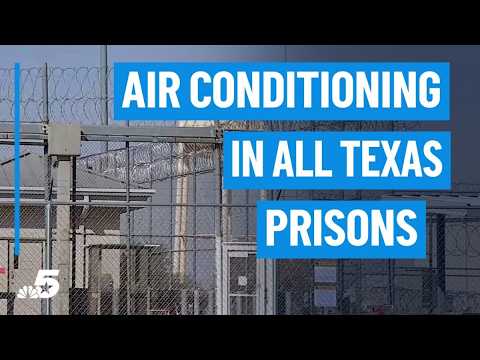
A federal judge has ordered Texas to install air conditioning in every state prison by the end of 2029. The ruling, issued Sept. 22, follows a three-year lawsuit over summer heat that advocates said pushed heat indexes past 130 degrees in some units.

Judge Robert Pitman found the conditions violate the Eighth Amendment's ban on cruel and unusual punishment and warned that cost is no excuse for missing the deadline. Texas puts the price at up to $1.5 billion and plans to appeal; just over a third of the state's 104 lockups are fully air-conditioned today.

Why it matters

If the order holds, Texas must spend up to $1.5 billion cooling a prison system projected to hold 150,000 inmates by 2028.

Questions about this story

Free account needed to ask — your question is kept and asked for you right after sign-up. Answers are public.

No questions yet — be the first to ask.

Key Indicators

$1.5B
Estimated cost to air-condition all prisons
TDCJ's cost estimate for full systemwide cooling, cited in court filings.
53,676
Cool beds as of Sept. 1, 2026
TDCJ expects the figure to top 61,000 by year-end and reach 90,000 by 2028.
~35%
Facilities fully air-conditioned
Just over a third of TDCJ's 104 facilities as of Sept. 1, 2026.
150,000
Projected prison population by 2028
State projection cited during the litigation.
Dec. 31, 2029
Court-ordered compliance deadline
Judge Pitman set this as the date by which air conditioning must be installed in every prison.

Voices

Curated perspectives — historical figures and your fellow readers.

Ever wondered what historical figures would say about today's headlines?

Sign up to generate historical perspectives on this story.

People Involved

Organizations Involved

Timeline

May 2023 September 2026

8 events Latest: 3 days ago
Tap a bar to jump to that date
  1. State announces appeal

    Statement

    TDCJ says it will appeal, disputing the deliberate-indifference finding.

  2. Cool bed count reported

    Data

    TDCJ reports 53,676 cool beds; just over a third of 104 facilities fully air-conditioned.

  3. Agency funding request revealed

    Funding

    TDCJ requests $289 million for air conditioning, less than its own plan said it could spend.

  4. Larger cooling investment

    Funding

    Texas approves more than $400 million for air-conditioned expansion dorms and to buy a climate-controlled lockup.

  5. First cooling funding approved

    Funding

    Texas legislators appropriate $85 million toward prison air conditioning.

Scenarios

1

Fifth Circuit blocks the air-conditioning order

Possible Resolves by Q2 2027

Discussed by: TDCJ and its attorneys; plaintiffs' counsel said an appeal could delay implementation by at least a year

TDCJ will likely first seek a stay of Pitman's order while the appeal proceeds before the U.S. Court of Appeals for the Fifth Circuit. Plaintiffs' attorneys have said they will fight any stay. If the appeals court grants one or overturns the deliberate-indifference finding, the 2029 deadline could collapse or slip by years.

2

Texas installs air conditioning in all prisons by 2029

Possible Resolves by End of 2029

Discussed by: Plaintiffs' attorneys and prison-reform advocates who brought the case

If the appeal fails or resolves quickly, TDCJ would need roughly $1.5 billion from the Legislature and must finish installation by Dec. 31, 2029. Pitman wrote that financial considerations will not excuse noncompliance and ordered status reports every six months. Full compliance would require the 2027 and 2029 legislative sessions to fund the work at levels far above the current request.

3

Order stands, but Texas misses the 2029 deadline

Likely Resolves by End of 2029

Discussed by: Observers citing Texas's decade of failed prison-cooling funding bills

State lawmakers repeatedly declined to fund systemwide air conditioning, and TDCJ's own 2026 appropriations request fell short of the $774.3 million it told the court it could spend in the next budget cycle. Even with the order in place, funding gaps or appeal delays could push full installation past 2029, setting up contempt proceedings or a follow-up lawsuit. Pitman has not yet appointed a monitor but said he could.

Historical Context

3 moments from history that rhyme with this story — and how they unfolded.

November 1976

Estelle v. Gamble (1976)

Inmate J.W. Gamble, a Texas prisoner hurt on a work detail, argued officials were deliberately indifferent to his medical needs. The Supreme Court ruled that such indifference to a prisoner's serious illness or injury violates the Eighth Amendment.

Then

Gave inmates a federal cause of action for medical neglect and set the deliberate-indifference test.

Now

Became the yardstick for prisoner conditions cases, including heat claims.

Why this matters now

Pitman applied exactly this standard, finding TDCJ's heat response deliberately indifferent.

December 1980

Ruiz v. Estelle (1980)

Federal judge William Wayne Justice found Texas's entire prison system violated the Eighth Amendment through overcrowding, violence and poor conditions, and placed it under federal oversight.

Then

Texas prisons ran under federal consent decrees for decades, capping inmate populations and forcing reforms.

Now

Showed a single federal ruling can compel broad changes to Texas prisons despite state resistance.

Why this matters now

The heat case repeats that pattern: a federal judge ordering systemwide reform over state objections about cost and authority.

May 2011

Brown v. Plata (2011)

The Supreme Court, 5-4, ordered California to cut its prison population by tens of thousands, finding overcrowding denied inmates adequate medical and mental-health care.

Then

California shifted inmates to county jails and built new facilities over years, at a cost of billions.

Now

Established that federal courts can order expensive systemic changes to state prisons when violations persist.

Why this matters now

Like this order, Plata forced a state to fund sweeping prison reform it had long resisted, with cost not accepted as an excuse.

Sources

(7)