Anchor

Averaged Navier-Stokes equation blows up in finite time
New CapabilitiesTao's 2014 construction shows why the Millennium Prize problem resists standard PDE techniques
2 days ago: Hacker News discussion resurfaces Tao's paperNew here? Follow stories to track developments over time. Create a free account to get updates when stories you care about change.
Overview
Updated 58 minutes agoA $1 million prize problem in fluid dynamics has resisted proof for over two decades. Terence Tao's 2014 construction shows why: he built an averaged version of the Navier-Stokes equations that blows up in finite time, even though it conserves energy exactly like the real equations.
The result doesn't disprove global regularity for the actual equations, but it demonstrates the 'supercriticality barrier' that any proof must overcome. A 2026 preprint claims to have achieved finite-time blowup for the true equations, though the claim is unverified.
Why it matters
The Navier-Stokes global regularity problem carries a $1 million Millennium Prize; Tao's result shows why it resists standard PDE techniques.
Questions about this story
Free account needed to ask — your question is kept and asked for you right after sign-up. Answers are public.
No questions yet — be the first to ask.
Key Indicators
2014
Year Tao published the averaged blowup result
Tao's paper appeared on his blog in February 2014 and in the Journal of the American Mathematical Society the same year.
$1M
Millennium Prize purse
The Clay Mathematics Institute offers $1 million for each of seven unsolved problems, including Navier-Stokes global regularity.
5/4
Critical α threshold for blowup in 2023 extension
The 2023 follow-up paper shows blowup for all α < 5/4 in the α-dissipative averaged equation.
Related Media

Terence Tao at IPAM's Fireside Chat 2026 (50m16s) (cropped)
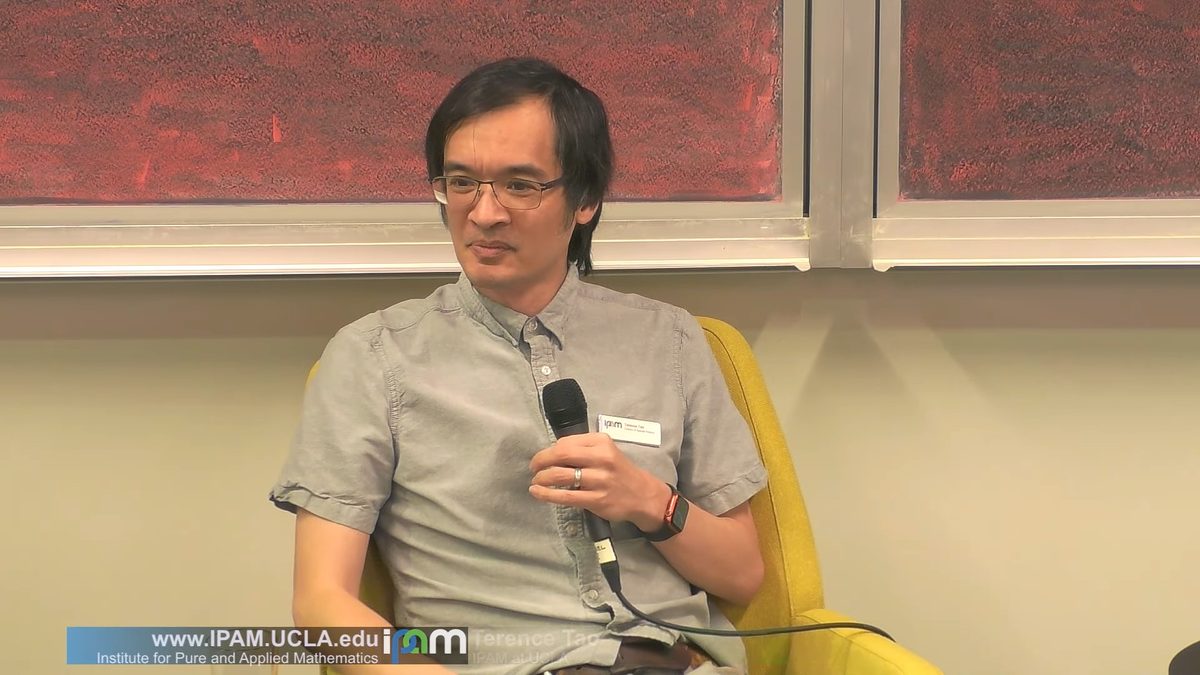
Terence Tao at IPAM's Fireside Chat 2026 (50m16s)
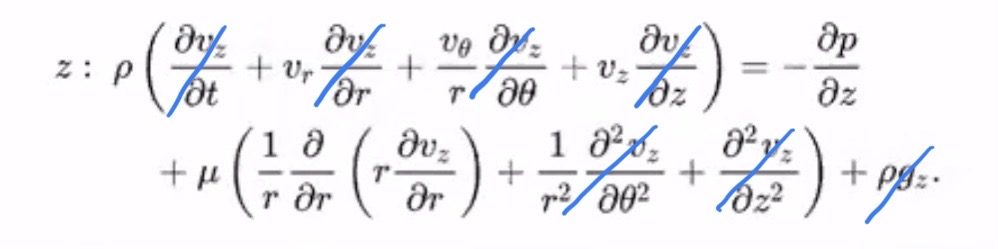
Navier Stokes Equation in Cylindrical Coordinates for Z-Direction
14.0K views
1:09:11
Finite time blowup for an averaged Navier-Stokes equation
princetonmathematics
84.8K views
52:24
Can the Navier-Stokes Equations Blow Up in Finite Time?
The Israel Academy of Sciences and Humanities
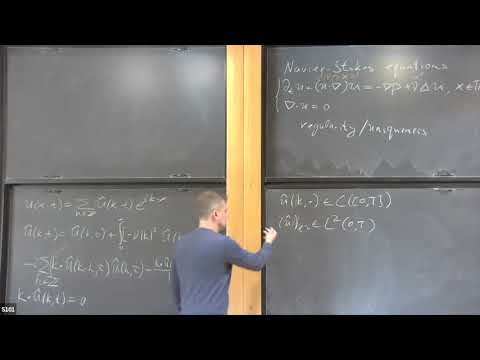
4.1K views
1:11:05
3D Navier-Stokes equations: the dynamics of a blow-up
Institute for Advanced Study
Images from Openverse under Creative Commons licenses. Videos from YouTube.
Voices
Curated perspectives — historical figures and your fellow readers.
Play
Exploring all sides of a story is often best achieved with Play.
Most of these play right now — no account needed. Sign up to save scores, keep a streak, and unlock Debate and Predict.
Log in
Sign Up
Higher or Lower
A number from this story, against one from elsewhere in the news — guess which is bigger, then keep the chain going. 5 rounds, 3 strikes; a miss costs a strike and resets your streak.
Example
Anchor
EU tariff revenue
$52B
Big for this kind of number
Mystery
Pentagon AI contract
?
Round 1
Streak: 0
Mystery
?
Keyboard: ↓/L lower · ↑/H higher
0 pts
Best streak: 0 · Rounds: 0
0 points — sign up to put that on the leaderboard.
Now try on this story
Connections
Sixteen names from the news. Find the four hidden groups of four. Four mistakes max.
Loading today's puzzle…
0/4 groups
Mistakes
Sign up to keep a daily streak — a new puzzle lands every day.
Now try on this story
Exit debate?
Your progress in this debate will be lost.
How it works
- 1 Two AI personas square off on this story.
- 2 You predict who'll win each round — correct picks earn XP.
- 3 One crossfire question is yours to fire. Pick it carefully.
Couldn't generate a topic
Select Your Champions
Choose one persona for each side of the debate
DEBATE TOPIC
Choose personas with different perspectives for a more dynamic debate.
SIDE A (PRO)
Select debater for this side:
No debate personas available right now.
SIDE B (CON)
Select debater for this side:
No debate personas available right now.
VS
Get ready to make your prediction...
Round of
Claim
Evidence
Stakes
Crossfire Answer
Closing Statement
Claim
Evidence
Stakes
Crossfire Answer
Closing Statement
Your Crossfire Question
Generating arguments...
Who's Got This Round?
Make your prediction before the referee scores
The referee scores both sides on
Correct predictions earn +20 XP
· Press 1 or 2 to pick
Evidence
40%
Logic
30%
Detail
20%
Style
10%
Round Results
Your Pick
Not this time
(%)
Overall Score
/10
Your Pick
Not this time
(%)
Overall Score
/10
Set the Crossfire
Pick the question both personas must answer in the final round
Crafting crossfire questions...
Choosing a question earns +10 XP crossfire bonus
🏆
Total XP Earned
Cred Change
Predictions
Debate Oracle! You called every round!
Sharp Instincts! You know your debaters!
The Coin Flip Strategist! Perfectly balanced!
The Contrarian! Bold predictions!
Inverse Genius! Try betting the opposite next time!
XP Breakdown
Base completion
+20 XP
Rounds played ( rounds x 5 XP)
+ XP
Correct predictions ( correct x 20 XP)
+ XP
Crossfire bonus
+10 XP
Accuracy
%
Prediction History
Round
You picked:
✓
✗
Now try on this story
Keep debating to level up your credibility and unlock achievements
People Involved
Organizations Involved
Timeline
February 2014 September 2026
6 events
Latest: 2 days ago
Tap a bar to jump to that date
-
Hacker News discussion resurfaces Tao's paper
Latest DiscussionTao's 2014 paper is discussed on Hacker News, likely in the context of the 2026 blowup claims.
-
Preprint claims finite-time blowup for the true Navier-Stokes equations
ClaimA preprint (arXiv:2604.09949) claims to construct explicit initial data that blows up in finite time, settling the Millennium Prize problem in the negative. Unverified.
-
Partial regularity paper extends Tao's result
ResearchA follow-up paper proves blowup for α-dissipative averaged equations with α < 5/4, and bounds the blowup set's Hausdorff dimension.
-
Regularization by noise paper studies Tao's model
ResearchA paper analyzes whether stochastic transport noise can prevent blowup in Tao's averaged equation.
-
Paper appears in the Journal of the American Mathematical Society
PublicationThe paper is published in JAMS, one of the top mathematics journals.
-
Tao publishes averaged Navier-Stokes blowup paper
PublicationTao posts the paper on his blog, constructing an averaged Navier-Stokes equation that blows up in finite time.
Historical Context
3 moments from history that rhyme with this story — and how they unfolded.
2002-2003
Perelman's Poincaré conjecture proof (2003)
Grigori Perelman posted three papers proving the Poincaré conjecture, the first Millennium Prize problem to be solved. His proof was verified by multiple teams of mathematicians within a few years.
Then
Perelman was awarded the Millennium Prize in 2010 but declined it, along with the Fields Medal in 2006.
Now
It remains the only Millennium Prize problem solved, showing both the difficulty of these problems and the verification process for major claims.
Why this matters now
Perelman's proof shows what verified resolution of a Millennium Prize problem looks like, in contrast to the unverified 2026 Navier-Stokes claim.
2005
Katz-Pavlovic dyadic model (2005)
Nets Katz and Pavlovic constructed a dyadic shell model of the Navier-Stokes equations that blows up in finite time. The model simplifies the nonlinearity by averaging over frequency shells.
Then
The model provided evidence that the nonlinearity alone could drive blowup, absent the finer structure of the true equations.
Now
Tao's 2014 paper builds directly on this model, using a more complicated system of ODEs related to the Katz-Pavlovic construction.
Why this matters now
Tao's averaged equation is a sophisticated extension of the Katz-Pavlovic model, showing the same blowup mechanism survives in a setting that obeys the energy identity.
October 2013
Otelbaev's Navier-Stokes proof claim (2013)
Mukhtarbay Otelbaev, a Kazakh mathematician, posted a 100-page paper claiming to prove global regularity for the 3D Navier-Stokes equations. The claim drew intense scrutiny from the global mathematics community.
Then
Within months, mathematicians identified errors in the proof, including a flawed inequality in the final section.
Now
The episode reinforced skepticism toward unverified Navier-Stokes proofs and highlighted the difficulty of the problem.
Why this matters now
The 2026 preprint claiming finite-time blowup for the true Navier-Stokes equations faces the same verification gauntlet that Otelbaev's claim did.
Sources
(7)
Related Stories
Claude formally verifies Fermat's Last Theorem in 11 days
New Capabilities
Updated 2 hours ago
AI systems begin solving historic Erdős mathematical problems
New Capabilities
Updated May 29
AI systems begin producing original mathematics
New Capabilities
Updated May 24
Neuromorphic computers master physics simulations
New Capabilities
Updated May 29
The century-long quest to reconcile quantum mechanics with gravity
New Capabilities
Updated May 30
Hydrogen turns superfluid, unlocking 50-year-old quantum mystery
New Capabilities
Updated May 19