California declares emergency as GKN Aerospace chemical tank threatens Garden Grove
Built World
The five-day evacuation ended after the tank's crack released pressure and ruled out a catastrophic explosion; GKN Aerospace now faces a criminal probe and a class-action lawsuit
The five-day evacuation ended after the tank's crack released pressure and ruled out a catastrophic explosion; GKN Aerospace now faces a criminal probe and a class-action lawsuit
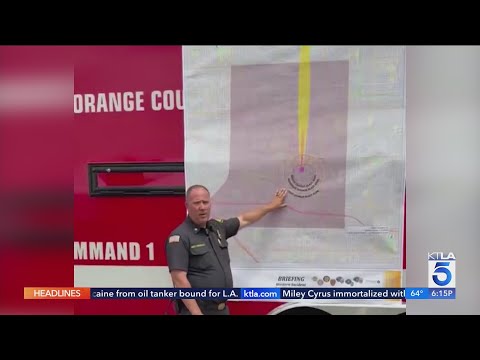
The risk of a catastrophic explosion is gone, and 50,000 displaced residents were cleared to go home. OCFA Interim Chief TJ McGovern announced Monday that the BLEVE (vapor explosion) risk 'is now off the table' — the tank cooled from 100°F to 93°F and its crack released built-up pressure.
A smaller explosion or slow leak remains possible. Crews continue cooling operations.
President Trump approved Newsom's federal emergency declaration, activating FEMA in Orange County. Orange County DA Todd Spitzer's criminal probe and a class-action lawsuit seeking billions from evacuated residents are the two main threads still live.
Why it matters
Fifty thousand residents returned home after five days, but a criminal probe and a billion-dollar lawsuit against GKN Aerospace are just beginning.
Questions about this story
Free account needed to ask — your question is kept and asked for you right after sign-up. Answers are public.
No questions yet — be the first to ask.
Key Indicators
50,000
Residents evacuated (orders lifted)
Peak evacuation covered a nine-square-mile zone across six cities; orders lifted May 25 after the explosion threat was eliminated.
7,000 gal
Methyl methacrylate in tank
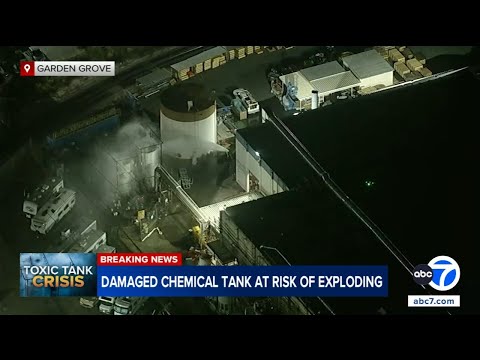
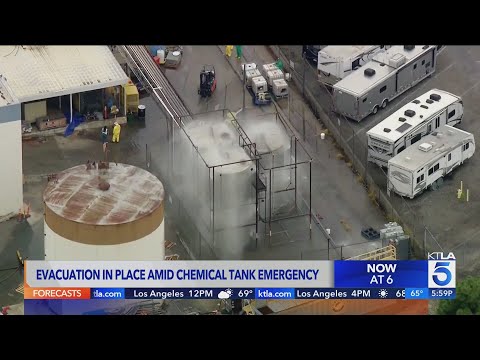
Held in a 34,000-gallon vessel at the GKN Aerospace plant; still requires controlled drainage or venting.
9 sq mi
Former evacuation zone
Covered parts of Garden Grove, Stanton, Westminster, Cypress, Buena Park, and Anaheim.
93°F
Tank temperature (dropping)
Fell from 100°F-plus to 93°F overnight on May 25; BLEVE explosion threat declared eliminated.
1
Criminal probe opened
Orange County DA Todd Spitzer launched a criminal investigation into the facility's safety record.
5 days
Duration of acute crisis
Orange County Fire Authority ran continuous cooling operations from May 21 through May 25.
Fire officials said the all-night inspection produced 'positive intel' about pressure conditions in the tank. Two Garden Grove residents filed a class-action lawsuit against GKN Aerospace seeking damages potentially in the billions.
BLEVE explosion threat declared eliminated; tank temperature falls to 93°F
Incident
OCFA Interim Chief TJ McGovern announced the risk of a catastrophic vapor explosion 'is now off the table.' The tank's temperature dropped from 100°F to 93°F overnight after the crack released internal pressure.
Trump approves federal emergency declaration, activating FEMA in Orange County
Government
President Trump approved Newsom's request for a Presidential Emergency Declaration. The move activated FEMA in Orange County and opened federal funding for the response.
Evacuation orders lifted; 50,000 residents cleared to return home
Public Safety
The City of Garden Grove lifted mandatory evacuation orders for all residential areas. Around 50,000 residents were cleared to return home after five days away.
DA opens criminal probe; EPA expects a leak, not an explosion
Legal
Orange County DA Todd Spitzer announces a criminal investigation into GKN's safety record. The EPA says a leak is the more likely outcome.
Tank temperature exceeds gauge's 100°F maximum
Incident
The tank's internal temperature climbed past 100 degrees Fahrenheit (the highest the on-site gauge can measure), up from 90°F the previous night. The actual temperature is unknown.
Crack found in tank; response put on 'new trajectory'
Incident
A recon team found a crack in the vessel that OCFA Interim Chief TJ McGovern said may be releasing internal pressure. Officials launched an all-night mission to confirm whether the explosion threat had been eliminated.
California congressional delegation presses Trump on emergency declaration
Government
Senators Alex Padilla and Adam Schiff, with Representative Derek Tran, sent a letter to President Trump urging him to approve Newsom's federal emergency declaration for Orange County.
Newsom declares state of emergency
Government
Governor Gavin Newsom proclaims a state of emergency for Orange County and asks President Trump for a federal Emergency Declaration to activate FEMA.
Tank temperature climbs
Incident
Internal temperature rises from 77°F in the morning to 90°F by night, an increase of roughly one degree per hour.
Cracks discovered, evacuations expand
Incident
OCFA hazmat teams find multiple cracks in the tank. The evacuation zone grows to roughly nine square miles and 50,000 people.
Tank begins overheating
Incident
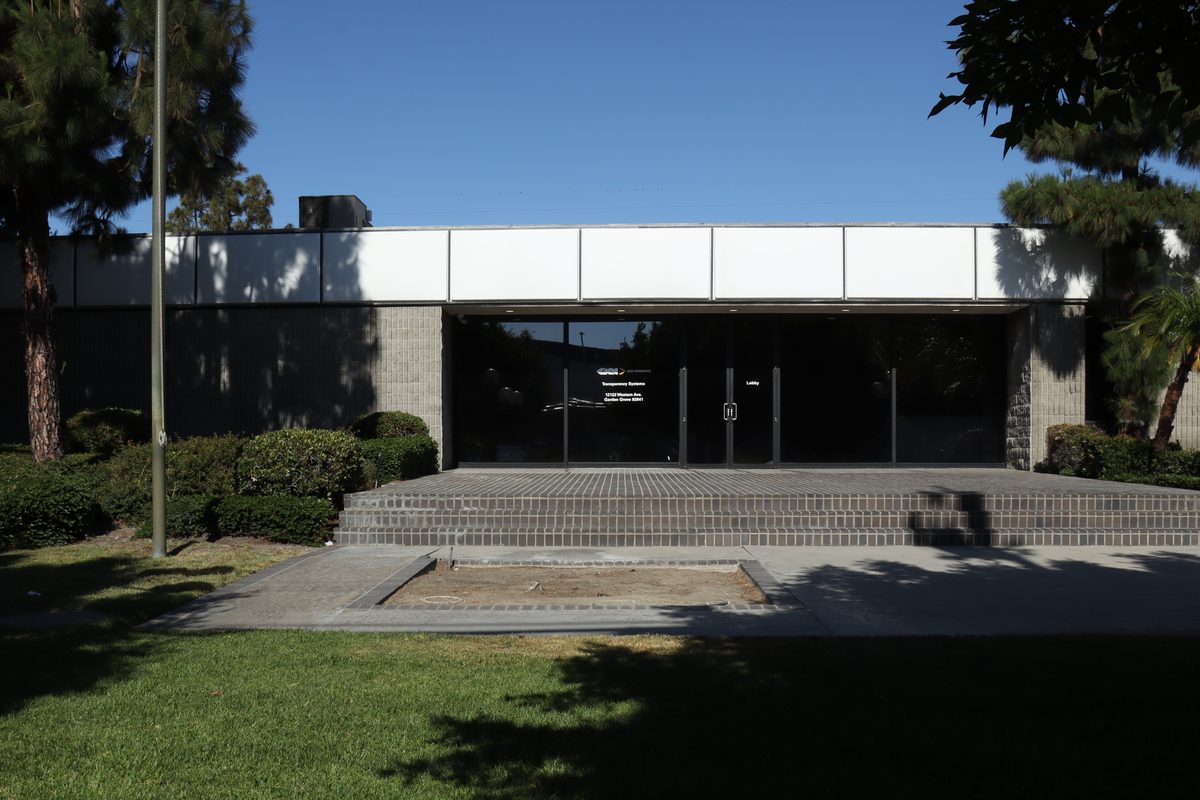
Orange County Fire Authority is alerted to a methyl methacrylate tank overheating at the GKN Aerospace plant at 12122 Western Avenue.
First evacuation orders issued
Public Safety
Authorities order residents in a wide perimeter around the plant to leave their homes.
2018
Cal/OSHA penalty against the Garden Grove plant
Regulatory
California's Department of Industrial Relations fined GKN Aerospace after an inspection of the Western Avenue facility.
Scenarios
1
Tank vented or drained safely, no major release
Likely
Resolves by Jun 21, 2026
Discussed by: EPA on-scene coordinators; Orange County Fire Authority briefings
Crews keep cooling the tank long enough to transfer or controlled-vent the methyl methacrylate without a runaway reaction. Residents return home in stages over the following week. GKN faces civil penalties and a criminal probe, but no mass casualties.
2
Tank ruptures or explodes, causing mass casualties
Unlikely
Resolves by Jun 7, 2026
Discussed by: Fox News; Time; KTLA hazmat reporting
Cooling fails, the relief valve cannot keep up, and the tank either explodes or releases a large vapor cloud over the evacuated zone. Casualty counts depend on wind direction and on how many residents ignored evacuation orders. The site burns or contaminates surrounding industrial blocks for days.
3
Orange County DA files criminal charges against GKN executives or the company
Possible
Resolves by May 24, 2027
Discussed by: Orange County DA Todd Spitzer; CBS Los Angeles
Spitzer's probe finds evidence of falsified inspection records, ignored maintenance, or worker complaints that were buried. Charges follow against the company, plant managers, or both. The case becomes a test for criminal prosecution of industrial-safety failures in California.
4
Federal Emergency Declaration approved for Orange County
Uncertain
Resolves by Q2 2026
Discussed by: Governor Newsom's office; White House
President Trump approves Newsom's request, opening FEMA reimbursement for evacuation, cooling, and cleanup costs. Approval is politically notable because the Trump administration has been tightening federal disaster aid criteria.
5
Class-action lawsuit wins major settlement from GKN Aerospace
Possible
Resolves by End of 2029
Discussed by: X-Law Group P.C. and Presidio Law Firm, filing on behalf of evacuated Garden Grove residents
Two law firms filed a class-action on behalf of evacuated residents seeking damages potentially in the billions. If the case survives motions to dismiss and reaches settlement or trial, it could produce a large payout for those affected — and potentially force GKN to renegotiate or exit its Garden Grove lease.
Historical Context
3 moments from history that rhyme with this story — and how they unfolded.
1 of 3
February 2023
East Palestine train derailment (2023)
A Norfolk Southern freight train derailed in East Palestine, Ohio, with 38 cars off the tracks and several burning for two days. Crews ran a controlled burn of railcars holding about 115,000 gallons of vinyl chloride. Residents within a one-mile radius were evacuated.
Then
The plume spread for hundreds of miles. Federal and state agencies clashed over health monitoring and cleanup responsibility.
Now
Two years later, contaminated soil was still being trucked out of town, and residents reported lingering health complaints. Norfolk Southern faced billions in liability and settlement costs.
Why this matters now
Garden Grove involves a much smaller volume of chemical (7,000 vs. 115,000 gallons), but it is happening inside a dense suburb instead of a rural town. East Palestine is the recent yardstick for how badly a hazmat response can go when chemistry, weather, and politics collide.
2 of 3
August 2012
Chevron Richmond refinery fire (2012)
A corroded 52-inch pipe at Chevron's Richmond, California refinery ruptured, releasing a vapor cloud that ignited and engulfed 19 workers. All escaped, but a thick black plume drifted over the East Bay.
Then
Around 15,000 area residents sought medical treatment for breathing problems. A five-hour shelter-in-place order covered the city.
Now
The U.S. Chemical Safety Board found Chevron had ignored a known corrosion risk for years. Chevron later paid $160 million in settlements and was forced to overhaul piping and inspection programs.
Why this matters now
Like Garden Grove, Richmond was a case where a known maintenance problem at an industrial site sent tens of thousands of nearby residents to hospitals or shelter. It set the modern California template for using criminal and regulatory tools after industrial near-misses.
3 of 3
April 2013
West Fertilizer Company explosion (2013)
A fire at a fertilizer storage facility in West, Texas, ignited 30 tons of ammonium nitrate. The blast destroyed homes, a school, and a nursing home within a few blocks of the plant. Fifteen people died, including twelve first responders.
Then
The town center was leveled. Federal investigators called it a failure of land-use planning as much as plant safety.
Now
It led to a 2017 federal rule tightening chemical facility safety. The Trump administration rolled back parts of that rule before it was partly restored.
Why this matters now
West showed what happens when an industrial chemical site sits next to homes and schools and the worst case actually arrives. Garden Grove's GKN plant is in exactly that kind of neighborhood, which is why the cooling operation is being run as if the explosion scenario is live.