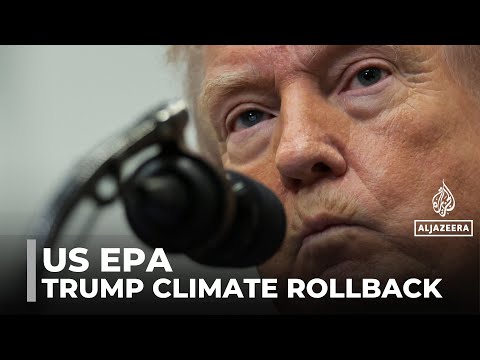
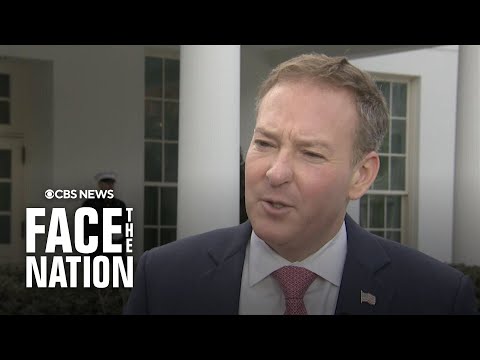
The EPA's February 2026 revocation of its 2009 endangerment finding ended federal greenhouse gas authority, but the rollbacks kept coming. By May 2026, the agency had also repealed mercury protections for coal plants, relaxed refrigerant deadlines for businesses, and sent a final rule to the White House budget office to erase power plant emissions standards.
Lawsuits piled up in the D.C. Circuit within days of the revocation. In April 2026, sixteen health and environmental groups joined twenty-four state attorneys general in petitioning EPA to reconsider the repeal, arguing the agency relied on analyses conducted after the public comment period closed. The courts have not yet set a briefing schedule.
Why it matters
If the EPA cannot regulate greenhouse gases, no federal agency can—and states alone cannot fill the gap.
Questions about this story
Free account needed to ask — your question is kept and asked for you right after sign-up. Answers are public.
0
Do you think the changes will lead to major poor outcomes for people?
The evidence strongly points to serious harm: independent analysis projects tens of thousands of additional deaths, and the mercury rollback alone undoes standards that had saved up to 11,000 lives a year — though ongoing litigation could block some rules before they take full effect.
Why it matters: These aren't abstract regulatory shifts — the projected death and disease tolls come from EPA's own modeling and peer-reviewed public health research, not just advocacy estimates.
—Independent analysis projects roughly 58,000 additional deaths tied to the endangerment finding repeal, driven by climate-linked heat waves, floods, and respiratory illness.
—Rolling back MATS to 2012 standards reverses a rule that had cut mercury emissions from coal plants by 90% and was credited with saving up to 11,000 lives per year; removing continuous emissions monitoring makes those gains harder to enforce.
—Increased smog and soot from loosened power plant rules are projected to cause over 2,500 early deaths and more than 1 million additional asthma attacks annually.
—Low-income communities and communities of color near coal plants bear the sharpest exposure to mercury and air toxics — meaning the harms are not evenly distributed.
The Trump administration argues the opposite: that climate regulations impose crippling costs on industry and consumers, and that the economic relief from deregulation will itself improve living standards — Zeldin frames the rollbacks as freeing businesses from rules that raised energy prices without proportionate benefit.
Some legal scholars note the courts could vacate key rules before they cause the projected harm — 24 state AGs and 16 health groups have mounted procedural challenges that, if successful, could restore the standards without Congress acting.
AI-generated with web search — may be wrong. Check the linked sources.
Key Indicators
20+
State Challengers
State attorneys general challenging the endangerment finding repeal through D.C. Circuit lawsuits and a formal petition for reconsideration filed in April 2026.
Images from Openverse under Creative Commons licenses.
Videos from YouTube.
Voices
Curated perspectives — historical figures and your fellow readers.
Charles Darwin
(1809-1882) ·Victorian Era · science
Fictional AI pastiche — not real quote.
"One observes with melancholy familiarity that those in power may declare, by administrative fiat, that a danger does not exist — yet nature, I assure you, has never once consulted the Federal Register before proceeding with her consequences. The courts, like the fossil record, have a most inconvenient habit of preserving the evidence."
0% found this insightful
Ayn Rand
(1905-1982) ·Cold War · philosophy
Fictional AI pastiche — not real quote.
"The productive mind finally shrugs off seventeen years of bureaucratic chains forged from the mysticism of collective panic — yet observe the predictable spectacle: those who cannot create value rush immediately to courts, demanding that judges compel the universe to validate their fear."
100% found this insightful
Ever wondered what historical figures would say about today's headlines?
Sign up to generate historical perspectives on this story.
18 events
Latest: May 21st, 2026 · 5 months ago
Showing 8 of 18
JK to step
Tap a bar to jump to that date
Jump to
May 2026
Trump and Zeldin Roll Back HFC Refrigerant Deadlines
LatestRegulatory
At a White House ceremony, Trump and Zeldin announced a rule extending deadlines for grocery stores and businesses to phase out hydrofluorocarbons. The Air-Conditioning, Heating and Refrigeration Institute warned the reversal would 'inject uncertainty across the market.'
EPA Sends Power Plant Greenhouse Gas Standards Repeal to White House for Review
Regulatory
EPA submitted a final rule to the Office of Management and Budget to repeal all greenhouse gas emissions standards for fossil fuel-fired power plants. OMB has up to 90 days to review before the rule can be published in the Federal Register.
April 2026
Environmental Groups and 24 State AGs Petition EPA to Reconsider Endangerment Repeal
Legal
Sixteen health and environmental groups petitioned EPA to reconsider the endangerment finding repeal, arguing the final rule relied on analyses added after the public comment period closed. Twenty-four state attorneys general filed a parallel petition on the same grounds.
February 2026
EPA Repeals Updated Mercury and Air Toxics Standards for Coal Plants
Regulatory
EPA finalized a rule rolling back 2024 updates to mercury and air toxics protections for coal-fired power plants, reinstating the 2012 standards and removing continuous emissions monitoring requirements. States and nonprofits filed D.C. Circuit challenges.
Massachusetts Lawsuit Details Legal Challenge
Legal
Massachusetts and allies outline arguments against EPA repeal, citing Supreme Court precedents upholding original finding.
Coalition of 17 Groups Sues EPA in D.C. Circuit
Legal
Earthjustice, EDF, Sierra Club, American Lung Association, and others file petition challenging revocation as illegal and unscientific.
Connecticut, Public Health Groups Sue EPA
Legal
Connecticut AG joins health and green groups suing over repeal of endangerment finding central to emissions regulation.
EPA Officially Revokes Endangerment Finding
Regulatory
Zeldin signs the final rule revoking the 2009 finding, eliminating the legal basis for all federal greenhouse gas regulations under the Clean Air Act.
July 2025
EPA Proposes Endangerment Finding Repeal
Regulatory
At an Indiana truck dealership, Zeldin formally proposes revoking the endangerment finding and eliminating vehicle emissions standards.
March 2025
EPA Announces Formal Endangerment Finding Review
Regulatory
Zeldin announces the EPA will formally reconsider the 2009 endangerment finding and related regulations.
January 2025
Lee Zeldin Confirmed as EPA Administrator
Personnel
The Senate confirms Zeldin 56-42. He immediately begins implementing Trump's deregulation agenda.
Trump Signs Day-One Climate Executive Orders
Executive
Hours after inauguration, Trump signs orders withdrawing from Paris Agreement, declaring a national energy emergency, and directing EPA to reconsider the endangerment finding.
June 2022
Supreme Court Limits EPA Authority in West Virginia v. EPA
Legal
The Court rules 6-3 that EPA cannot use 'generation shifting' to regulate power plants, establishing the 'major questions doctrine' that limits agency authority.
June 2017
Trump Announces First Paris Agreement Withdrawal
International
President Trump announces U.S. withdrawal from the Paris climate accord during his first term, though the endangerment finding remains intact.
February 2016
Supreme Court Stays Clean Power Plan
Legal
In an unprecedented move, the Supreme Court halts enforcement of the Clean Power Plan before lower court review, signaling skepticism of broad EPA authority.
August 2015
Obama Announces Clean Power Plan
Regulatory
Building on the endangerment finding, EPA proposes rules to cut power plant carbon emissions 32% below 2005 levels by 2030.
December 2009
EPA Issues Original Endangerment Finding
Regulatory
EPA Administrator Lisa Jackson signs the finding that six greenhouse gases threaten public health and welfare, based on a 200-page analysis and 380,000 public comments.
April 2007
Supreme Court Rules Greenhouse Gases Are Pollutants
Legal
In Massachusetts v. EPA, the Supreme Court rules 5-4 that greenhouse gases qualify as air pollutants under the Clean Air Act and EPA must determine whether they endanger public health.
Scenarios
1
Courts Uphold Revocation, Federal Climate Authority Ends
Possible
Discussed by: Conservative legal scholars, Competitive Enterprise Institute, energy industry groups
If courts defer to EPA's new interpretation of the science or find the revocation procedurally valid, federal authority to regulate greenhouse gases under the Clean Air Act would effectively end. States like California could still regulate vehicles under their Clean Air Act waiver, but national emissions standards would disappear. Power plants and industrial facilities would face no federal carbon limits. This outcome would require surviving challenges in district court, the D.C. Circuit, and potentially the Supreme Court.
2
Courts Strike Down Revocation, Legal Battle Continues for Years
Likely
Discussed by: Environmental Defense Fund, Earthjustice, legal analysts at Columbia Law's Sabin Center
Environmental groups and states argue the revocation ignores established science and violates the Clean Air Act's requirement that EPA findings be based on science. Federal courts have unanimously upheld the endangerment finding since 2009, including a 2023 D.C. Circuit decision. If courts find the revocation arbitrary and capricious—reversing a scientific finding without new scientific evidence—they could reinstate the original determination. However, litigation could take 3-5 years to reach final resolution.
3
Supreme Court Narrows Clean Air Act, Creates New Climate Framework
Possible
Discussed by: Legal scholars, Bloomberg Law analysis, environmental law professors
The Supreme Court's 2022 West Virginia v. EPA decision established that agencies need clear congressional authorization for regulations with major economic impact. The Court could use this case to further define—or limit—EPA's authority under the Clean Air Act, potentially creating a new legal framework that constrains future administrations from reinstating climate regulations without explicit congressional action.
4
Congress Intervenes to Codify or Block Climate Authority
The Inflation Reduction Act of 2022 included language affirming that greenhouse gases are pollutants under the Clean Air Act, but did not explicitly codify the endangerment finding. A future Congress could pass legislation either explicitly authorizing EPA to regulate greenhouse gases or stripping that authority entirely, settling the question through legislation rather than litigation or executive action.
Historical Context
3 moments from history that rhyme with this story — and how they unfolded.
1 of 3
1981-1983
Reagan EPA Deregulation Backlash (1981-1983)
President Reagan appointed Anne Gorsuch to lead EPA with a mandate to cut regulations, staff, and budget. EPA staff was cut 29% and budget 44% by 1984. Enforcement cases filed to the Department of Justice dropped 69% in the first year. Gorsuch attempted to gut the Clean Air Act with proposals to weaken pollution standards.
Then
By 1983, scandal and congressional investigations forced mass resignations of EPA officials. Reagan brought back the agency's first administrator, William Ruckelshaus, to restore credibility.
Now
The backlash demonstrated limits to environmental deregulation and established that sustained public opposition could reverse aggressive rollbacks.
Why this matters now
The Reagan experience suggests that dramatic environmental deregulation can generate backlash, but the current action is more fundamental—eliminating the legal basis for regulation rather than simply weakening enforcement.
2 of 3
1973-1996
Leaded Gasoline Phase-Out (1973-1996)
In 1973, EPA began phasing out lead in gasoline despite industry opposition. Average lead content was 2-3 grams per gallon. In 1982, the Reagan administration proposed abolishing lead limits entirely, but reversed course in 1985 and accelerated the phase-out instead.
Then
By 1996, leaded gasoline was banned for road vehicles. Lead content had dropped from 200,000 tons annually to under 2,000 tons.
Now
Blood lead levels in American children fell 70%. The phase-out is now considered one of public health's greatest achievements, saving over 1.2 million lives annually worldwide.
Why this matters now
The leaded gasoline case shows that even when an administration attempts to reverse an EPA finding, scientific evidence and public health outcomes can prevail. However, greenhouse gas regulation lacks the same visible, immediate health effects that galvanized support for lead regulation.
3 of 3
August 2015 - June 2022
Clean Power Plan Litigation (2015-2022)
Obama's EPA issued rules requiring power plants to cut carbon emissions 32% by 2030. Twenty-seven states sued. In an unprecedented move, the Supreme Court stayed the rule before lower courts ruled. Trump's EPA replaced it with a weaker rule. The Supreme Court ultimately ruled in West Virginia v. EPA that the original approach exceeded EPA authority.
Then
The Clean Power Plan never took effect. Trump replaced it with the Affordable Clean Energy rule, which was also struck down.
Now
The Supreme Court's 'major questions doctrine' established that agencies need clear congressional authorization for economically significant regulations, limiting future EPA climate authority.
Why this matters now
The Clean Power Plan saga previewed the current battle: it showed courts will scrutinize EPA climate authority and that regulations can be undone by subsequent administrations. However, revoking the endangerment finding goes further—eliminating the foundation rather than just challenging specific rules.