

Pull to refresh
Logo
Daily Brief
Following
Why Ranks Sign Up
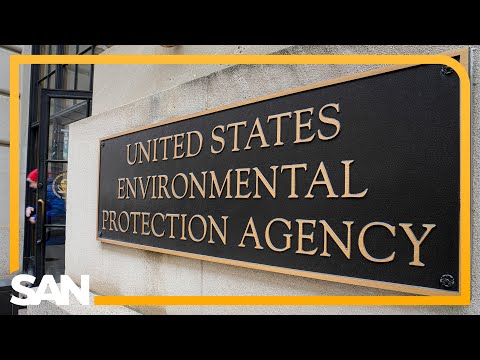
Court fight over EPA's canceled environmental justice grants

Court fight over EPA's canceled environmental justice grants

Rule Changes

A judge voided the EPA's shutdown of a $2.8 billion community grant program but stopped short of forcing it back to life

Yesterday: Judge voids the cancellation

Overview

Community groups in Baltimore, Nashville and San Diego were promised federal money to clean up pollution and cool overheated neighborhoods. A federal judge has now ruled the EPA broke the law when it cut off the entire $2.8 billion program.

U.S. District Judge Richard Gergel voided the cancellation, calling it 'arbitrary and capricious.' An EPA official had testified he ended the program for 'policy reasons,' which the court found legally insufficient. But Gergel declined to force the agency to restart the work, leaving the money's fate unsettled.

Why it matters

The ruling tests whether an agency can erase a program Congress funded by citing 'policy,' with billions for local pollution and heat projects at stake.

Questions about this story

No questions yet — be the first to ask.

Key Indicators

$2.8B
Program funding at stake
What the block grant program was set to send to community projects.
Feb. 2025
Program terminated
When the EPA cut off the whole program for 'policy reasons.'
Sept. 2026
Award deadline
The cutoff for awarding the funds; the judge refused to extend it.
$500K
Example community grant
What a North Carolina group received for neighborhood air sensors.

Voices

Curated perspectives — historical figures and your fellow readers.

Ever wondered what historical figures would say about today's headlines?

Sign up to generate historical perspectives on this story.

Play

Exploring all sides of a story is often best achieved with Play.

Log in to play. Track your picks, climb the leaderboards. Log in Sign Up
Predict 4 ways this could play out. Contrarian picks score more — points lock when the scenario resolves. Log in to play
Higher or Lower Two numbers from this story. Guess which is bigger. 5 rounds to set a streak. Log in to play
Timeline Five events from this story — drag them oldest to newest. Log in to play
Connections Sixteen names from the news. Find the four hidden groups of four. Log in to play

People Involved

Organizations Involved

Timeline

August 2022 June 2026

5 events Latest: Yesterday
Tap a bar to jump to that date
  1. EPA kills the program

    Agency Decision

    An EPA official terminates the entire block grant program, later testifying he did so for 'policy reasons.'

  2. Trump orders a freeze

    Executive Action

    New executive orders pause Inflation Reduction Act disbursements and direct agencies to close environmental justice offices.

  3. Congress creates the program

    Legislation

    The Inflation Reduction Act sets aside $2.8 billion for environmental and climate justice block grants to community projects.

Historical Context

3 moments from history that rhyme with this story — and how they unfolded.

February 1975

Train v. City of New York (1975)

The Nixon administration's EPA withheld billions in water-pollution control money that Congress had appropriated under the Clean Water Act. New York City and other cities sued to force the funds out. The Supreme Court ruled unanimously that the administrator could not refuse to allot the money Congress directed be spent.

Then

The EPA had to release the impounded water-cleanup funds to states and cities.

Now

The case became a marker for limits on the executive's power to refuse spending Congress has mandated.

Why this matters now

Both cases turn on the same question: can the executive branch refuse to spend environmental money Congress already appropriated?

June 2019

Department of Commerce v. New York (2019)

The Trump administration tried to add a citizenship question to the 2020 Census, saying it would help enforce the Voting Rights Act. The Supreme Court ruled 5-4 that the stated reason was contrived and blocked the question under the Administrative Procedure Act.

Then

The citizenship question was kept off the 2020 Census.

Now

Courts reaffirmed they can reject agency actions built on thin or pretextual justifications.

Why this matters now

Gergel applied the same law: an agency must give a real, reasoned basis, and 'policy reasons' alone did not clear that bar.

June 2020

Department of Homeland Security v. Regents (2020)

The first Trump administration moved to end DACA, the program shielding some immigrants brought to the U.S. as children. The Supreme Court ruled 5-4 that the rescission was 'arbitrary and capricious' because the agency failed to weigh the consequences and explain its choice.

Then

DACA stayed in place; the administration had to try again with better reasoning.

Now

The decision set a clear standard for how thoroughly agencies must justify reversing a major program.

Why this matters now

The phrase 'arbitrary and capricious' is exactly what Gergel used to void the EPA's shutdown of the grant program.

Sources

(4)