

Pull to refresh
Logo
Record flooding hits Guangxi as a second typhoon targets Zhejiang

Record flooding hits Guangxi as a second typhoon targets Zhejiang

Force in Play

Typhoon Narra's floods converge with Saudel's approach and an unstable barrier lake in Xizang

5 days ago: Saudel landfall expected in Zhejiang or Fujian

Overview

Updated 1 hour ago

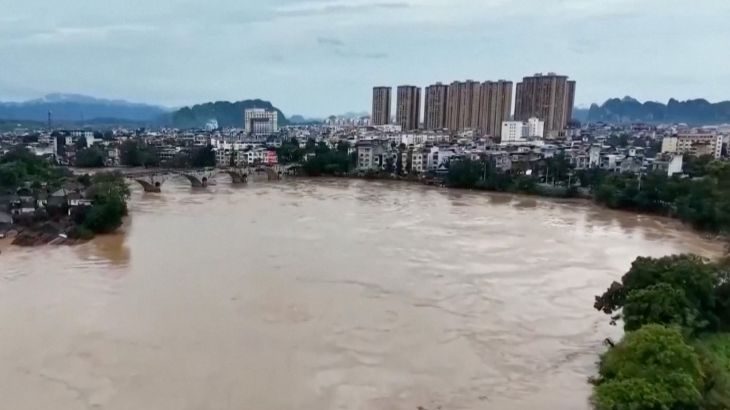
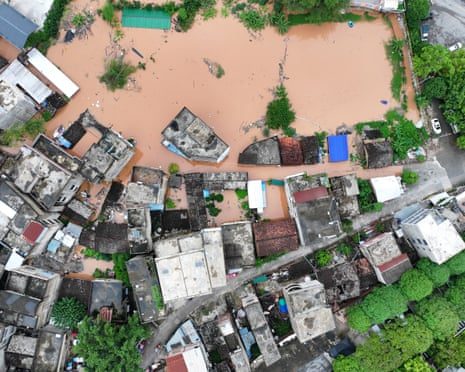
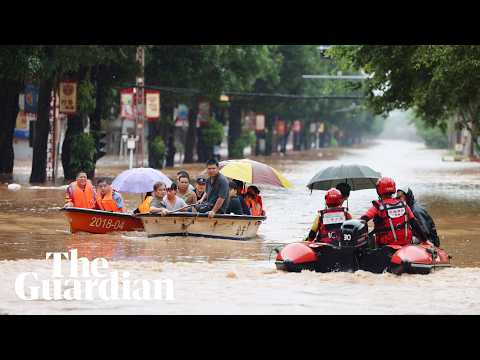
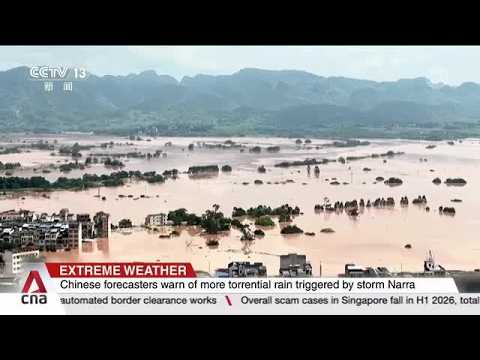
Water in Guangxi's Zuojiang river reached 108.87 meters on August 26, the highest level since 1955. Typhoon Narra's lingering rains pushed it 7.67 meters above flood stage and forced more than 54,000 people from their homes.

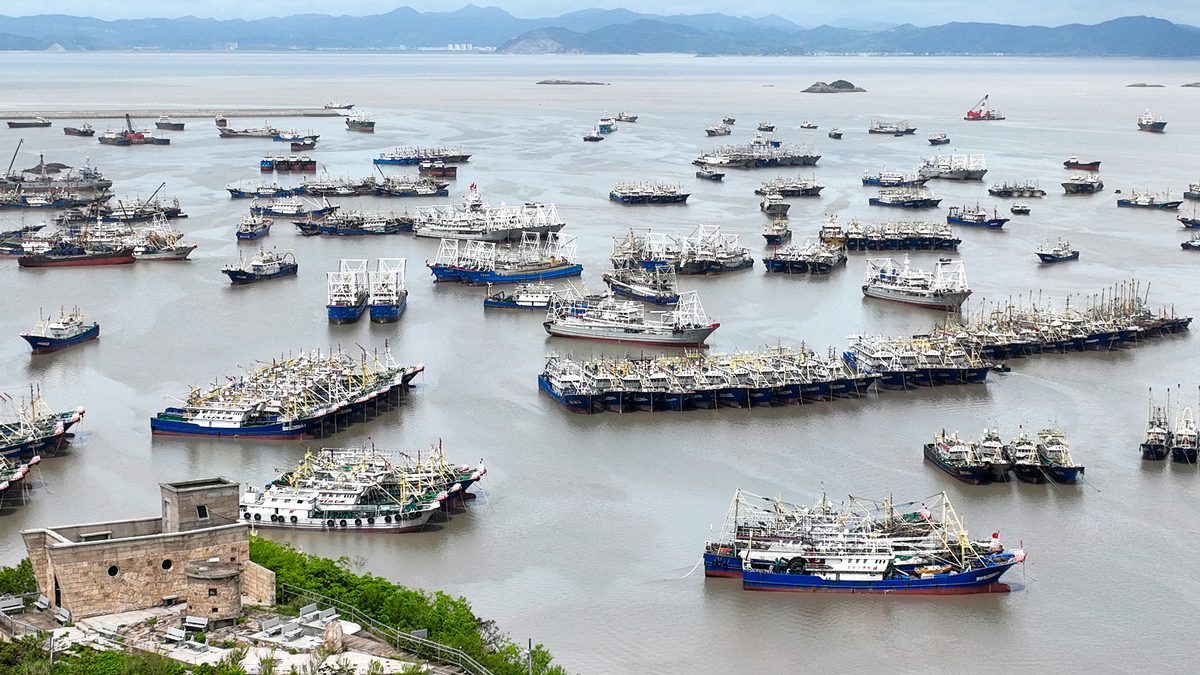
The flooding unfolded as a second storm, Typhoon Saudel, moved toward Zhejiang's coast, where authorities activated the highest-level emergency response. In Xizang, a barrier lake formed by a mudslide near Gyirong port holds about 2 million cubic meters of water and risks breaching. Three flood crises are converging across China at once.

Why it matters

Two typhoons and an unstable barrier lake are flooding three regions at once, testing flood defenses built in the decades since the 1998 Yangtze disaster.

Questions about this story

Free account needed to ask — your question is kept and asked for you right after sign-up. Answers are public.

No questions yet — be the first to ask.

Key Indicators

54,000+
Evacuated in Guangxi
People relocated after Typhoon Narra caused the region's worst flooding since 1955.
3M m³
Forecast inflow to Gyirong barrier lake
Cubic meters of water expected to flow into the lake over three days, per the Ministry of Water Resources, raising breach risk.
Level I
Zhejiang typhoon emergency response
Highest-level activation triggered ahead of Typhoon Saudel's expected landfall on August 28.
108.87m
Chongzuo river water level
Measured at 03:00 on August 26, 7.67 meters above flood warning stage, the highest since 1955.

Voices

Curated perspectives — historical figures and your fellow readers.

Ever wondered what historical figures would say about today's headlines?

Sign up to generate historical perspectives on this story.

Play

Exploring all sides of a story is often best achieved with Play.

Most of these play right now — no account needed. Sign up to save scores, keep a streak, and unlock Debate and Predict. Log in Sign Up
Predict 3 ways this could play out. Back the one you believe — contrarian picks score more when a scenario has a resolution date. Log in to play

People Involved

Organizations Involved

Timeline

6 events Latest: 5 days ago
Tap a bar to jump to that date
  1. Saudel landfall expected in Zhejiang or Fujian

    Latest Forecast

    Typhoon Saudel forecast to come ashore between Zhejiang's Sanmen county and Fujian's Xiapu county, packing winds up to 42 m/s.

  2. Orange flood alert; Level I response for Saudel; Xizang barrier lake risk

    Alert

    GDACS orange alert active. Zhejiang raises typhoon response to Level I ahead of Saudel. Ministry of Water Resources activates level-IV response for the Gyirong barrier lake.

  3. Chongzuo hits highest water level since 1955

    Measurement

    Narra makes landfall in Hainan. Chongzuo's Zuojiang river reaches 108.87 meters, 7.67 meters above flood stage. CMA upgrades to Level II response.

  4. Record levels at three hydrological stations

    Measurement

    Stations in Ningming and Longzhou counties record their highest flood levels on record. Xinhua reports 22,008 evacuated across Guangxi.

  5. Flood event flagged; rivers start rising

    Alert

    GDACS tracks a flood event in China as rain and upstream inflows saturate Guangxi's river basins.

  6. Heavy rain begins across Guangxi

    Weather

    Rainfall associated with Typhoon Zitan starts; Zhilang town in Ningming county records 618.2 mm over four days.

Historical Context

3 moments from history that rhyme with this story — and how they unfolded.

June-August 1998

1998 Yangtze River floods

The Yangtze, Songhua, and Nen rivers overflowed for months, killing more than 4,000 people and affecting 180 million. Floodwaters breached dikes in dozens of places, and the military deployed in force for sandbagging and evacuation.

Then

The government launched a massive dike reinforcement and resettlement program along major rivers.

Now

Spending on flood control infrastructure rose sharply, and river basin management shifted toward draining floodplains and strengthening reservoirs.

Why this matters now

Today's August 2026 flooding tests the infrastructure built after 1998. Guangxi's record levels and Zhejiang's pre-drained reservoirs reflect that era of investment.

August 2019

Typhoon Lekima (2019)

Lekima hit Zhejiang's Wenling coast as a severe typhoon, dumping record rainfall and triggering a landslide that killed dozens. More than a million people were evacuated before landfall.

Then

Zhejiang's pre-evacuation effort was widely credited with limiting casualties.

Now

The province refined its typhoon response playbook, including reservoir pre-release and fishing fleet sheltering.

Why this matters now

Lekima is the direct precedent for how Zhejiang prepares for Typhoon Saudel. The August 27 Level I activation and 14,682 vessels in harbor mirror the 2019 playbook.

July 2021

Zhengzhou metro flooding (2021)

A year's worth of rain fell on Zhengzhou in a single day. Floodwater poured into the metro system, killing 302 people, most inside a flooded subway line. The city's drainage and warning systems were overwhelmed within hours.

Then

China's cabinet launched a national review of urban flood defenses and weather warning thresholds.

Now

Cities upgraded drainage and early-warning systems, but extreme rainfall events continue to exceed design capacity.

Why this matters now

The 2021 disaster showed that even modern urban infrastructure fails under extraordinary rain. Guangxi and Zhejiang now face a similar test of whether defenses hold.

Sources

(11)