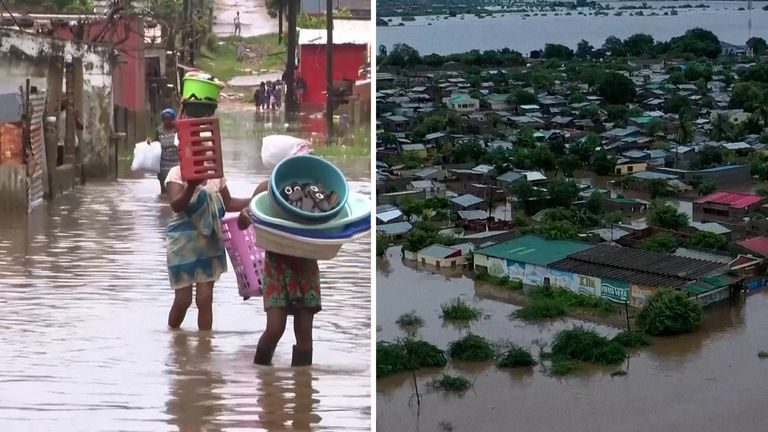
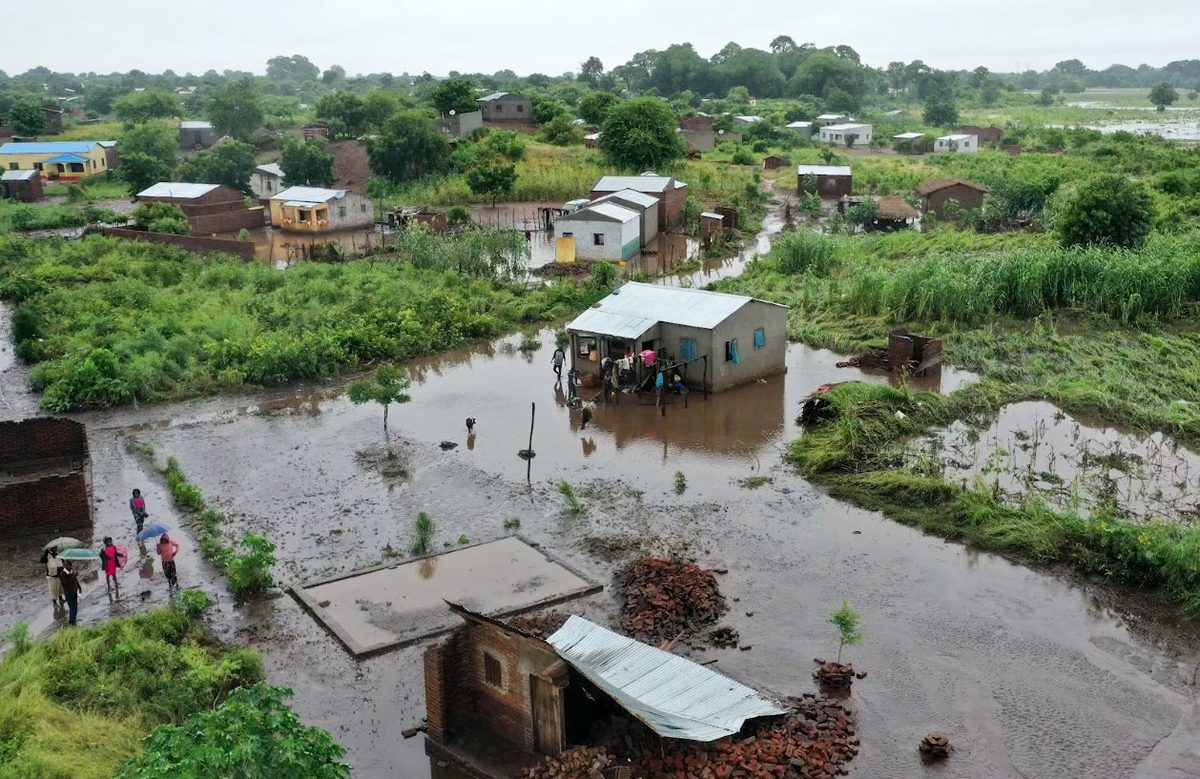
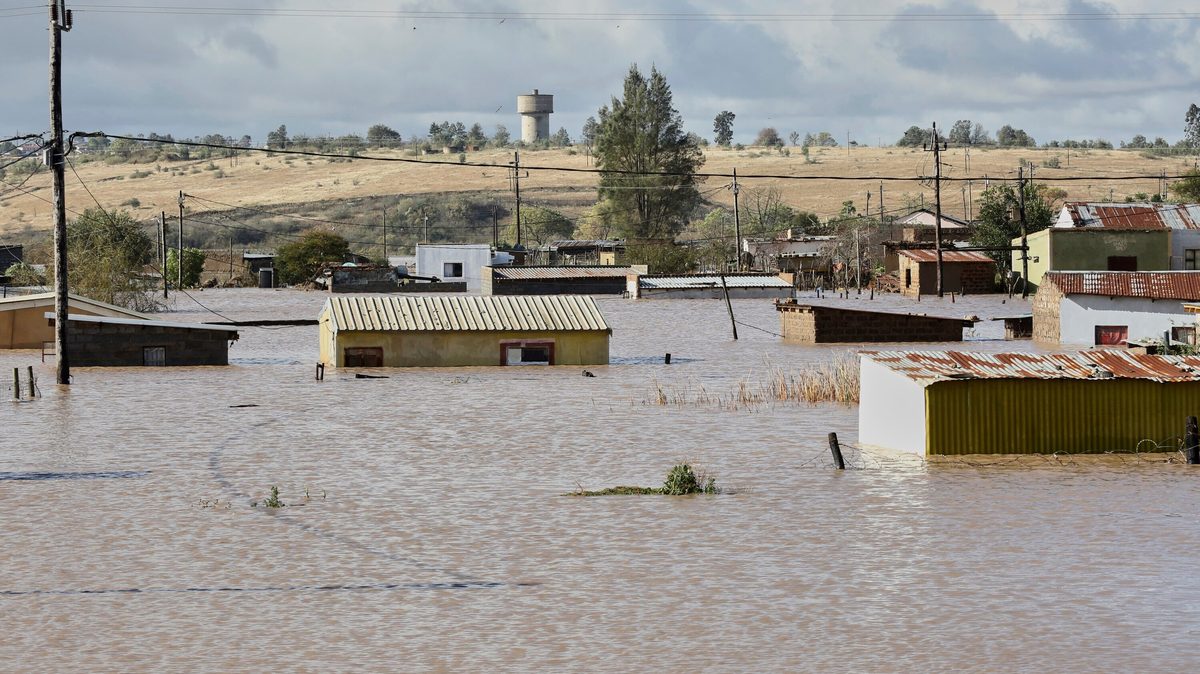
Torrential rains driven by La Niña have killed more than 200 people across Mozambique, South Africa, and Zimbabwe since late December 2025. South Africa declared a national disaster on January 18, 2026, after floods killed at least 37 in Limpopo, Mpumalanga, and other provinces, destroyed thousands of homes, and washed away roads and bridges.
President Ramaphosa conducted site visits to both Limpopo and Mpumalanga, warning that climate change is now forcing governments to prepare for annual disaster recovery.
The three-country crisis is the worst regional flooding since Cyclone Idai in 2019, with over 600,000 affected in Mozambique and 327,000 displaced in Gaza province alone—where 40% is submerged. Zimbabwe has recorded 70 deaths and extensive infrastructure collapse. Mozambican President Daniel Chapo canceled his World Economic Forum trip to manage the crisis, while South Africa's army deployed helicopters for rooftop rescues across flooded communities.
Questions about this story
Free account needed to ask — your question is kept and asked for you right after sign-up. Answers are public.
No questions yet — be the first to ask.
Key Indicators
200+
Regional death toll
Confirmed deaths across Mozambique (103-110), South Africa (38), and Zimbabwe (70)
610,000
People affected in Mozambique
Total affected across all provinces, with 327,000 displaced and 68,600 in evacuation centers
$240M
Limpopo damage estimate
Infrastructure damage in Limpopo province alone, with R1.7 billion needed for roads
40%
Gaza province submerged
Mozambique's Gaza province with 40% under floodwater, 15,000 households affected in Xai-Xai alone
20 events
Latest: January 21st, 2026 · 9 months ago
Showing 8 of 20
JK to step
Tap a bar to jump to that date
Jump to
January 2026
South Africa Death Toll Rises to 38
LatestCasualty Report
Fatalities increase to 38 across Limpopo (18 deaths) and Mpumalanga (20 deaths), with 6 people still missing in Limpopo. Total of 3,750 houses damaged across both provinces.
Xai-Xai Compulsory Evacuation Ordered
Emergency
Authorities order compulsory evacuation of 15,000 households in Xai-Xai's flood-prone areas as Limpopo River bursts banks. Police mobilized to forcibly remove residents refusing to leave; only 100 of 200 targeted families evacuated so far.
UNICEF Warns of Waterborne Disease Threat
Humanitarian
UNICEF issues urgent warning that contaminated water and disrupted sanitation are creating deadly disease outbreak conditions. Cholera and typhoid cases already detected, particularly among children in overcrowded evacuation centers.
Ramaphosa Visits Mpumalanga; Death Toll Rises to 37
Government
President Ramaphosa conducts second site visit to Nkomazi Local Municipality in Mpumalanga. National death toll revised upward to at least 37 across affected provinces.
Mozambique: 327,000 Displaced in Gaza Province Alone
Humanitarian
Gaza province governor reports 327,000 people displaced into temporary shelters with 40% of province submerged. Total affected across Gaza and Maputo provinces reaches 600,000.
Government reports 152 kilometers of roads completely destroyed and over 3,000 kilometers damaged. Recovery costs estimated at hundreds of millions of dollars.
President Chapo Cancels Davos Trip
Government
Mozambican President Daniel Chapo cancels World Economic Forum attendance to manage flood crisis. Countrywide red alert remains in effect.
Ramaphosa Links Crisis to Climate Finance Needs
Policy
President Ramaphosa emphasizes climate change is now evident, stating Global South countries need annual climate finance for disaster recovery.
INGD Warns Floods May Exceed 2000 Catastrophe
Assessment
National disaster agency vice-president Gabriel Monteiro warns current flooding could surpass historic 2000 floods in scope, affecting more provinces. Total affected reaches 610,000 people with 68,600 in 77 evacuation centers.
Save the Children Launches Emergency Response
Humanitarian
International aid organization describes flooding as 'pushing already exhausted communities further into crisis,' with over 513,000 affected including more than half children. Warns of approaching cyclone season creating double crisis risk.
South Africa Declares National Disaster
Government
National Disaster Management Centre formally declares national disaster, enabling coordinated response across affected provinces.
Minister Hlabisa Visits Mpumalanga
Government
COGTA Minister assesses damage to roads and bridges; Mpumalanga government estimates R2.1 billion needed for infrastructure repairs.
Regional Death Toll Exceeds 100
Casualty Report
Combined fatalities across Mozambique (103), South Africa (30+), and Zimbabwe (70) surpass 200 as flooding intensifies.
Red Level 10 Alert Issued; Kruger Park Evacuated
Emergency
South African Weather Service issues highest alert level. SANParks evacuates 600 tourists and staff from flooded Kruger National Park camps by helicopter.
President Ramaphosa Tours Flood-Stricken Limpopo
Government
Ramaphosa visits affected areas, describes damage as 'catastrophic,' and warns against corruption in relief fund distribution.
SANDF Deploys Helicopters for Limpopo Rescues
Response
South African National Defence Force begins helicopter operations to rescue residents trapped on rooftops and in trees in northern provinces.
Two Dams Breach in Zimbabwe's Zaka District
Infrastructure
Dam failures in Masvingo province destroy bridges and fields. Birchenough Bridge on Save River later closed due to compromised supports.
Satellite Analysis Confirms 870 km² Flooded in Sofala
Assessment
UNOSAT satellite imagery shows extensive flooding across Mozambique's Sofala province, with inundated area expanding by 100 km² since late December.
December 2025
Heavy Rains Begin Across Mozambique
Weather
Sustained rainfall affects six Mozambique provinces. Over the following two weeks, 75,000+ people are affected and 21 deaths reported.
September 2025
La Niña Conditions Emerge
Climate
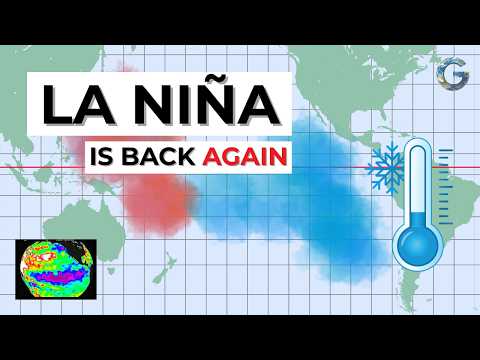
US Climate Prediction Center confirms La Niña formation, raising forecasts for above-normal rainfall across southern Africa through early 2026.
Scenarios
1
Flooding Persists Through February as La Niña Continues
Likely
Discussed by: South African Weather Service, Mozambique Meteorological Service
Weather services warn that saturated soils and high river levels maintain elevated flood risk through February. La Niña conditions are expected to persist into early 2026 before weakening. Additional rainfall could trigger renewed flooding in already-damaged areas, particularly in low-lying communities along major river systems. Death tolls and displacement figures could rise substantially.
2
Cholera Outbreak Spreads Across Flood-Affected Areas
Possible
Discussed by: Mozambique Institute for Disaster Management and Risk Reduction, WHO
Contaminated wells and boreholes, combined with livestock carcasses in floodwaters, create conditions for waterborne disease outbreaks. Mozambique has already recorded cholera deaths among its flood fatalities. If clean water distribution and sanitation measures fail to reach displaced populations quickly, a regional cholera emergency could compound the flooding crisis.
3
Food Security Crisis Emerges as Crop Losses Mount
Possible
Discussed by: World Food Programme, US Famine Early Warning System
With 70,000+ hectares of cropland destroyed in Mozambique alone and seed stocks washed away, the region faces potential food shortages through mid-2026. The WFP has already warned of insufficient stocks and funding. If agricultural recovery is slow and international aid insufficient, millions dependent on subsistence farming could face acute food insecurity.
4
Rains Subside, Recovery and Reconstruction Begin
Possible
Discussed by: South African government, regional disaster management agencies
La Niña weakens as forecast, rainfall normalizes by late January or February, and flood waters recede. Governments and international agencies shift focus to reconstruction of damaged infrastructure, with South Africa alone facing over $500 million in repair costs across Limpopo and Mpumalanga. Recovery efforts face scrutiny over corruption concerns raised by President Ramaphosa.
5
2026 Flooding Surpasses 2000 Catastrophe as Cyclones Hit
Possible
Discussed by: INGD Vice-President Gabriel Monteiro, Save the Children, UNICEF
INGD warns the current flooding already affects more provinces than the catastrophic 2000 floods. With cyclone season beginning and the Limpopo River system still in full flood, incoming tropical systems could compound the disaster. If cyclones strike before flood waters recede, the combined impact could create Mozambique's worst natural disaster on record, potentially affecting over one million people.
6
Cholera Epidemic Spreads Through Evacuation Centers
Likely
Discussed by: UNICEF, UN health agencies, Mozambique health authorities
With 68,600 people in 77 overcrowded evacuation centers, contaminated water sources, and disrupted sanitation systems, conditions are optimal for rapid cholera transmission. UNICEF reports cases already detected. If the outbreak spreads unchecked through displacement camps—as occurred after Cyclone Idai and Freddy—it could kill hundreds and overwhelm health systems already managing flood casualties.
Historical Context
3 moments from history that rhyme with this story — and how they unfolded.
1 of 3
March 2019
Cyclone Idai (2019)
Tropical Cyclone Idai made landfall on Mozambique's coast on March 14, 2019, bringing sustained winds of 175 km/h and torrential rainfall. The storm devastated Beira, Mozambique's fourth-largest city, before moving inland to affect Zimbabwe and Malawi. Over 1,300 people died across the three countries, with 3 million affected and economic losses exceeding $2 billion.
Then
Massive international humanitarian response mobilized. Cholera outbreak affected over 6,000 people in Mozambique. Hundreds of thousands displaced into temporary camps.
Now
Idai became the deadliest tropical cyclone recorded in the Southwest Indian Ocean. The disaster prompted increased investment in early warning systems and regional disaster coordination, though infrastructure vulnerabilities remain.
Why this matters now
Like 2019, the current crisis spans Mozambique, Zimbabwe, and South Africa simultaneously, overwhelming regional response capacity. The cholera risk emerging now echoes Idai's aftermath. The 2026 floods, while not cyclone-driven, are producing comparable regional impacts.
2 of 3
April 2022
KwaZulu-Natal Floods (2022)
A cut-off low-pressure system stalled over South Africa's east coast, dropping over 450mm of rain on KwaZulu-Natal in three days. The floods killed 436 people—South Africa's deadliest on record—destroyed 4,000 homes, and caused R5.6 billion in road damage. Durban's water system was 80% disabled, and 600 schools closed.
Then
President Ramaphosa declared a national disaster and visited affected areas. Criticism emerged over slow government response and vulnerability of informal settlements built in flood-prone areas.
Now
The disaster exposed chronic underinvestment in drainage infrastructure and building standards. Some affected communities remain in temporary housing. The floods became a reference point for climate adaptation discussions in South Africa.
Why this matters now
The 2026 response mirrors 2022: presidential visit, national disaster declaration, and warnings about corruption in relief funds. Both events highlight how informal settlements and poor infrastructure amplify flood impacts. The 2022 experience shapes current expectations for government accountability.
3 of 3
February-March 2000
2000 Mozambique Floods
Five weeks of rain followed by Cyclone Eline caused catastrophic flooding along Mozambique's Limpopo and Save rivers. An estimated 700 people died, 650,000 were displaced, and 140,000 hectares of cropland destroyed. The image of a woman giving birth in a tree during helicopter rescue became internationally iconic.
Then
International aid totaled $450 million. The disaster prompted the creation of new early warning systems and disaster management institutions in Mozambique.
Now
The floods accelerated infrastructure investment in flood-prone areas and established templates for regional disaster response that remain in use today.
Why this matters now
The current floods again affect the Limpopo basin and share the same La Niña-enhanced rainfall pattern. Helicopter rescues of stranded residents echo the iconic 2000 images. Twenty-six years later, many of the same communities remain vulnerable to the same river systems.