



Pull to refresh
Logo
Geothermal drying unit opens in Arunachal Pradesh's Dirang

Geothermal drying unit opens in Arunachal Pradesh's Dirang

Built World

A trilateral India-Norway-Iceland pilot uses well heat, not electricity, to dry kiwi, apple, persimmon and yak meat

Overview

Updated 1 hour ago

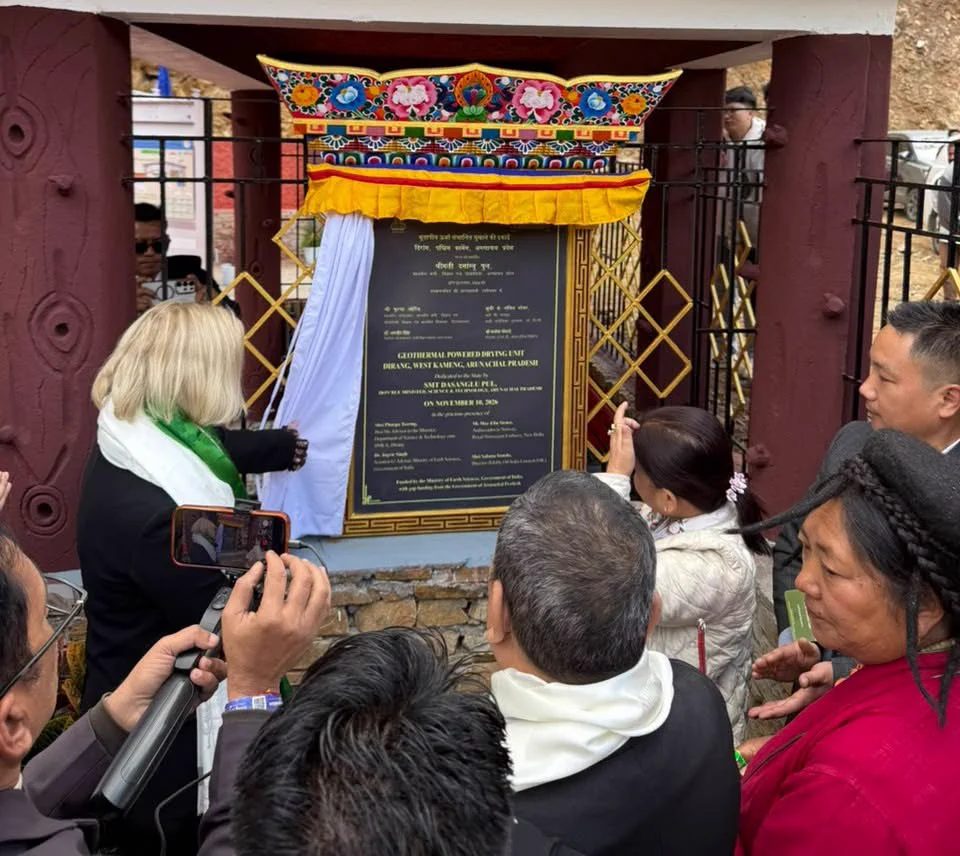
On 10 November 2026, officials opened a geothermal-heated drying facility at Dirang in West Kameng district, Arunachal Pradesh. The unit runs on the natural temperature and flow of a geothermal well drilled nearby, with no electricity needed to dry kiwi, apple, persimmon and yak meat.

It is the first geothermal-powered drying unit in Northeast India, and the visible end of a chain that began with a pumping test on the same site a year earlier. The question now is whether one pilot becomes a template for the eastern Himalayas or stays a single demonstration.

Why it matters

If it replicates, Himalayan farmers get a post-harvest tool that runs without grid power or fuel.

Questions about this story

Free account needed to ask — your question is kept and asked for you right after sign-up. Answers are public.

No questions yet — be the first to ask.

Key Indicators

1
Geothermal drying units in Northeast India
The Dirang facility is described as the region's first.
3
Countries in the collaboration
India, Norway and Iceland partnered on the project.
4
Product types named for drying
Kiwi, apple, persimmon and yak meat were listed at the inauguration.

Voices

Curated perspectives — historical figures and your fellow readers.

Sign up to generate historical perspectives on this story.

People Involved

Organizations Involved

Timeline

November 2025 November 2026

4 events Latest: Today
Tap a bar to jump to that date
  1. Geothermal drying facility inaugurated at Dirang

    Today Inauguration

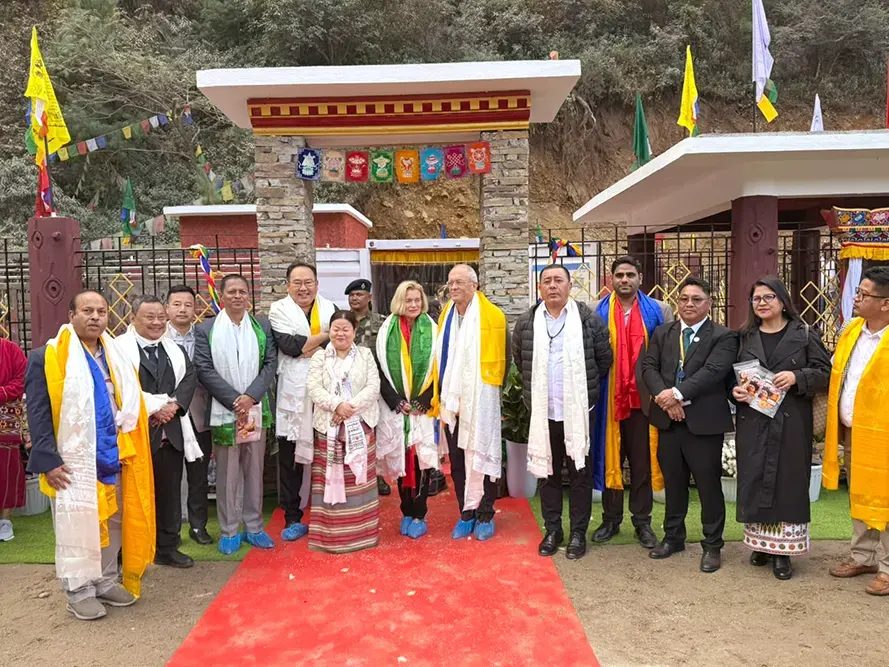
    Minister Dasanglu Pul and Norwegian Ambassador May-Elin Stener opened the unit, which will dry kiwi, apple, persimmon and yak meat.

  2. Deccan Herald reports unit set to open for farmers

    Media

    Reporting described the Dirang unit as the Northeast's first geothermal-powered drying facility, published amid protests over mega dams.

  3. Drying unit completes installation and performance testing

    Commissioning

    CESHS finished testing a unit that runs on the well's natural temperature and flow, with no electricity.

  4. Pumping test begins on Northeast India's first geothermal well

    Testing

    CESHS, supervised by NGI and Geotropy, started testing whether the Dirang reservoir could sustain production for heating, spas and agro-processing.

Scenarios

1

Arunachal Pradesh commissions a second geothermal direct-use unit

Possible Resolves by Q1 2028

Discussed by: State officials and project partners, who described the Dirang unit as a step toward wider adoption

The pilot's performance data gives CESHS and the state science and technology department a case for a second site. Trigger: sustained well output through a full harvest season plus state budget allocation. The unit would likely be another agro-processing facility rather than a power plant, since the well's heat supports drying and heating directly.

2

Dirang unit stalls as a one-off demonstration

Possible Resolves by Q1 2028

Discussed by: Skeptics of Himalayan geothermal development, who note the region's long history of unexploited surveys

The facility keeps operating at pilot scale but no replication follows. Triggers would be a well that declines in output, drying capacity too small for local harvest volumes, or the end of Norwegian and Icelandic technical support without a domestic replacement. The unit would remain a training site rather than an industry.

3

Geothermal heat extends to building heating and spa tourism at Dirang

Unlikely Resolves by Q2 2029

Discussed by: CESHS and project partners, who listed ground source heat pumps and hot spring spas as candidate uses

The same well that feeds the dryer could heat buildings or supply a spa. That requires different infrastructure and a commercial operator, so it is a slower path than another drying unit. Success would make Dirang a multi-use geothermal site rather than a single agricultural facility.

Historical Context

2 moments from history that rhyme with this story — and how they unfolded.

1930s

Reykjavik geothermal district heating (1930 onward)

Iceland began piping geothermal hot water into Reykjavik homes in the 1930s, replacing coal. The system expanded from a single well into a citywide network, and geothermal heat now supplies most Icelandic homes.

Then

Household heating costs fell and coal imports dropped.

Now

Iceland built technical expertise in direct-use geothermal that it now exports, including to the Dirang project through Geotropy.

Why this matters now

Dirang is a direct-use project, not a power plant. Iceland's path shows how a single well can become a heating system, and how that expertise becomes an export.

1976

Svartsengi Resource Park, Iceland (1976 onward)

Iceland built a facility that cascades geothermal energy through multiple uses: district heating, a lagoon, and industrial processes. The Blue Lagoon grew out of the plant's discharge water.

Then

One resource supported heating, tourism and industry at once.

Now

Cascaded use became a model for squeezing more value from a single geothermal well.

Why this matters now

The Dirang well could follow the same logic, moving from drying produce to heating buildings or supplying a spa.

Sources

(6)