
Pull to refresh
Logo
New Mexico funds four geothermal exploration projects

New Mexico funds four geothermal exploration projects

Built World

State awards $17.3 million to tribal, university, and test-drilling efforts

Today: State awards $17.3 million in geothermal grants

Overview

Updated 1 hour ago

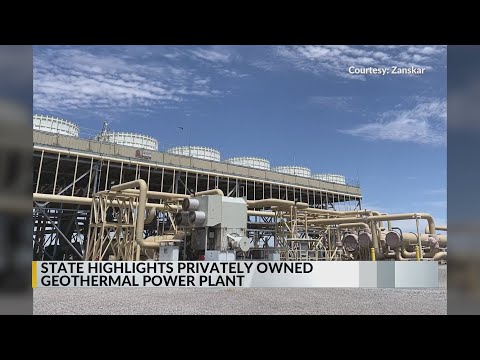
New Mexico has one operating geothermal power plant. State officials just spent $17.3 million to find out where the next ones could go.

The grants fund four projects: a tribal feasibility study, two university research efforts, and a $10 million test well in Socorro County. They're the first major payouts from a state fund created in 2025 to push geothermal beyond its current single-plant footprint.

Why it matters

If test wells confirm New Mexico's geothermal potential, the state could add always-on clean power to a grid that now runs on one plant.

Questions about this story

Free account needed to ask — your question is kept and asked for you right after sign-up. Answers are public.

No questions yet — be the first to ask.

Key Indicators

$17.3M
Total state geothermal grants
Awarded to four projects across New Mexico in October 2026.
4
Projects funded
Two tribal entities and two universities received grants.
$10M
Largest single grant
New Mexico Tech's stratigraphic test well in Socorro County.
1
Operating geothermal plants in state
Lightning Dock, operated by Zanskar near Cotton City.

Voices

Curated perspectives — historical figures and your fellow readers.

Ever wondered what historical figures would say about today's headlines?

Sign up to generate historical perspectives on this story.

People Involved

Organizations Involved

Timeline

2025 October 2026

3 events Latest: Today
  1. State awards $17.3 million in geothermal grants

    Today Funding

    EMNRD awards grants to Jicarilla Apache Nation, New Mexico State University, New Mexico Tech, and San Ildefonso Pueblo.

  2. Legislature expands geothermal fund

    Legislation

    House Bill 91 passes, expanding the fund's grant authority for geothermal development projects.

  3. New Mexico creates geothermal development fund

    Legislation

    HB289 passes, creating the Geothermal Projects Development Fund with $20 million and authorizing study and project grants.

Scenarios

1

New Mexico's second geothermal plant enters planning

Possible Resolves by End of 2027

Discussed by: ThinkGeoEnergy, state energy officials

The $10 million test well in Socorro County and the Jicarilla feasibility study confirm viable geothermal resources. EMNRD uses the data to support a commercial development, and a second utility-scale plant enters planning.

2

Exploration finds no viable resource, geothermal push stalls

Unlikely Resolves by End of 2027

Discussed by: Geothermal industry analysts

The test well and feasibility studies find insufficient heat or permeability. The state's geothermal push stalls, and the fund's remaining money goes to smaller studies rather than development.

3

Federal and state funding combine for a larger buildout

Likely Resolves by End of 2027

Discussed by: U.S. Department of Energy, San Ildefonso Pueblo officials

DOE's $99 million enhanced geothermal program and the state grants overlap in New Mexico. San Ildefonso Pueblo and Zanskar's Lightning Dock work advance in parallel, creating multiple development tracks.

Historical Context

3 moments from history that rhyme with this story — and how they unfolded.

1960

The Geysers, California (1960)

The first commercial geothermal power plant in the United States opened at The Geysers in California's Mayacamas Mountains. The field grew to become the world's largest geothermal complex, peaking at about 2,000 megawatts of capacity.

Then

The Geysers proved geothermal power could work at utility scale in the US.

Now

It anchored California's geothermal industry and remains the largest geothermal field in the world.

Why this matters now

Shows how a single successful field can anchor a regional geothermal industry, the model New Mexico is trying to replicate.

1970s-2000s

Iceland's geothermal transition (1970s-2000s)

After the 1970s oil shocks, Iceland invested heavily in geothermal district heating and power generation. The country drilled wells, built plants, and connected homes to geothermal heat.

Then

Iceland cut its oil dependence for heating within two decades.

Now

Geothermal now provides about 25% of Iceland's electricity and roughly 90% of home heating.

Why this matters now

Demonstrates how sustained public investment can transform a region's energy mix, the path New Mexico's fund is designed to follow.

2023

Fervo Energy Utah (2023)

Fervo Energy demonstrated commercial-scale enhanced geothermal in Utah, drilling horizontal wells and fracturing hot rock to create a reservoir. The project powered Google data centers.

Then

Proved enhanced geothermal could work outside natural hot springs.

Now

Opened the door for geothermal in regions without traditional hydrothermal resources.

Why this matters now

Modern enhanced geothermal techniques could make New Mexico's less-conventional resources viable, expanding what the state's test wells might find.

Sources

(10)