



Pull to refresh
Logo
GitHub Copilot can now migrate .NET apps to Windows on Arm

GitHub Copilot can now migrate .NET apps to Windows on Arm

New Capabilities

Microsoft's upgrade agent finds x64 assumptions and rewrites them for Arm64, but runtime testing still falls to developers

Overview

Updated 1 hour ago

Windows on Arm has run x86 software through emulation since 2017. The compromise works, but it costs battery life and speed, and native Arm64 apps remain scarce. On November 5, 2026, Microsoft added a way to automate the slowest part of fixing that: finding every place a.NET codebase assumes Intel.

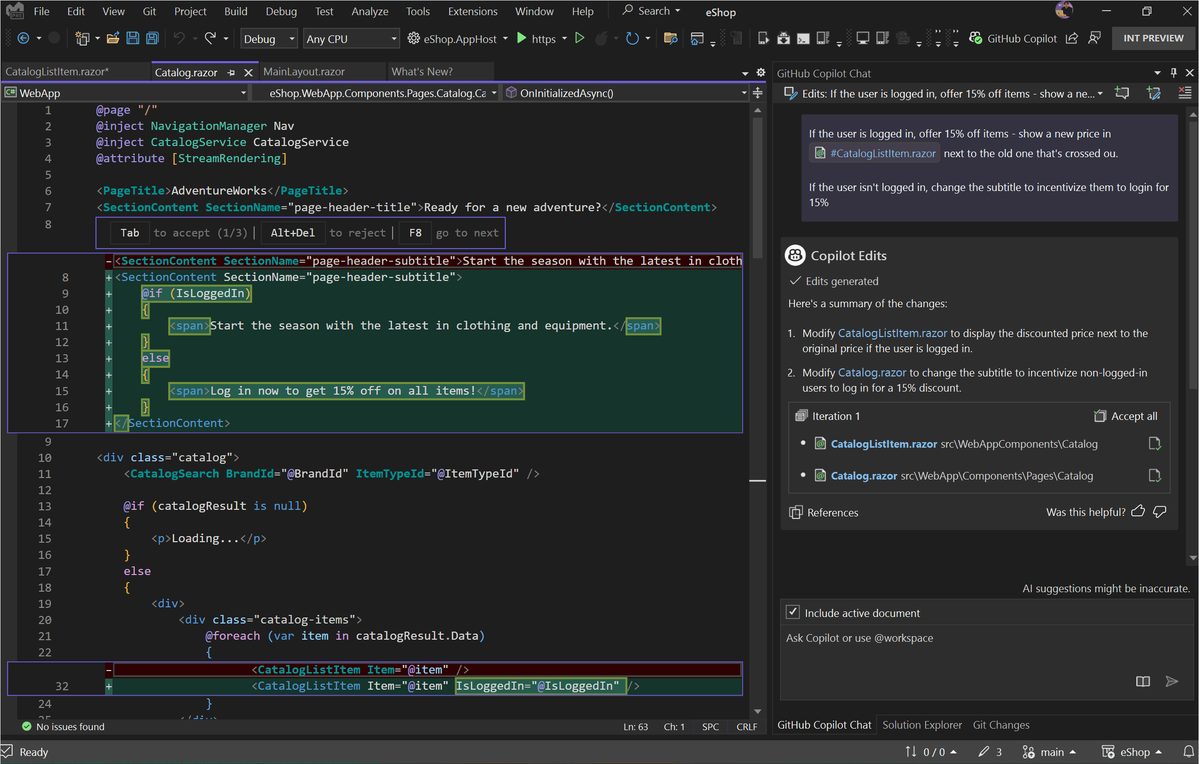
The GitHub Copilot upgrade agent now assesses.NET projects for Arm64 compatibility, writes a migration plan, and edits project files, package references, and source code. It can build for win-arm64. It cannot prove the app runs correctly. That still needs Arm64 hardware or continuous-integration runners.

Why it matters

The bottleneck in Arm Windows adoption is not chips. It is the unglamorous work of finding hidden x64 assumptions in millions of lines of .NET.

Questions about this story

Free account needed to ask — your question is kept and asked for you right after sign-up. Answers are public.

No questions yet — be the first to ask.

Key Indicators

4
Arm64 surfaces the agent scans
Project files, NuGet native assets, source code, and infrastructure.
4
Target runtime identifiers supported
win-arm64, linux-arm64, linux-musl-arm64, and osx-arm64.

Voices

Curated perspectives — historical figures and your fellow readers.

Sign up to generate historical perspectives on this story.

People Involved

Organizations Involved

Timeline

May 2024 November 2026

3 events Latest: Yesterday
  1. Coverage describes the agent's limits

    Latest Announcement

    Reports describe agent assessment, planning, code edits, and Arm64 builds, plus the need for runtime testing.

  2. Arm64 migration scenario goes public

    Product

    Microsoft publishes the Arm64 migration scenario for its Copilot upgrade agent.

  3. Microsoft launches Copilot+ PCs

    Product launch

    Microsoft announces Copilot+ PCs, putting Arm64 Windows laptops in front of mainstream buyers.

Scenarios

1

Arm64 migration becomes a standard Copilot upgrade path

Likely Resolves by Q2 2027

Discussed by: Microsoft .NET team and GitHub Copilot upgrade agent documentation

Microsoft ships the Arm64 scenario broadly, and enterprises start treating it as the first step in a Windows refresh. The trigger is general availability plus Arm64 CI runners in GitHub Actions. If that happens, the agent moves from a documented scenario to a default part of.NET maintenance.

2

Native Arm64 .NET apps stay a minority on Windows

Possible Resolves by End of 2027

Discussed by: Microsoft adoption reporting and Arm ecosystem analysts

Emulation is good enough for many line-of-business apps, so teams migrate only when performance or vendor support forces them. The agent lowers the cost of migrating but does not create demand. In this path, Arm64 Windows remains a secondary target for.NET developers.

3

Microsoft extends agent-assisted migration beyond .NET

Possible Resolves by End of 2027

Discussed by: Microsoft .NET and developer tools teams

If the.NET scenario works, Microsoft applies the same assessment-and-rewrite loop to C++ or other runtimes with native dependencies. That would widen the tool's role in Windows on Arm and make architecture migration a general Copilot function rather than a.NET feature.

Historical Context

3 moments from history that rhyme with this story — and how they unfolded.

October 2012

Windows RT (2012)

Microsoft shipped Windows RT on Arm chips, starting with the Surface RT. The operating system ran only Windows Store apps. There was no x86 emulation, so developers had to rebuild for Arm, and few did.

Then

The device sold poorly and Microsoft took a large writedown.

Now

Windows RT became the cautionary example of an Arm Windows platform without an app bridge.

Why this matters now

The new agent attacks the same problem, too few native Arm apps, with tooling instead of a clean-slate operating system.

June–November 2020

Apple Silicon and Rosetta 2 (2020)

Apple announced a move from Intel to its own Arm-based chips at its June 2020 developer conference and shipped the first M1 Macs in November. Rosetta 2 translated existing x86 software, and Apple gave developers a transition kit.

Then

Most major Mac apps shipped native Arm versions within a year.

Now

The transition became the reference model for swapping a CPU architecture without stranding users.

Why this matters now

Microsoft is chasing the same outcome on Windows, but without Apple's control over both the hardware and the full app ecosystem.

2017

Windows 10 on Arm (2017)

Microsoft and Qualcomm brought full Windows to Arm laptops with x86 emulation built in. Devices such as the Asus NovaGo and HP Envy x2 ran existing Windows software, slowly.

Then

The devices were niche, limited by performance and app compatibility.

Now

Emulation kept Arm Windows usable but gave developers little reason to compile natively.

Why this matters now

The new tool targets exactly that gap: reducing reliance on emulation by making native builds cheaper to produce.

Sources

(7)