



Pull to refresh
Logo
Ghana Gold Board makes XRF testing definitive for gold purity

Ghana Gold Board makes XRF testing definitive for gold purity

Rule Changes

New assay rules take effect October 1, replacing the water density method with X-ray fluorescence as the basis for pricing and payment.

Today: New assay regime takes effect

Overview

Updated 1 hour ago

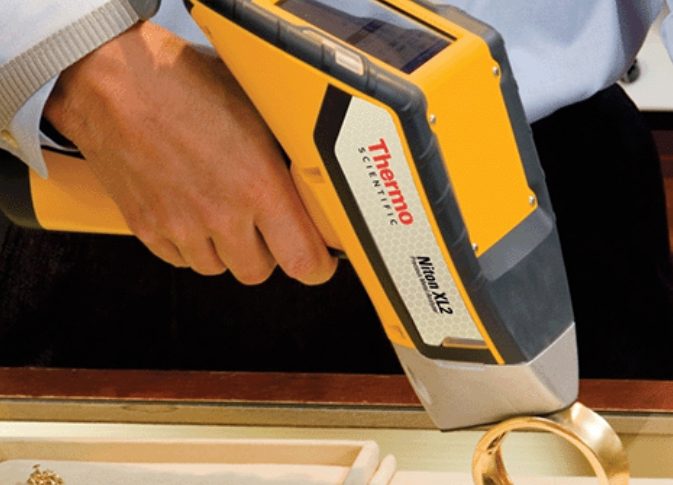
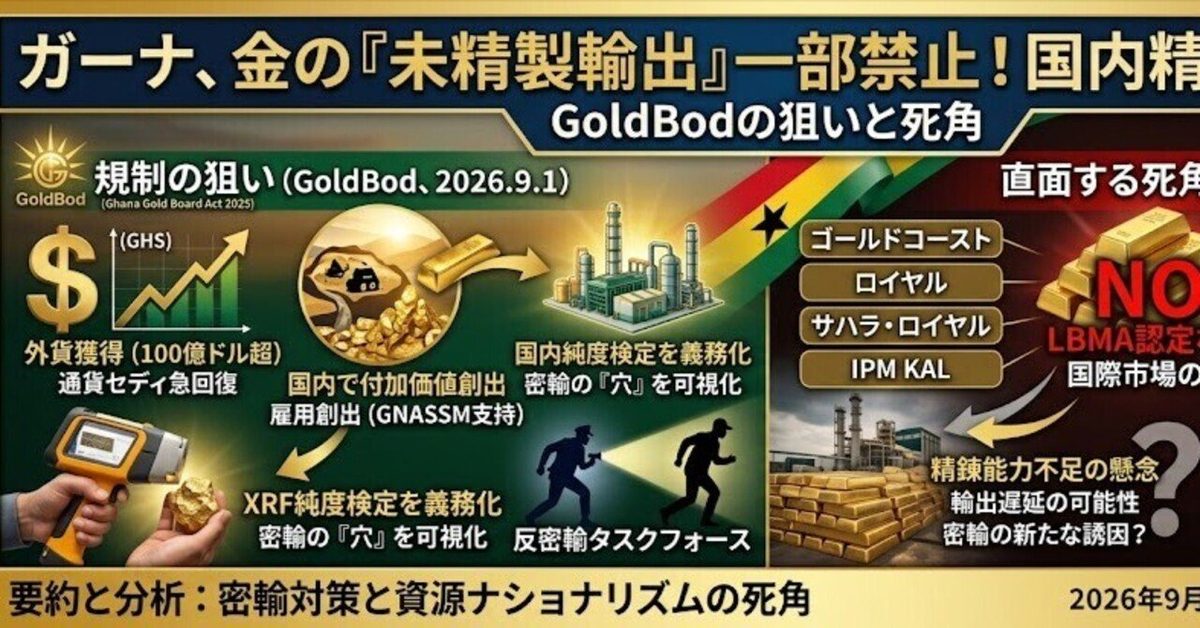
Starting today, the Ghana Gold Board (GoldBod) uses X-ray fluorescence (XRF) testing as the definitive method for determining gold purity. The water density method, long the default, now serves only as an indicative assessment and can no longer determine pricing or payment.

Where water density is still used, gold is bought at a 0.7 percent purity discount. Non-compliance is a licence breach under the Ghana Gold Board Act, 2025 (Act 1140), giving the new regime legal teeth.

Why it matters

If this sticks, Ghana's gold trade shifts from a cheap, easily-manipulated purity test to a precise one, affecting every small-scale miner and licensed buyer's payment.

Questions about this story

Free account needed to ask — your question is kept and asked for you right after sign-up. Answers are public.

No questions yet — be the first to ask.

Key Indicators

0.7%
Purity discount when water density method is used
Applied to the purity reading when XRF is unavailable or parties elect water density.
±0.1%
Permissible purity differential between successive XRF reports
Exceeds this tolerance, transaction requires further verification.
Act 1140
Legal basis for enforcement
Ghana Gold Board Act, 2025, under which non-compliance is a licence breach.

Voices

Curated perspectives — historical figures and your fellow readers.

Ever wondered what historical figures would say about today's headlines?

Sign up to generate historical perspectives on this story.

People Involved

Organizations Involved

Timeline

December 2025 October 2026

4 events Latest: Today
Tap a bar to jump to that date
  1. New assay regime takes effect

    Today Regulation

    XRF becomes definitive for purity, pricing, and payment; water density is now indicative only.

  2. GoldBod revises assay regime figures

    Regulation

    Compliance notice changes discount to 0.7% and tolerance to ±0.1%, effective October 1.

  3. GoldBod issues XRF compliance notice

    Regulation

    Initial notice makes XRF mandatory from September 1, with 0.5% discount and ±0.05% tolerance.

  4. Ghana Gold Board Act takes effect

    Legislation

    Act 1140 establishes the legal framework for GoldBod's regulatory authority.

Scenarios

1

XRF regime runs smoothly, fraud drops

Likely Resolves by Jan 1, 2027

Discussed by: GoldBod and industry analysts

Licensed buyers secure XRF equipment, wait times and payment disputes decrease, and purity determination becomes more consistent. The 0.7% discount discourages water density use, pushing the market toward XRF adoption.

2

Small-scale miners resist, supply disruptions

Possible Resolves by Mar 1, 2027

Discussed by: The Vaultz News and industry observers

Small-scale miners, used to water density testing, push back against perceived lower payments or the cost of XRF. This could lead to slower purchasing or informal channels, reducing formal sector volumes.

3

Enforcement actions against non-compliant buyers

Likely Resolves by Jun 1, 2027

Discussed by: Legal analysts

GoldBod takes regulatory action against licensed buyers who fail to comply, leveraging Act 1140. This could involve fines, licence suspension, or other penalties, signaling the regime's enforcement strength.

Historical Context

One moment from history that rhymes with this story — and how it unfolded.

2010s-2020s

Ghana's gold sector informality challenges

Ghana's gold sector has had issues with informality, weak controls, and inconsistent valuation. The water density method, though inexpensive, was highly susceptible to error and manipulation, including introduction of tungsten cores.

Then

Systemic mispricing and revenue leakage for aggregators and state reserves.

Now

Led to the creation of GoldBod and the push for precise, tamper-resistant testing methods.

Why this matters now

The XRF mandate is a direct response to these long-standing vulnerabilities, aiming to bring structure and accountability.

Sources

(6)