Anchor

Dutch central bank moves 86 tonnes of gold out of US and Canada citing geopolitical unrest
Money MovesDe Nederlandsche Bank shifts the reserves to London, where gold trades fastest in a crisis
3 days ago: DNB announces relocationNew here? Follow stories to track developments over time. Create a free account to get updates when stories you care about change.
Overview
Updated 1 hour agoFor decades, European central banks stored gold in New York because it was safest there. The Dutch central bank just moved 86 tonnes of it out, citing 'increasing geopolitical unrest.'
The transfer, worth roughly $11 billion, ran from March to August 2026 and ended with the gold at the Bank of England. Bullion there meets modern trading standards and can be sold fastest in an emergency. The move cuts Dutch reliance on US and Canadian vaults sharply.
Why it matters
Central banks hold gold in U.S. vaults on trust. A NATO ally just pulled $11 billion out, and that trust is visibly eroding.
Questions about this story
Free account needed to ask — your question is kept and asked for you right after sign-up. Answers are public.
No questions yet — be the first to ask.
Key Indicators
86 tonnes
Gold moved from North America
Relocated from New York and Ottawa to London between March and August 2026.
$83.6B
Total value of Dutch gold reserves
612.4 tonnes, valued by DNB at the end of 2025.
32.1%
Dutch gold held in London after move
Up from 18.1%; London is now the largest foreign holding after the Netherlands itself.
18.5%
Dutch gold remaining in New York
Down from 31.3% before the transfer; Ottawa also now holds 18.5%.
Related Media
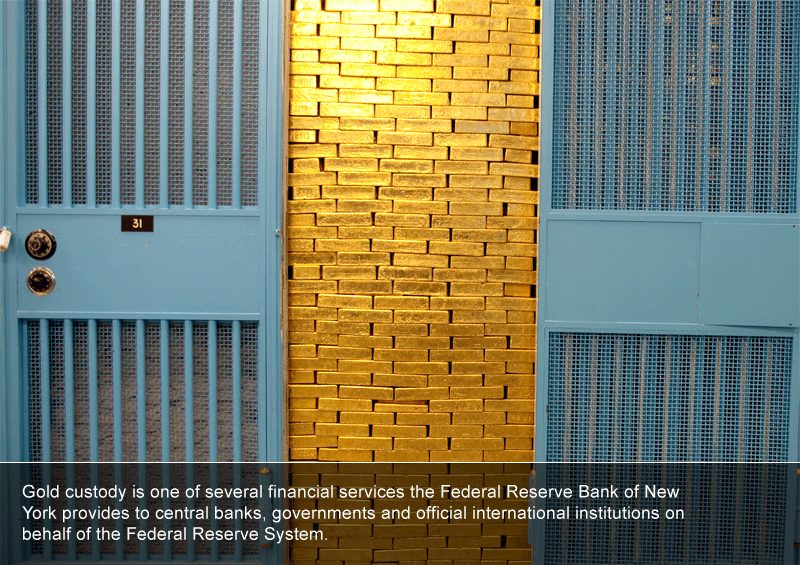
Gold Vault - FEDERAL RESERVE BANK of NEW YORK
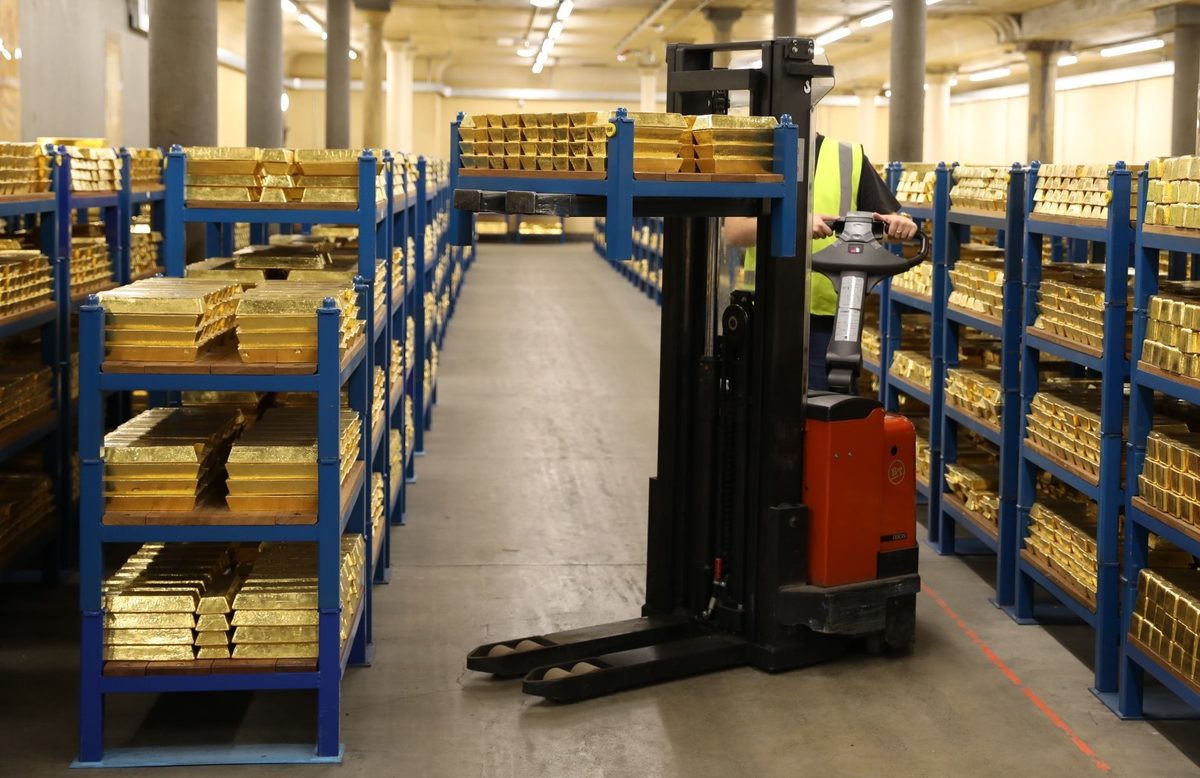
LBMA | Bank of England Gold Vault Today

Gold bars placed on Euro banknotes representing wealth and finance concepts.

2.0K views
6:37
Netherlands Shifts Gold From New York, Ottawa to London ...
APT

32.7K views
9:44
Preparing for the Next System Shock: Central Banks Move Gold ...
GoldCore TV

143 views
3:25
Dutch Central Bank Moves 86 Tonnes Of Gold To London Amid ...
Mirror7 News | Breaking News
Images from Openverse under Creative Commons licenses. Videos from YouTube.
Voices
Curated perspectives — historical figures and your fellow readers.
Play
Exploring all sides of a story is often best achieved with Play.
Most of these play right now — no account needed. Sign up to save scores, keep a streak, and unlock Debate and Predict.
Log in
Sign Up
WHO SAID WHAT?
Can you match the quotes to the right people?
Rounds
People
Per question
Scoring
- points for each correct match.
- time bonus when you answer in under seconds.
- streak bonus once you hit correct in a row.
Score:
Round /
streak
— Who said this?
Tip: press 1– to answer.
Score:
Round /
streak
+
Base +
⚡ Speed +
🔥 Streak +
Streak reset · the answer was
No answer in time · it was
Next Up
Round
of
Score
points
Correct
Best Streak
Time Bonus
Avg. Time
points — sign up to put that on the leaderboard.
Now try on this story
Higher or Lower
A number from this story, against one from elsewhere in the news — guess which is bigger, then keep the chain going. 5 rounds, 3 strikes; a miss costs a strike and resets your streak.
Example
Anchor
EU tariff revenue
$52B
Big for this kind of number
Mystery
Pentagon AI contract
?
Round 1
Streak: 0
Mystery
?
Keyboard: ↓/L lower · ↑/H higher
0 pts
Best streak: 0 · Rounds: 0
0 points — sign up to put that on the leaderboard.
Now try on this story
Connections
Sixteen names from the news. Find the four hidden groups of four. Four mistakes max.
Loading today's puzzle…
0/4 groups
Mistakes
Sign up to keep a daily streak — a new puzzle lands every day.
Now try on this story
Exit debate?
Your progress in this debate will be lost.
How it works
- 1 Two AI personas square off on this story.
- 2 You predict who'll win each round — correct picks earn XP.
- 3 One crossfire question is yours to fire. Pick it carefully.
Couldn't generate a topic
Select Your Champions
Choose one persona for each side of the debate
DEBATE TOPIC
Choose personas with different perspectives for a more dynamic debate.
SIDE A (PRO)
Select debater for this side:
No debate personas available right now.
SIDE B (CON)
Select debater for this side:
No debate personas available right now.
VS
Get ready to make your prediction...
Round of
Claim
Evidence
Stakes
Crossfire Answer
Closing Statement
Claim
Evidence
Stakes
Crossfire Answer
Closing Statement
Your Crossfire Question
Generating arguments...
Who's Got This Round?
Make your prediction before the referee scores
The referee scores both sides on
Correct predictions earn +20 XP
· Press 1 or 2 to pick
Evidence
40%
Logic
30%
Detail
20%
Style
10%
Round Results
Your Pick
Not this time
(%)
Overall Score
/10
Your Pick
Not this time
(%)
Overall Score
/10
Set the Crossfire
Pick the question both personas must answer in the final round
Crafting crossfire questions...
Choosing a question earns +10 XP crossfire bonus
🏆
Total XP Earned
Cred Change
Predictions
Debate Oracle! You called every round!
Sharp Instincts! You know your debaters!
The Coin Flip Strategist! Perfectly balanced!
The Contrarian! Bold predictions!
Inverse Genius! Try betting the opposite next time!
XP Breakdown
Base completion
+20 XP
Rounds played ( rounds x 5 XP)
+ XP
Correct predictions ( correct x 20 XP)
+ XP
Crossfire bonus
+10 XP
Accuracy
%
Prediction History
Round
You picked:
✓
✗
Now try on this story
Keep debating to level up your credibility and unlock achievements
People Involved
Organizations Involved
De Nederlandsche Bank
Central bank
Relocated gold out of North America
The Dutch central bank, one of Europe's largest gold holders.
Bank of England
Central bank
Recipient of relocated Dutch gold
Stores gold for dozens of foreign central banks and hosts the world's largest over-the-counter gold trading hub.
Federal Reserve Bank of New York
Central bank
Holds reduced share of Dutch gold
Operates the underground vault storing gold bullion for foreign central banks and governments.
Timeline
March 2026 September 2026
3 events
Latest: 3 days ago
-
DNB announces relocation
Latest StatementCentral bank says it moved the gold to prepare for a crisis, citing 'increasing geopolitical unrest.'
-
Transfer of 86 tonnes completes
Money MoveAll gold arrives at the Bank of England; 27 tonnes are physically shipped via the Dutch vault at Zeist.
-
DNB starts gold transfer
Money MoveDutch central bank begins moving gold from New York and Ottawa; sells 59 tonnes in New York and buys the same amount in London.
Historical Context
3 moments from history that rhyme with this story — and how they unfolded.
1945 – 1990s
Cold War gold storage in New York (1945–1990s)
European central banks stored gold in New York during and after World War II, fearing Nazi seizure and later Soviet occupation. At peak, the Federal Reserve Bank of New York held more than 12,000 tonnes of foreign gold in its underground vault.
Then
The gold stayed safe from European conflict for decades.
Now
US custody became default practice for central banks, built on an assumption of American reliability as a neutral custodian.
Why this matters now
The Dutch transfer questions that assumption directly: if Washington is now unpredictable, the original rationale for New York storage weakens.
January 2013 – December 2017
Germany's gold repatriation (2013–2017)
In 2013, Germany's Bundesbank said it would bring home 674 tonnes of gold from New York and Paris, responding to public pressure and a federal audit court's demand for oversight. It finished in late 2017, two years ahead of schedule.
Then
Germany stored more than half its gold in Frankfurt and reduced its reliance on foreign vaults.
Now
Established that major European economies would repatriate gold under political pressure without rupturing ties with Washington.
Why this matters now
The Netherlands' move extends that pattern: no break with the US, but a visible reduction in reliance on American vaults.
February 2022 – present
Freezing of Russian central bank assets (2022)
Days after Russia's invasion of Ukraine, the US, EU, UK, and allies froze roughly $300 billion of Russian central bank assets held in Western institutions.
Then
Russia lost access to most of its foreign reserves, an unprecedented action at that scale.
Now
Central banks worldwide began treating assets held in Western jurisdictions as politically exposed, not just storage.
Why this matters now
That precedent is the backdrop for the Dutch decision: gold in US vaults is no longer seen as politically neutral custody.
Sources
(10)Related Stories
Gold's historic run: from $2,000 to $4,600 in two years
Money Moves
Updated May 21
US sanctions Turkey's Golden Global Bank over Iran Revolutionary Guard ties
Money Moves
Updated 2 hours ago
Bank of Japan's market operations track the unwinding of its easing era
Money Moves
Updated Aug 24
Precious metals flash crash: The Warsh shock
Money Moves
Updated May 26
US tightens financial squeeze on Hizballah's cash pipeline
Money Moves
Updated Aug 21
Gold hits record $4,620 as DOJ investigation threatens Fed independence
Money Moves
Updated May 20