





Pull to refresh
Logo
Solar panels from the 1980s still produce over 80% of original power, Swiss study finds

Solar panels from the 1980s still produce over 80% of original power, Swiss study finds

New Capabilities

Six arrays installed between 1987 and 1993 degrade just 0.16-0.24% per year — well below the industry's typical 0.75-1% assumption

January 30th, 2026: SUPSI publishes 30-year degradation study

Overview

Updated 1 hour ago

Six solar arrays installed in Switzerland between 1987 and 1993 still produce more than 80% of their original power after 30 years of operation. The University of Applied Sciences and Arts of Southern Switzerland (SUPSI) measured annual degradation of just 0.16% to 0.24% — about three times slower than the industry-standard assumption of 0.75% to 1%.

The stakes are economic. Nearly every solar financial model and power purchase agreement assumes a 25-year life. If panels routinely last 40 to 50 years, solar electricity gets cheaper and replacement cycles stretch.

Why it matters

Solar panels that last 40-50 years instead of 25 cut electricity costs and stretch replacement cycles — changing the economics of every new installation.

Questions about this story

Free account needed to ask — your question is kept and asked for you right after sign-up. Answers are public.

No questions yet — be the first to ask.

Key Indicators

0.16–0.24%
Annual degradation rate measured over 30+ years
Measured across six Swiss PV systems installed between 1987 and 1993.
0.75–1%
Typical annual degradation rate reported in literature
The industry assumption the SUPSI findings undercut by roughly three to four times.
>80%
Original power output retained after 30 years
Most of the six systems remain above the 80% threshold commonly used to define end of life.
6
PV systems studied
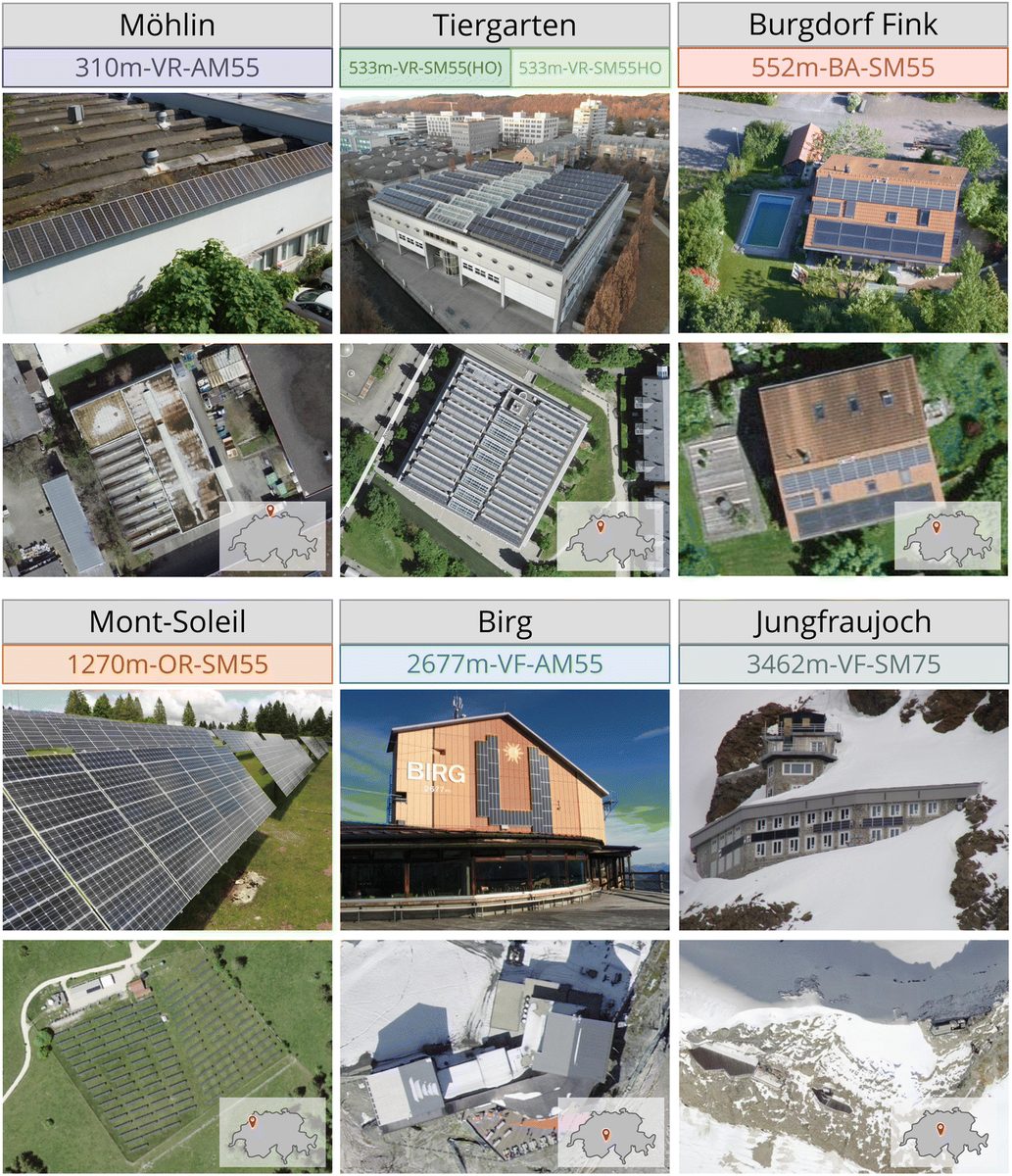
Systems span altitudes from 310m in Möhlin to 3,462m at Jungfraujoch.

Voices

Curated perspectives — historical figures and your fellow readers.

Ever wondered what historical figures would say about today's headlines?

Sign up to generate historical perspectives on this story.

People Involved

Organizations Involved

Timeline

1987 January 2026

5 events Latest: January 30th, 2026 · 8 months ago
Tap a bar to jump to that date
  1. SUPSI publishes 30-year degradation study

    Latest Research

    Six Swiss systems installed 1987-1993 show annual degradation of just 0.16-0.24%, far below the 0.75-1% industry assumption.

  2. Sandia study: most new modules retain 80% after 30 years

    Research

    Five-year early-life study of 834 modules found 13 of 23 systems on track to exceed 30 years above the 80% threshold.

  3. First large-scale aged-module study published

    Research

    Study of 204 crystalline silicon modules from 20 manufacturers found only 17.6% fell below 80% of original power after 20+ years.

  4. Final studied Swiss PV system installed

    Deployment

    Jungfraujoch façade-mounted system installed at 3,462m, the highest of the six studied arrays.

  5. First studied Swiss PV system installed

    Deployment

    Möhlin rooftop system installed at 310m altitude, the first of six arrays studied decades later.

Scenarios

1

Major manufacturers extend module warranties beyond 30 years

Possible Resolves by End of 2028

Discussed by: pv-magazine, solar industry analysts

With multiple field studies showing real-world degradation below 0.25% per year, manufacturers face competitive pressure to extend standard performance warranties beyond 25 years. A 30-year warranty would take several years to appear, as manufacturers validate their own products before committing to longer guarantees.

2

IEC extends qualification testing for 40-year lifetimes

Possible Resolves by End of 2029

Discussed by: IEC technical committees, PV standards observers

The International Electrotechnical Commission (IEC) updates its 61215 design qualification standard to include extended stress tests calibrated to operating lifetimes beyond 30 years, drawing on the SUPSI field data. A revision would mark the first major update to long-term qualification assumptions since the standard's adoption.

3

PV fleet owners extend operating plans to 40+ years

Likely Resolves by End of 2028

Discussed by: Utility planners, independent power producers, Lazard LCOE reports

Utilities and independent power producers update asset-life assumptions from 25 to 40 years for existing solar fleets, deferring panel replacement and lowering the levelized cost of electricity for those assets. The SUPSI data provides a concrete field benchmark for these planning revisions.

Historical Context

2 moments from history that rhyme with this story — and how they unfolded.

December 2008

ESTI aged-module study (2008)

Researchers tested 204 crystalline silicon modules from 20 manufacturers, originally characterized at the European Solar Test Installation between 1982 and 1986. After two decades outdoors, only 35 modules — 17.6% — had fallen below 80% of original power when measured to IEC standards.

Then

The study was published in Progress in Photovoltaics and established that field data contradicted warranty assumptions.

Now

It did not immediately shift industry practice, but provided the first large-scale quantitative evidence of multi-decade module life.

Why this matters now

The 2008 study opened the question the SUPSI study closes: it showed modules outlive warranties, and SUPSI extends the finding to a third decade with more detailed correlation to materials and design.

November 2022

Sandia early-life degradation study (2022)

Sandia National Laboratories published a five-year degradation study of 834 fielded modules from seven manufacturers across 13 module types and three US climates. Thirteen of 23 systems studied were expected to exceed 30 years above the 80% power threshold.

Then

The Department of Energy laboratory's data reinforced that modern modules are on track to exceed warranty life.

Now

Combined with aged-module studies, it suggested 40-50 year lifetimes are becoming realistic for current products.

Why this matters now

Sandia looked at new modules; SUPSI looked at 30-year-old ones. Together they bracket the lifetime question from both ends, with consistent results.

Sources

(8)