
Pull to refresh
Logo
Daily Brief
Following
Why Sign Up
NASA upgrades the International Space Station's aging power grid with new roll-out solar arrays

NASA upgrades the International Space Station's aging power grid with new roll-out solar arrays

Built World
By Newzino Staff |

A five-year effort to restore the station's electricity supply enters its final phase as astronauts prepare the last two power channels

Today: First spacewalk preps 2A power channel for final arrays

Overview

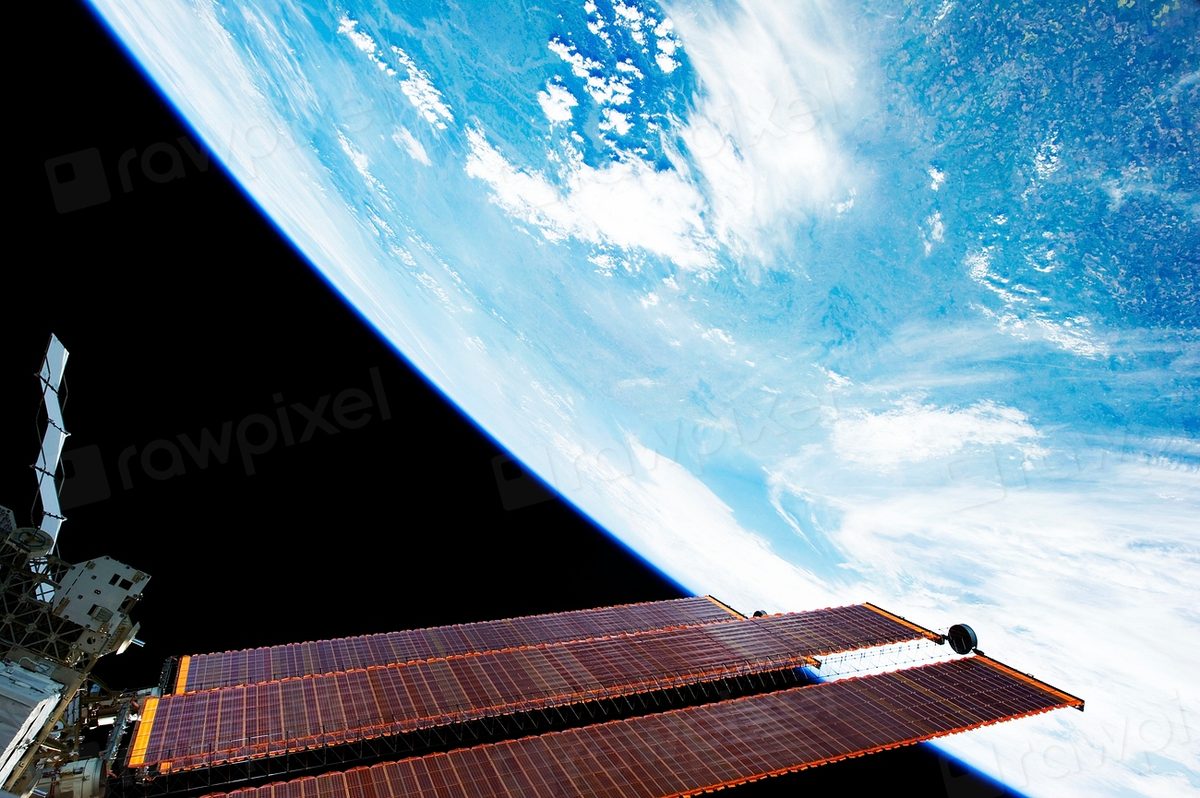
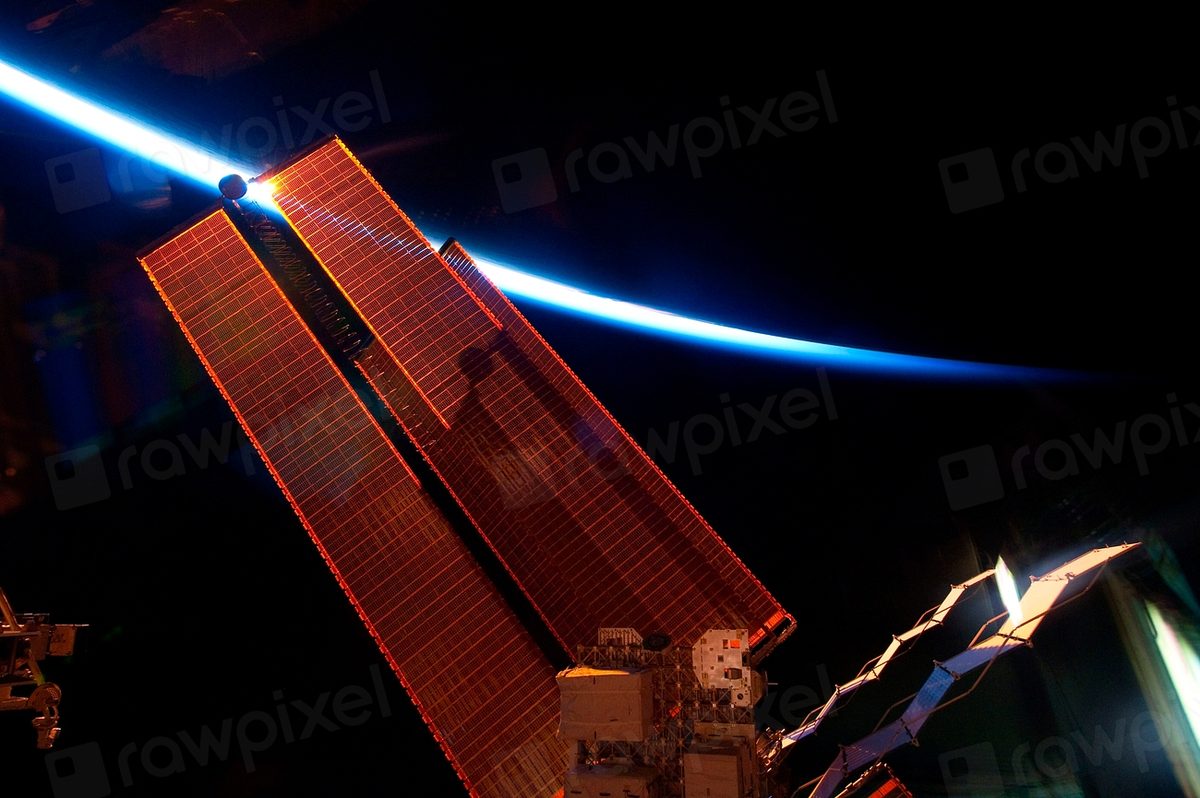
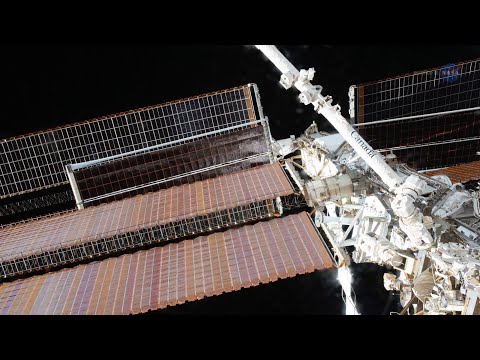
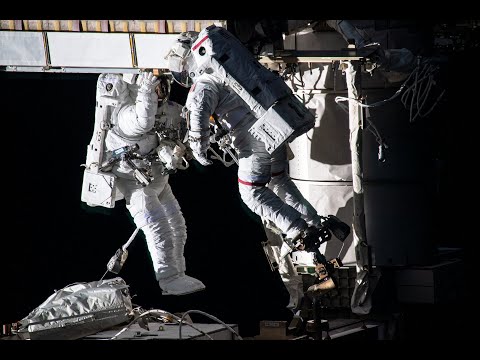
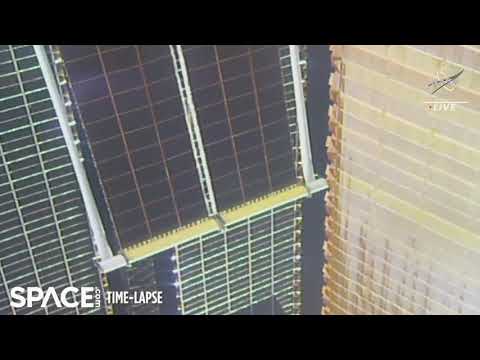
The International Space Station's original solar arrays were designed to last 15 years. The oldest set has now been in orbit for 25, battered by radiation and micrometeorite strikes until the station's total power output dropped from 240 kilowatts to roughly 160 — a one-third loss. On March 18, 2026, astronauts Jessica Meir and Chris Williams stepped outside the station for a 6.5-hour spacewalk to begin preparing the final two power channels for new roll-out solar arrays that will restore the station's electrical capacity.

Key Indicators

6 of 8
New arrays installed
Six ISS Roll-Out Solar Arrays have been installed since 2021, with the final two in preparation.
~160 kW
Degraded power output before upgrades
The station's original arrays had lost roughly one-third of their generating capacity due to 25 years of space exposure.
278th
Station assembly spacewalk
The March 18 spacewalk marks the 278th extravehicular activity supporting ISS construction and maintenance.
25 years
Age of oldest solar arrays
The P6 truss arrays, installed in December 2000, have operated a decade beyond their 15-year design life.

Interactive

Exploring all sides of a story is often best achieved with Play.

Ever wondered what historical figures would say about today's headlines?

Sign up to generate historical perspectives on this story.

Sign Up

Debate Arena

Two rounds, two personas, one winner. You set the crossfire.

People Involved

Organizations Involved

Timeline

  1. First spacewalk preps 2A power channel for final arrays

    Spacewalk

    Meir and Williams spent 6.5 hours outside the station routing cables and installing a modification kit on the P4 truss to prepare power channel 2A for its new roll-out solar array. It was the 278th ISS assembly spacewalk and Williams' first-ever extravehicular activity.

  2. Crew-12 arrives to take over spacewalk duties

    Mission

    Jessica Meir and her Crew-12 teammates launched aboard a SpaceX Dragon, inheriting the solar array spacewalk assignments from the evacuated Crew-11.

  3. Spacewalk postponed after astronaut medical event

    Delay

    Crew-11 Commander Mike Fincke experienced a medical event the day before the scheduled solar array spacewalk, triggering the first medical evacuation in the station's 25-year history. All four Crew-11 members returned to Earth on January 15.

  4. Third IROSA pair completes initial six-array upgrade

    Installation

    Steve Bowen and Warren Hoburg installed the third pair on channels 1A and 1B, finishing the initial contract. NASA had already signed a $35 million deal for a fourth pair to complete all eight channels.

  5. Second IROSA pair installed on S4 and P4 trusses

    Installation

    Astronauts Josh Cassada and Frank Rubio installed arrays on power channels 3A and 4A, extending the upgrade to four of the station's eight power channels.

  6. First IROSA pair installed on P6 truss

    Installation

    Astronauts Shane Kimbrough and Thomas Pesquet installed the first two roll-out arrays on power channels 2B and 4B over three spacewalks, beginning the station's power restoration.

  7. Roll-out solar array technology demonstrated on ISS

    Technology

    NASA tested the Roll-Out Solar Array concept on the station as a technology demonstration, proving the compact, lightweight design could work in orbit.

  8. First ISS solar arrays deployed

    Infrastructure

    The first pair of Solar Array Wings was deployed on the P6 truss segment, beginning the station's power system buildout. All eight original arrays were installed by March 2009.

Scenarios

1

Final arrays installed, station runs at full power through 2030

Discussed by: NASA's Space Operations Mission Directorate; ISS transition planning documents

The most straightforward outcome: the fourth pair of arrays arrives on a SpaceX cargo Dragon later in 2026, is installed during follow-up spacewalks, and restores the station's power grid to near-original capacity. The ISS operates comfortably through its planned 2030 end date with enough electricity to support a full science program and visiting commercial crews. This is the baseline NASA plan and the scenario with the fewest variables.

2

ISS operations extended beyond 2030 as commercial stations lag

Discussed by: NASA Associate Administrator Ken Bowersox; SpaceNews and Ars Technica analysts

NASA has signaled it does not want to deorbit the station before commercial replacements are operational. If companies like Axiom Space or Vast face delays — a common pattern in commercial space — the restored power grid could prove essential for extending ISS operations into the early 2030s. The IROSA upgrades would shift from a maintenance project to a bridge investment keeping the station viable beyond its planned retirement.

3

Technical delays push final array installation into 2027

Discussed by: Spaceflight Now; NASASpaceFlight.com forum analysts

The January medical evacuation already pushed these spacewalks back by two months. If the cargo Dragon delivering the final arrays faces launch delays, or if the second preparation spacewalk encounters complications, the actual installation could slip into 2027. The station would continue operating on its current six-array-plus-legacy configuration — adequate but leaving less power margin as the oldest arrays continue to degrade.

Historical Context

Hubble Space Telescope servicing missions (1993–2009)

December 1993 – May 2009

What Happened

NASA conducted five Space Shuttle missions to repair and upgrade the Hubble Space Telescope, replacing degraded solar arrays, gyroscopes, and scientific instruments. The first mission in 1993 famously corrected Hubble's flawed primary mirror with a set of corrective optics, transforming it from an embarrassing failure into the most productive telescope in history.

Outcome

Short Term

Each servicing mission extended Hubble's operational life by years and dramatically improved its scientific output.

Long Term

Hubble remains operational more than 35 years after launch, producing groundbreaking discoveries well beyond its design life — proving that in-orbit maintenance can transform the return on a space asset.

Why It's Relevant Today

The IROSA program follows the same logic: rather than abandoning aging but irreplaceable space infrastructure, in-orbit upgrades extend its useful life. Both cases demonstrate that spacewalk-based maintenance, while expensive and risky, can be far cheaper than building a replacement.

ISS ammonia cooling system repair (2013)

May 2013

What Happened

An ammonia coolant leak on the station's P6 truss threatened to shut down one of the station's two external cooling loops. Astronauts Chris Cassidy and Tom Marshburn performed an emergency spacewalk — planned in just 48 hours instead of the usual weeks — to replace a pump controller box and stop the leak before it disabled half the station's power system.

Outcome

Short Term

The rapid repair succeeded, restoring full cooling capacity and averting a partial station shutdown.

Long Term

The emergency underscored how dependent the station is on its aging infrastructure and how a single system failure can cascade into a power crisis.

Why It's Relevant Today

The 2013 emergency illustrated the fragility of the station's power and thermal systems — the same systems the IROSA program is designed to shore up. Proactive upgrades like the new solar arrays reduce the likelihood of future emergency repairs on 25-year-old hardware.

Sources

(12)