

Pull to refresh
Logo
Google's Project Suncatcher satellite sends first AI response from orbit

Google's Project Suncatcher satellite sends first AI response from orbit

New Capabilities

A prototype carrying four Google TPUs ran a Gemma model in low Earth orbit, an early step toward space-based data centers

Overview

Updated Yesterday

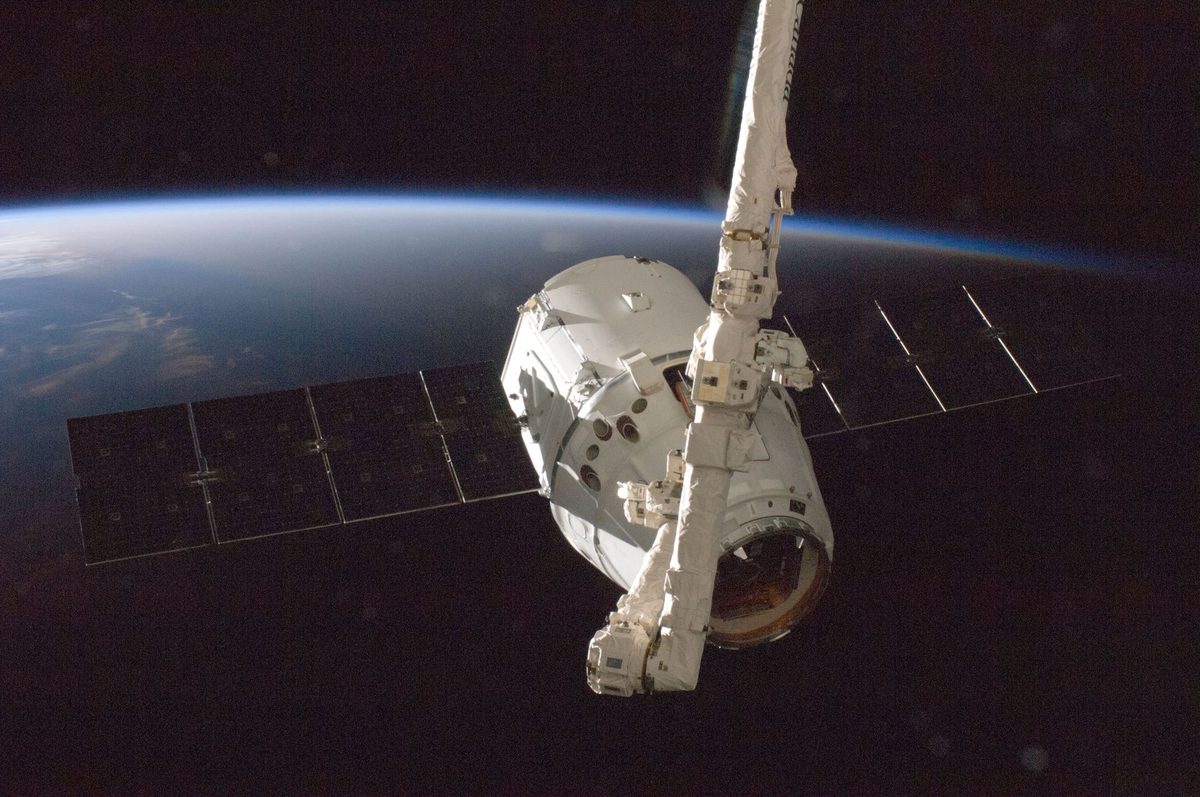
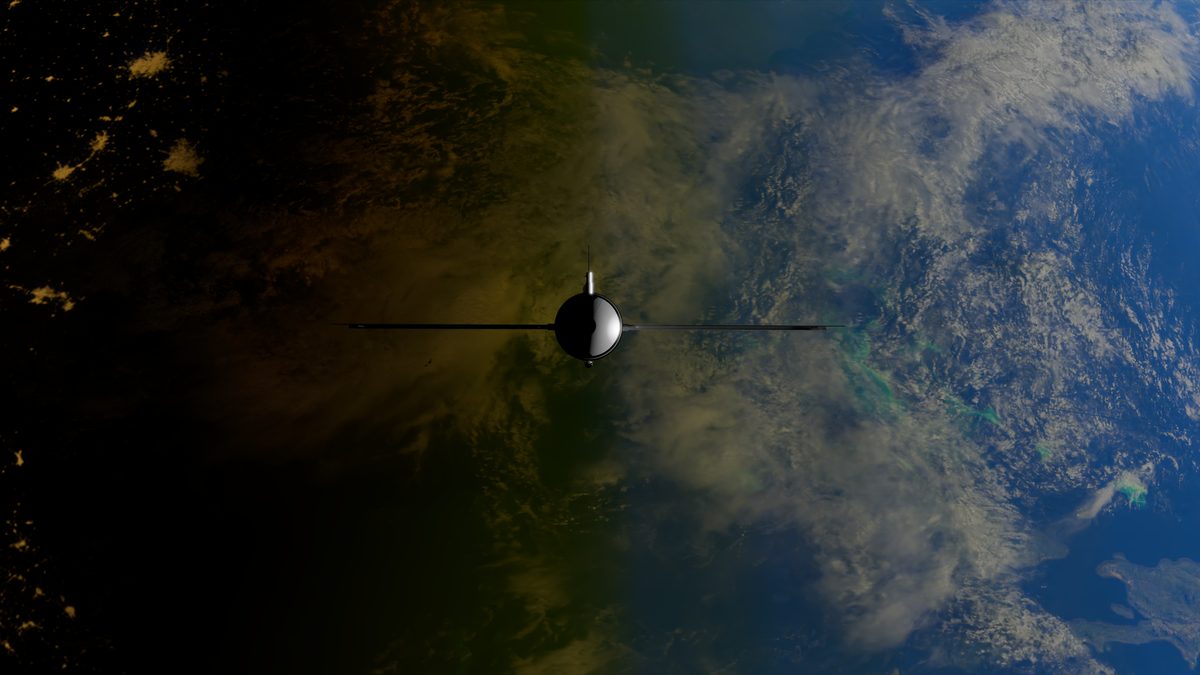
On October 1, a Google prototype satellite rode a SpaceX Falcon 9 into low Earth orbit carrying four Tensor Processing Units, the chips Google builds for machine learning. On October 30, one of them answered a prompt from the ground: a haiku about being in space, downlinked as the satellite passed over Svalbard, Norway.

The test is small. One chip runs at a time, for roughly 20 minutes, on about a kilowatt of solar power. But it shows a data-center-class processor can execute a model in orbit. Google's longer bet is that clusters of satellites linked by lasers could handle AI inference without land, water or a grid connection.

Why it matters

Google is testing whether AI computing can leave the ground, which would change where data centers are built and who can build them.

Questions about this story

Free account needed to ask — your question is kept and asked for you right after sign-up. Answers are public.

No questions yet — be the first to ask.

Key Indicators

4
TPUs on the prototype satellite
The spacecraft carries four Tensor Processing Units, but power limits allow only one to run at a time.
1 kW
Solar power generated on board
Power generation caps how long and how often the chips can operate.
~20 min
Maximum run time per TPU
Heat and power constraints limit each chip to short bursts during ground-station passes.
2
Satellites planned for the 2027 test
The next mission is meant to demonstrate optical links between two spacecraft.
5 years
Radiation dose survived in ground tests
Google says its Trillium TPUs withstood a total ionizing dose greater than a five-year mission would deliver.

Voices

Curated perspectives — historical figures and your fellow readers.

Sign up to generate historical perspectives on this story.

People Involved

Organizations Involved

Timeline

November 2025 2027

5 events Latest: Yesterday
Tap a bar to jump to that date
  1. Twin satellites planned to test laser links

    Upcoming Planned

    Google aims to fly two interconnected spacecraft to demonstrate high-bandwidth optical communication.

  2. First AI response from an orbital TPU

    Latest Milestone

    An onboard Gemma 4 model writes a haiku, downlinked during a ground pass over Svalbard, Norway.

  3. Prototype satellite reaches orbit

    Launch

    The Planet-built spacecraft launches on SpaceX's Transporter-18 rideshare; Google confirms contact.

  4. Reuters reports the imminent chip test

    Coverage

    Reuters reports Google will send TPUs to low Earth orbit, noting commercial viability is years away.

  5. Google reveals Project Suncatcher

    Announcement

    Google discloses research into solar-powered satellites carrying TPUs, with laser links between spacecraft.

Scenarios

1

Radiation tests clear the TPUs and Google launches twin satellites in 2027

Possible Resolves by Q3 2027

Discussed by: Google's own published roadmap and Reuters reporting on the program

Ground tests in a proton beam at UC Davis already suggested the chips tolerate a five-year mission's radiation dose. If the flight data confirms that, Google proceeds to the two-satellite mission meant to demonstrate optical inter-satellite links. That would move Suncatcher from a single-chip demo to a networked system.

2

Bit flips force a chip redesign and the 2027 mission slips

Possible Resolves by End of 2027

Discussed by: Google's own statements that radiation effects must now be measured in orbit rather than simulated

Radiation can flip stored bits and corrupt data without tripping ordinary monitoring. Google tested for this on the ground but says the real orbital environment is the remaining question. If error rates run higher than expected, the twin-satellite mission slips while engineers add error correction or shielding.

3

Google keeps Suncatcher a research program and flies no further hardware

Unlikely Resolves by Q2 2028

Discussed by: Beal's own comments on cost, and Brandon Lucia's points about repair and launch economics

The prototype is meant to operate for about a year. If the economics stay unfavorable and internal interest fades, Google could publish results and fold the effort into broader research. Beal has said space compute will not be cheaper than terrestrial data centers within five years.

Historical Context

3 moments from history that rhyme with this story — and how they unfolded.

1994-2002

Teledesic (1994-2002)

Bill Gates and Craig McCaw backed a plan for hundreds of satellites delivering broadband from orbit, pitched as an internet in the sky. The constellation was scaled back repeatedly as launch and hardware costs stayed high.

Then

The project was suspended in 2002 before a full constellation flew.

Now

It became the standard cautionary case for capital-intensive satellite broadband, cited until SpaceX's Starlink changed the launch economics.

Why this matters now

Google's plan depends on the same variable that sank Teledesic: whether cheap launches and mass-produced satellites can make orbital infrastructure pay.

1998-1999

Iridium (1998-1999)

Motorola built a constellation of dozens of satellites for global satellite phone service, a technical feat that worked as designed. The customer base did not materialize at the prices needed to cover the build.

Then

Iridium filed for bankruptcy in 1999, months after commercial service began.

Now

The assets were bought and the network survived, but the original business failed. It showed that a working satellite system can still be a commercial miss.

Why this matters now

Google's chip test proves capability, not demand. Suncatcher faces the same question Iridium did: who pays for orbital compute, and how much.

2013-2021

Google Loon (2013-2021)

Alphabet ran a fleet of stratospheric balloons to deliver internet to underserved regions, spun out as an independent company in 2018. The balloons worked; the business did not.

Then

Alphabet shut Loon down in January 2021, saying the economics never came together.

Now

Loon became Alphabet's clearest example of a technically successful moonshot ended by unit economics.

Why this matters now

Suncatcher is the same corporate bet in a harsher environment. Beal's own framing, that it must not be permanently too expensive to be practical, echoes the reasoning behind Loon's closure.

Sources

(9)