Pull to refresh
Logo
Daily Brief
Following
Why Sign Up
The race to build data centers in orbit

The race to build data centers in orbit

New Capabilities
By Newzino Staff |

Nvidia, SpaceX, and Google lead a scramble to move AI processing off Earth and into space

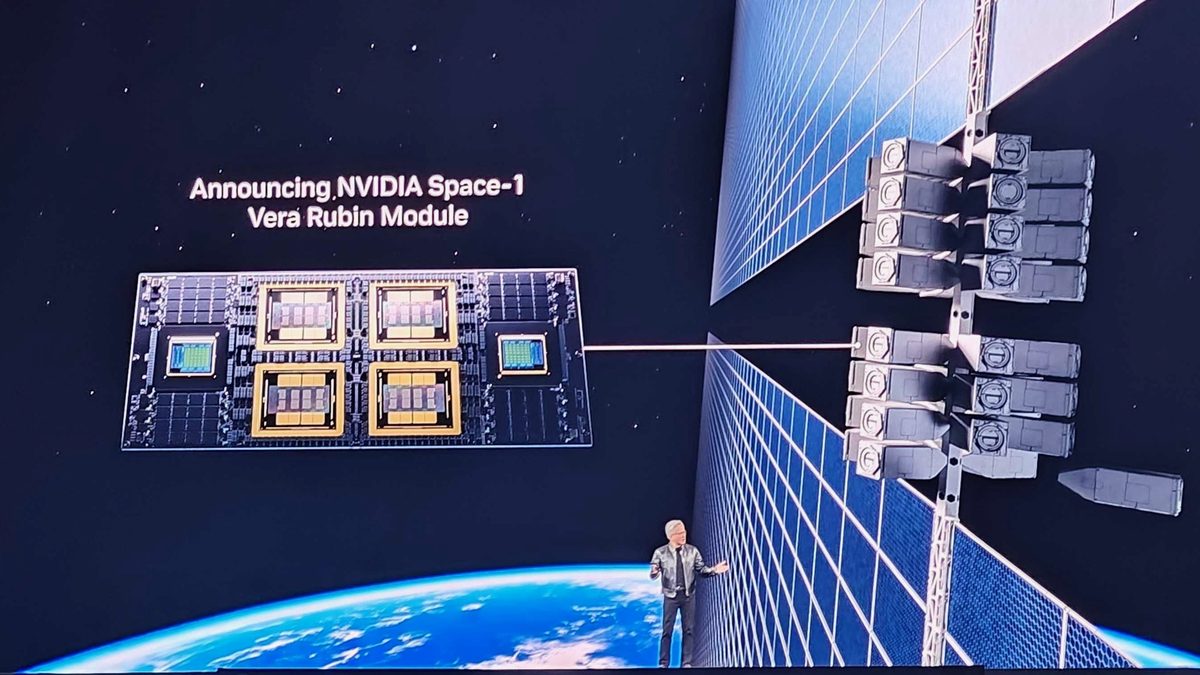
Yesterday: Nvidia launches Vera Rubin Space-1 Module

Overview

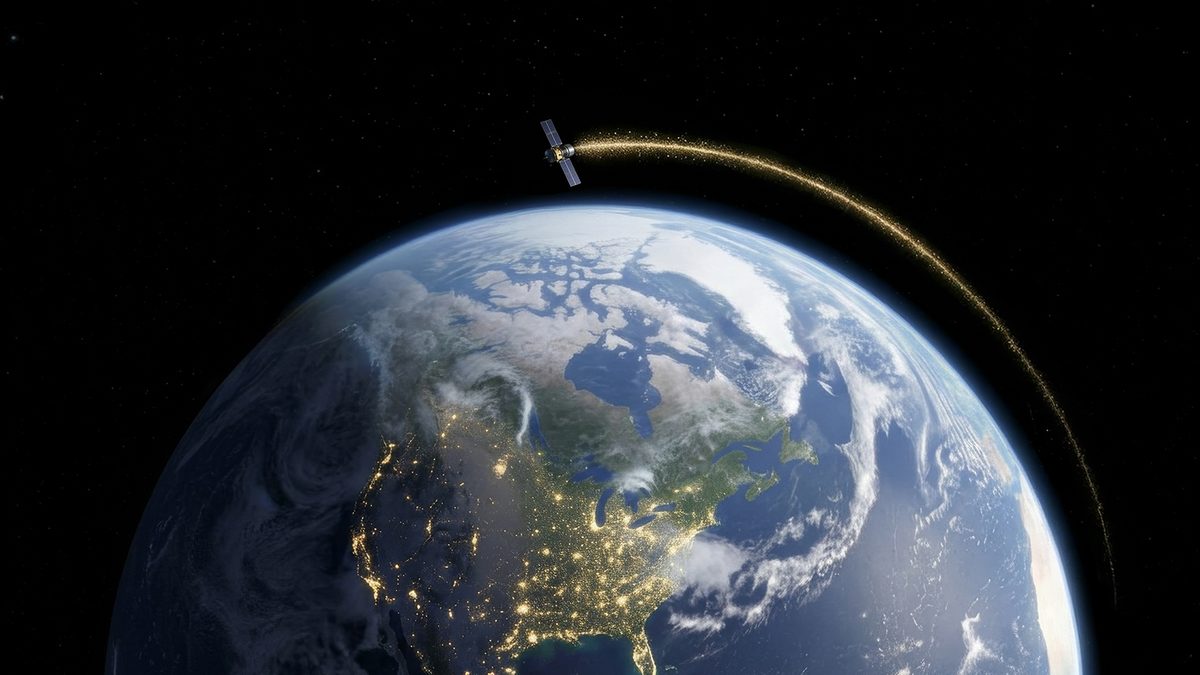
Earth observation satellites generate petabytes of imagery every day, but only about two percent of it ever reaches the ground. The bottleneck is physics: a satellite in low Earth orbit gets maybe ten minutes of ground-station contact per pass, and radio bandwidth cannot keep up with sensor resolution that doubles every few years. Nvidia's answer, announced at its annual developer conference on March 17, 2026, is to stop trying to move the data down and instead move the AI up. The Vera Rubin Space-1 Module packs 25 times the compute power of Nvidia's H100 chip into a radiation-hardened package designed to run large language models and foundation models directly in orbit.

Key Indicators

25x
Compute gain over H100
The Vera Rubin Space-1 Module delivers 25 times the AI inference performance of Nvidia's H100 GPU in a space-rated package
~2%
Satellite data actually downlinked
Only about two percent of Earth observation imagery captured in orbit reaches ground stations, driving the case for on-orbit processing
$25B
Projected space cloud market by 2035
The space cloud computing market is projected to reach roughly $25 billion by 2035, growing at over 15 percent annually
6
Nvidia launch partners
Axiom Space, Planet Labs, Starcloud, Aetherflux, Kepler Communications, and Sophia Space are building on the platform

Interactive

Exploring all sides of a story is often best achieved with Play.

Ever wondered what historical figures would say about today's headlines?

Sign up to generate historical perspectives on this story.

Sign Up

Debate Arena

Two rounds, two personas, one winner. You set the crossfire.

People Involved

Organizations Involved

Nvidia Corporation
Nvidia Corporation
Semiconductor Company
Platform provider for orbital AI computing

The dominant supplier of AI computing chips, now extending its platform from terrestrial data centers into orbit with radiation-hardened modules.

Starcloud
Starcloud
Orbital Data Center Startup
Operating first GPU-equipped satellite; planning second-generation constellation

The first company to fly a high-performance GPU in space and train an AI model in orbit, now planning a multi-satellite constellation with next-generation Nvidia chips.

Planet Labs
Planet Labs
Earth Observation Company
Building GPU-native AI engine for satellite imagery with Nvidia

Operates the largest fleet of Earth-imaging satellites and is integrating Nvidia GPUs into its next-generation Pelican and Owl constellations for real-time on-orbit analysis.

Axiom Space
Axiom Space
Commercial Space Station Company
Operating first orbital data center nodes; building ISS successor

Building the successor to the International Space Station and integrating Nvidia computing platforms into its orbital infrastructure for AI workloads.

Aetherflux
Aetherflux
Space-Based Solar Power and Computing Startup
Planning first orbital data center node for early 2027

A space-based solar power company entering the orbital data center race, planning to beam power via infrared lasers and deploy AI compute nodes powered by the Vera Rubin Module.

Kepler Communications
Satellite Communications Company
Operating first commercial optical data relay network with distributed GPU computing

Operates the world's first commercially operational optical data relay network and has deployed 40 Nvidia Jetson Orin GPUs across 10 satellites for distributed edge computing in orbit.

Timeline

  1. Nvidia launches Vera Rubin Space-1 Module

    Product Launch

    At GTC 2026, Nvidia announced a three-tier space computing platform: the Vera Rubin Space-1 Module delivering 25 times the AI inference performance of the H100, plus the already-shipping IGX Thor and Jetson Orin platforms. Six launch partners committed to the platform.

  2. SpaceX files for million-satellite data center constellation

    Regulatory

    SpaceX filed with the Federal Communications Commission for a constellation of up to one million satellites that could serve as orbital compute nodes, following its merger with Elon Musk's AI company xAI.

  3. First orbital data center nodes go live

    Deployment

    Axiom Space launched the first two orbital data center nodes to low Earth orbit, connected via Kepler Communications' optical relay network with 2.5 gigabit-per-second inter-satellite links.

  4. First AI model trained in space

    Milestone

    Starcloud trained NanoGPT on the complete works of Shakespeare aboard its orbiting H100 satellite and successfully ran Google's open-source Gemma large language model in orbit — both firsts.

  5. Google announces Project Suncatcher

    Announcement

    Google revealed plans to place its Tensor Processing Units in solar-powered satellite constellations connected by free-space optical links, with initial orbital tests planned for 2027.

  6. First high-performance GPU reaches orbit

    Milestone

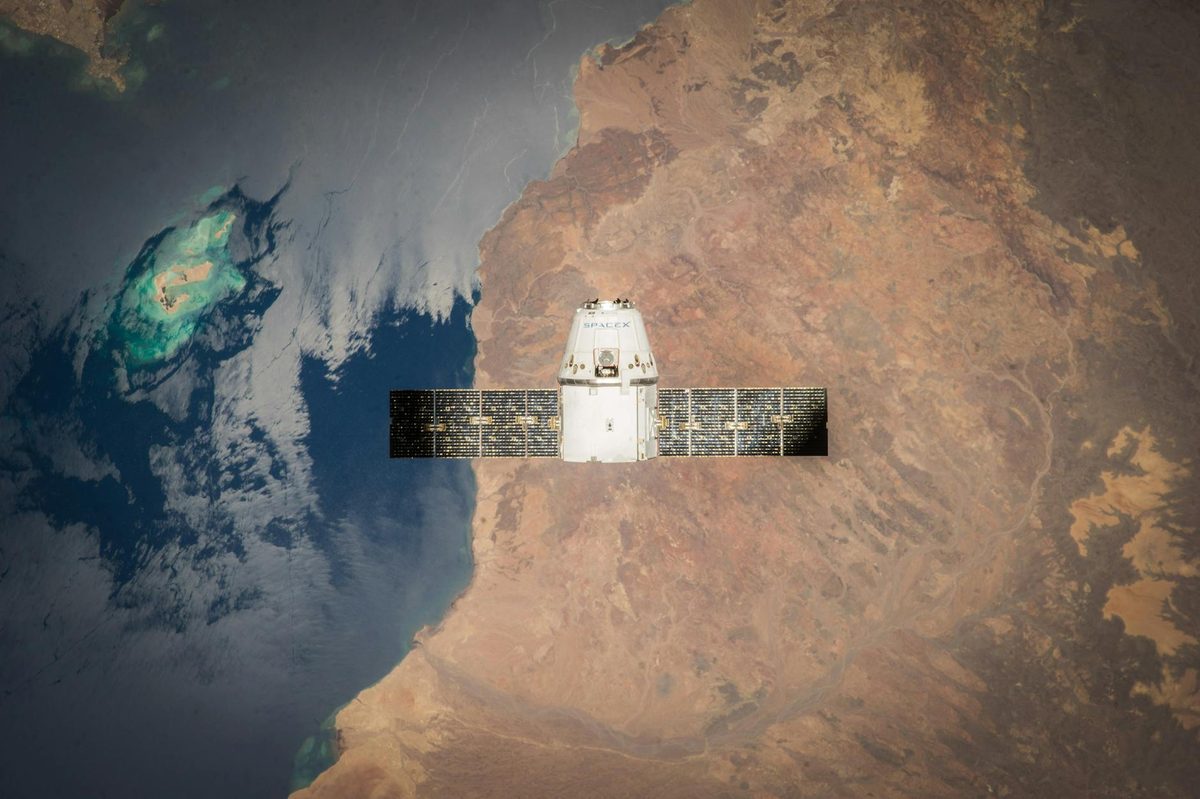
    Starcloud launched a 60-kilogram satellite carrying an Nvidia H100 GPU aboard a SpaceX rocket — 100 times more powerful than any computer previously flown in space.

  7. First AI chip flies in orbit

    Milestone

    The European Space Agency launched PhiSat-1 carrying an Intel Movidius Myriad 2 vision processing unit, the first dedicated AI chip in orbit. It ran cloud-detection algorithms on hyperspectral imagery, filtering out useless cloudy images before downlink.

  8. First teraflop in space

    Milestone

    Hewlett Packard Enterprise launched Spaceborne Computer-1 to the International Space Station, achieving the first trillion-calculation-per-second performance on commercial off-the-shelf hardware in space. It ran for 615 days without a single bit error.

Scenarios

1

Nvidia becomes the default platform for orbital computing

Discussed by: Analysts at SiliconANGLE, Data Center Knowledge, and industry observers at GTC 2026

With six launch partners already committed, shipping hardware in orbit today (via Starcloud and Kepler), and a next-generation chip promising a 25-fold performance leap, Nvidia replicates its terrestrial data center dominance in space. The CUDA software ecosystem — already the standard for AI development — gives Nvidia a moat that hardware competitors struggle to cross. In this scenario, most orbital AI workloads run on Nvidia silicon within five years, and the company captures the bulk of what analysts project as a $25 billion space cloud computing market by 2035.

2

SpaceX and Google build rival orbital compute stacks

Discussed by: SpaceNews, Network World, and space industry analysts tracking the SpaceX-xAI merger and Google's Project Suncatcher

SpaceX's million-satellite filing and Google's Suncatcher program represent vertically integrated alternatives to Nvidia's platform play. SpaceX controls launch costs, orbital bandwidth (Starlink), and now AI demand (xAI). Google controls its own chip design (TPUs), cloud platform, and AI models. If either builds a closed ecosystem — chips, satellites, connectivity, and software in one stack — Nvidia's role shrinks to supplying components rather than defining the platform. The trigger would be SpaceX or Google achieving self-sufficient orbital compute without Nvidia hardware.

3

Orbital data centers stall on thermal management and economics

Discussed by: The Register, skeptical commentary at GTC 2026, and aerospace engineers noting unresolved thermal challenges

In space, there is no air to carry heat away from processors. The only option is radiating heat as electromagnetic waves, which requires large thermal panels and limits how much compute can be packed into a satellite. Nvidia acknowledged this remains an open engineering problem. If the thermal challenge proves harder than expected, or if launch costs do not fall fast enough, orbital data centers could remain niche — useful for processing satellite imagery in situ but unable to compete with terrestrial facilities for general AI workloads. The 2027-2028 timeframe will be decisive as Starcloud-2 and Aetherflux attempt larger deployments.

4

Space computing triggers a new domain of geopolitical competition

Discussed by: European Space Agency ASCEND program leadership, Chinese state media covering the Comospace Aurora 5000, and space policy analysts

The European Space Agency is spending 300 million euros studying orbital computing through its ASCEND program. China's Comospace is preparing the Aurora 5000 orbital GPU for trials in 2026. If orbital data centers prove viable, nations may treat them as strategic infrastructure — like undersea cables or GPS constellations — subject to export controls, orbital slot competition, and sovereignty disputes. Computing in orbit sits outside any national jurisdiction, which is an advantage for commercial operators but a concern for governments that want to regulate AI workloads. This scenario becomes real if any major power attempts to restrict orbital computing access.

Historical Context

Cloud-to-edge computing shift (2016-present)

2016-present

What Happened

As billions of Internet of Things devices came online — autonomous vehicles, factory robots, surveillance cameras — they generated far more data than could economically be sent to centralized cloud data centers for processing. Companies like Amazon, Microsoft, and Google built edge computing platforms that pushed AI inference closer to where data was generated. AWS Greengrass launched in 2017; Azure IoT Edge in 2018.

Outcome

Short Term

Edge computing became a standard tier in cloud architecture within three years, creating a market worth over $60 billion by 2024.

Long Term

Established the principle that when data volume exceeds transmission capacity, you move compute to the data rather than data to the compute — the exact logic now driving orbital data centers.

Why It's Relevant Today

Satellites face the same fundamental constraint as factory floors and autonomous vehicles: sensors generate far more data than available bandwidth can move. Nvidia is applying the same playbook — GPU-accelerated edge inference — but the 'edge' is now 400 kilometers above Earth.

Hewlett Packard Enterprise Spaceborne Computer (2017-2019)

August 2017 - June 2019

What Happened

HPE sent a commercial off-the-shelf supercomputer to the International Space Station to test whether standard server hardware could survive and operate in space without radiation hardening. The system ran for 615 days, processed over 2,000 computations, and did not experience a single bit error. Spaceborne Computer-2 followed in 2021 and completed 24 experiments including the first AI inference on the ISS.

Outcome

Short Term

Proved that commodity hardware could function reliably in low Earth orbit with software-based radiation mitigation, undermining the assumption that space computing required expensive custom chips.

Long Term

Opened the door for companies like Starcloud to fly Nvidia H100s — consumer-grade GPUs — in orbit rather than waiting for radiation-hardened equivalents that lag generations behind in performance.

Why It's Relevant Today

The Spaceborne Computer was the proof of concept that made today's orbital data center race possible. It demonstrated that the performance penalty of radiation hardening was no longer mandatory, allowing Nvidia to offer near-terrestrial compute performance in space.

Iridium satellite constellation (1998-2001)

November 1998 - March 2001

What Happened

Motorola spent $5 billion launching 66 satellites to provide global mobile phone coverage, betting that people would pay premium prices for a satellite phone. The company filed for bankruptcy 9 months after commercial launch, having attracted only 10,000 subscribers against a target of 500,000. The satellites nearly had to be deorbited. A group of investors bought the entire constellation for $25 million — half a cent on the dollar.

Outcome

Short Term

Became the most expensive bankruptcy in history at the time and a cautionary tale about space-based infrastructure economics.

Long Term

The constellation was repurposed for government, maritime, and aviation customers who genuinely needed connectivity everywhere. Iridium NEXT replaced the original satellites from 2017 to 2019 and the company went public at a $3 billion valuation. The niche use case eventually sustained the business that the mass-market vision could not.

Why It's Relevant Today

Orbital data centers face a similar question: is the market big enough to justify the infrastructure cost? The optimistic projection — a $25 billion market by 2035 — depends on use cases beyond satellite imagery processing. If general-purpose orbital computing does not materialize, the winners may be niche operators serving defense, intelligence, and Earth observation customers, much as Iridium survived by abandoning the consumer market.

Sources

(11)