
Pull to refresh
Logo
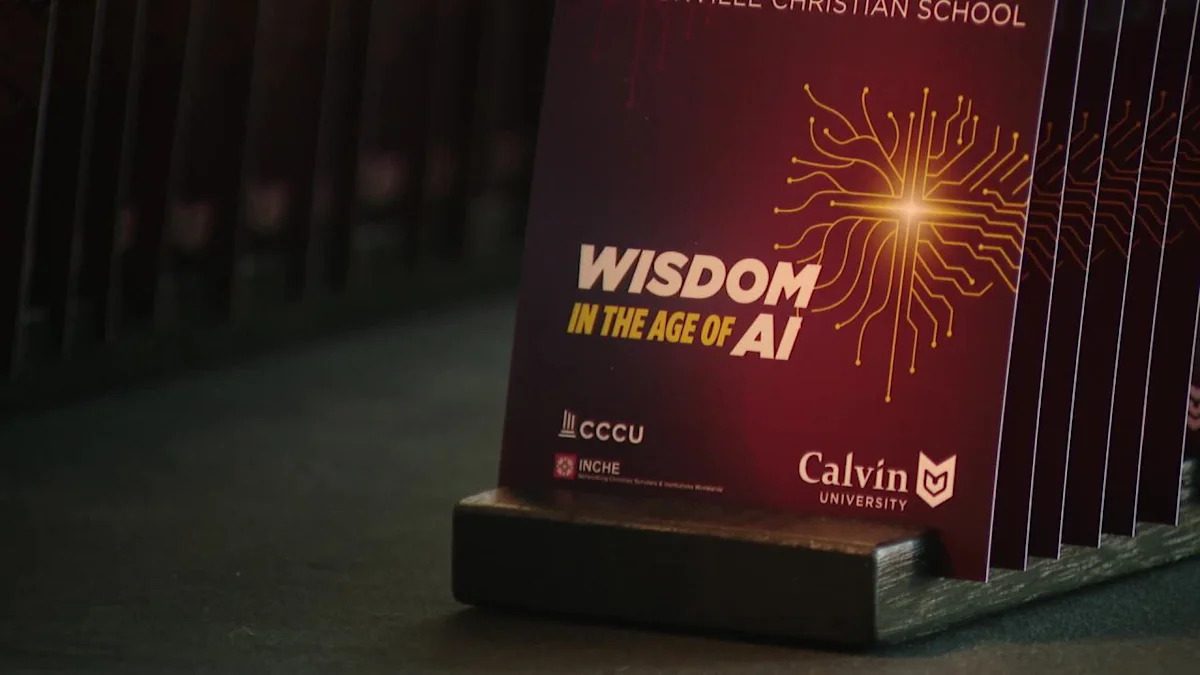
Calvin University launches faith-and-technology center at AI conference

Calvin University launches faith-and-technology center at AI conference

New Capabilities Grand Rapids, MI local

Three-day event brings CIA, MIT, and CNN speakers to Grand Rapids as the university pivots toward AI

Yesterday: Wisdom in the Age of AI conference begins

Overview

Updated 1 hour ago

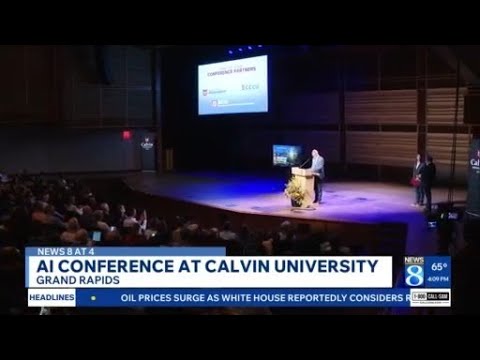
Calvin University opened a three-day AI conference Thursday. It also announced a new Center for Faith and Technology in Grand Rapids, Michigan.

The launch is part of a bet on technology at the 150-year-old Christian school, which cut 12.5% of faculty positions in late 2025. Calvin is pairing new AI programs with a faith-based ethics center to attract students as enrollment falls.

Why it matters

As enrollment falls, Calvin is betting on AI programs paired with faith-based ethics to stay competitive.

Monday: what changed in Grand Rapids, MI

One short email a week with the openings, closings, permits and council votes we covered. Free. Unsubscribe in one click.

Questions about this story

Free account needed to ask — your question is kept and asked for you right after sign-up. Answers are public.

No questions yet — be the first to ask.

Key Indicators

12.5%
Faculty positions cut in late 2025 restructuring
Calvin reduced faculty by 12.5% in November 2025 while consolidating programs.
3,674
Students enrolled during 2025-26 school year
Enrollment figure cited when the new School of Engineering and Computer Science was announced.
6
Conference tracks covering AI applications
Track topics: arts, business, church, education, healthcare, and STEM.
~900
Resources in the faith and technology hub
The online hub is part of the same grant-funded project as the center.

Voices

Curated perspectives — historical figures and your fellow readers.

Ever wondered what historical figures would say about today's headlines?

Sign up to generate historical perspectives on this story.

People Involved

Organizations Involved

Timeline

October 2024 October 2026

5 events Latest: Yesterday
Tap a bar to jump to that date
  1. Conference concludes

    Upcoming Event

    Final keynotes from MIT's Picard and CNN's Struyk close the event.

  2. Wisdom in the Age of AI conference begins

    Latest Event

    Three-day conference opens; Center for Faith and Technology launches.

  3. School of Engineering and Computer Science opens

    Restructuring

    Combines two existing programs under a unified tech-focused vision.

  4. Calvin cuts 12.5% of faculty positions

    Restructuring

    University consolidates programs, including language majors and the journalism minor.

  5. Grant application for faith and AI project

    Funding

    Professors apply to host an AI conference and build a faith and technology hub.

Scenarios

1

Calvin hosts a second AI conference in 2027

Likely Resolves by Nov 30, 2027

Discussed by: Conference organizers and the Calvin Chimes, which reported the grant project as multi-year

The Wisdom in the Age of AI conference is one part of a grant-funded project that also includes an online hub and a book set for summer 2027. If the conference becomes annual, it would solidify Calvin's role as a regular meeting point for Christian AI ethics.

2

'Christian Wisdom for the Age of AI' gains national attention

Possible Resolves by End of 2027

Discussed by: The grant project's stated goal of providing a comprehensive resource directory

The book, with a foreword by theologian Richard Mouw, is set for a summer 2027 release. If it draws reviews in national Christian publications, it could become a reference for faith-based AI ethics beyond Calvin.

3

Center remains dormant after initial grant ends

Unlikely Resolves by Q2 2028

Discussed by: The university's emphasis on enrollment-driven program decisions

The center's work is funded by a single CCCS grant supporting the conference, hub, and book. Without new funding or institutional commitment, the center could wind down after the book's release.

Historical Context

3 moments from history that rhyme with this story — and how they unfolded.

1986

Responsible Technology (1986)

The Calvin Center for Christian Scholarship published "Responsible Technology," a book drawing on Reformed philosophical traditions to examine technology's moral dimensions. It was an early effort to bring Christian theology to bear on technology ethics.

Then

The book contributed to a small but active faith-and-technology conversation at Calvin and other Christian universities.

Now

It became a reference point for later work at the intersection of faith and technology.

Why this matters now

The new Center for Faith and Technology is funded by the same Calvin Center for Christian Scholarship, making this launch an extension of a 40-year-old institutional effort.

1969-present

The Hastings Center (1969)

Daniel Callahan and Willard Gaylin founded the Hastings Center in 1969 as one of the first bioethics research institutions. It began by examining ethical questions raised by new medical technologies like ventilators and organ transplants.

Then

The center became a leading voice in bioethics debates through the 1970s and 1980s.

Now

It helped establish bioethics as a recognized field and influenced policy on medical research and end-of-life care.

Why this matters now

The Hastings model shows how a small academic ethics center can grow into a nationally influential institution, a trajectory Calvin may hope to follow with its AI center.

1986-present

Markkula Center for Applied Ethics (1986)

Santa Clara University, a Jesuit institution in California, founded the Markkula Center for Applied Ethics in 1986. It brought ethical analysis to business, technology, and civic life from a Catholic perspective.

Then

The center became a regional resource for ethics training and consulting.

Now

It grew into one of the most visible university-based applied ethics centers, often cited in tech ethics discussions.

Why this matters now

As a faith-based university ethics center that gained national visibility, Markkula offers a template for what Calvin's Center for Faith and Technology could become.

Sources

(5)