Anchor

Phase Zero will certify 15 to 18 local performers as Cultural Business Enterprises
Today: Phase Zero musician pilot announcedNew here? Follow stories to track developments over time. Create a free account to get updates when stories you care about change.
Overview
Updated 1 hour agoGrand Rapids is paying local musicians like any other city vendor. The Phase Zero pilot will certify 15 to 18 musicians as Cultural Business Enterprises and contract with them for free public performances.
The change is structural. Musicians move from grant applications into the city's vendor system, gaining a formal business record and eligibility for city work. The pilot is the latest in a series of Grand Rapids programs that treat undercapitalized workers as small businesses rather than beneficiaries.
Why it matters
This pilot tests whether cities can treat musicians as contractable small businesses, giving them access to the same procurement and financing tools as other vendors.
Questions about this story
Free account needed to ask — your question is kept and asked for you right after sign-up. Answers are public.
No questions yet — be the first to ask.
Key Indicators
15–18
Musicians to be certified in Phase Zero pilot
Upper bound of the planned cohort; the city will certify 15 to 18 performers.
8
Construction firms in MLBE bonding pilot
A parallel city program helping certified construction firms bid on larger projects.
20
Entrepreneur cap in DRIP retail incubator
Cap for Downtown Grand Rapids Inc.'s retail incubation program, launched in 2025.
Related Media
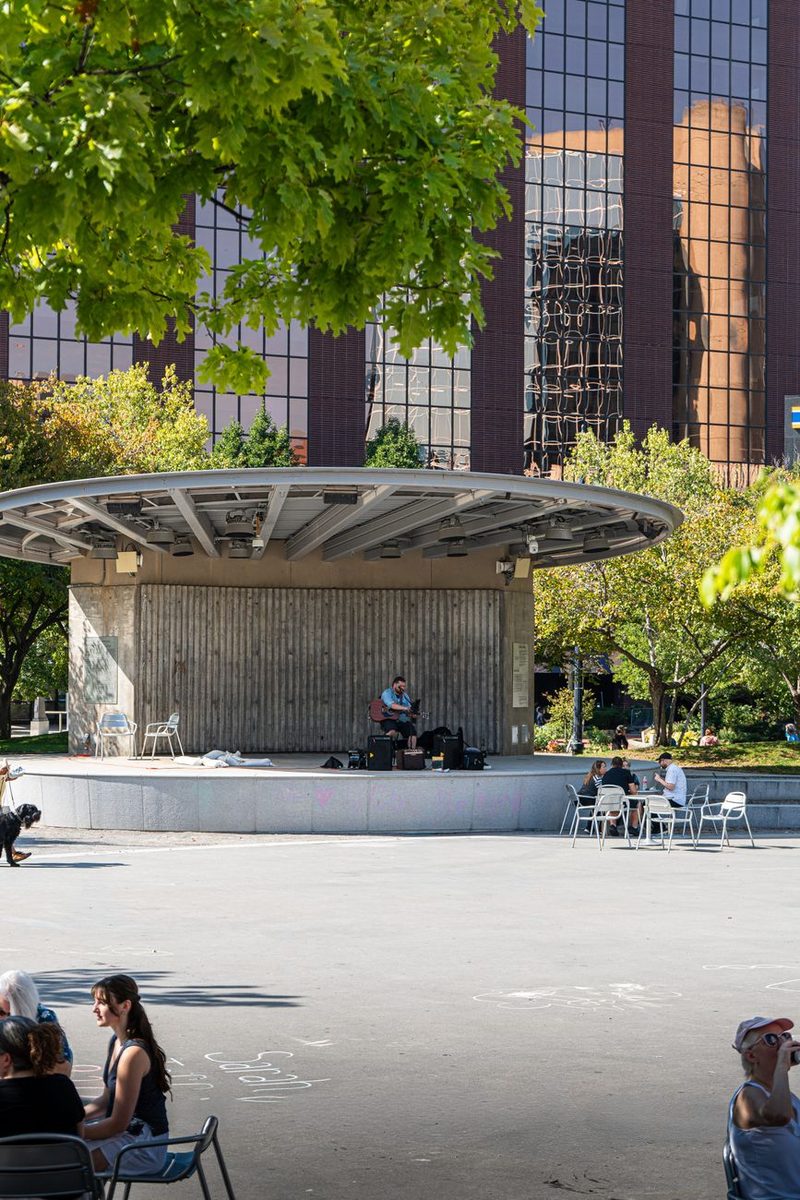
Outdoor live music performance at a city plaza in Grand Rapids, Michigan, during a sunny day.

Micro Local Business Enterprise Certification | City of Grand Rapids, Michigan

131 views
28:07
2026 City of Wichita Activation Grant Info Session
City of Wichita

91 views
3:16
MUSIC FRATERNITY EXPLORES NEW WAYS TO BUILD A ...
Choice TV Saint Lucia
Images from Openverse under Creative Commons licenses. Videos from YouTube.
Voices
Curated perspectives — historical figures and your fellow readers.
Play
Exploring all sides of a story is often best achieved with Play.
Most of these play right now — no account needed. Sign up to save scores, keep a streak, and unlock Debate and Predict.
Log in
Sign Up
Higher or Lower
A number from this story, against one from elsewhere in the news — guess which is bigger, then keep the chain going. 5 rounds, 3 strikes; a miss costs a strike and resets your streak.
Example
Anchor
EU tariff revenue
$52B
Big for this kind of number
Mystery
Pentagon AI contract
?
Round 1
Streak: 0
Mystery
?
Keyboard: ↓/L lower · ↑/H higher
0 pts
Best streak: 0 · Rounds: 0
0 points — sign up to put that on the leaderboard.
Now try on this story
Connections
Sixteen names from the news. Find the four hidden groups of four. Four mistakes max.
Loading today's puzzle…
0/4 groups
Mistakes
Sign up to keep a daily streak — a new puzzle lands every day.
Now try on this story
Exit debate?
Your progress in this debate will be lost.
How it works
- 1 Two AI personas square off on this story.
- 2 You predict who'll win each round — correct picks earn XP.
- 3 One crossfire question is yours to fire. Pick it carefully.
Couldn't generate a topic
Select Your Champions
Choose one persona for each side of the debate
DEBATE TOPIC
Choose personas with different perspectives for a more dynamic debate.
SIDE A (PRO)
Select debater for this side:
No debate personas available right now.
SIDE B (CON)
Select debater for this side:
No debate personas available right now.
VS
Get ready to make your prediction...
Round of
Claim
Evidence
Stakes
Crossfire Answer
Closing Statement
Claim
Evidence
Stakes
Crossfire Answer
Closing Statement
Your Crossfire Question
Generating arguments...
Who's Got This Round?
Make your prediction before the referee scores
The referee scores both sides on
Correct predictions earn +20 XP
· Press 1 or 2 to pick
Evidence
40%
Logic
30%
Detail
20%
Style
10%
Round Results
Your Pick
Not this time
(%)
Overall Score
/10
Your Pick
Not this time
(%)
Overall Score
/10
Set the Crossfire
Pick the question both personas must answer in the final round
Crafting crossfire questions...
Choosing a question earns +10 XP crossfire bonus
🏆
Total XP Earned
Cred Change
Predictions
Debate Oracle! You called every round!
Sharp Instincts! You know your debaters!
The Coin Flip Strategist! Perfectly balanced!
The Contrarian! Bold predictions!
Inverse Genius! Try betting the opposite next time!
XP Breakdown
Base completion
+20 XP
Rounds played ( rounds x 5 XP)
+ XP
Correct predictions ( correct x 20 XP)
+ XP
Crossfire bonus
+10 XP
Accuracy
%
Prediction History
Round
You picked:
✓
✗
Now try on this story
Keep debating to level up your credibility and unlock achievements
People Involved
Organizations Involved
Grand Rapids Office of Equity and Engagement
City government office
Runs small business certification and support programs
City office that certifies small businesses and runs support programs including the MLBE bonding pilot and the Phase Zero musician certification.
Downtown Grand Rapids Inc.
Downtown development organization
Runs the DRIP retail incubator program
Downtown development organization that launched the retail incubator program DRIP in 2025 to support micro-entrepreneurs.
Timeline
December 2020 September 2026
3 events
Latest: Today
-
Phase Zero musician pilot announced
Today PolicyCity certifies 15 to 18 musicians as Cultural Business Enterprises and pays them as vendors for free public performances.
-
DGRI launches DRIP retail incubator
LaunchThree-year program capped at 20 micro-entrepreneurs, with a goal of graduating several into storefronts.
-
Arts Marketplace launches at Studio Park
LaunchCollaborative retail space opened to support local artists and maker businesses.
Historical Context
3 moments from history that rhyme with this story — and how they unfolded.
July 1935 – 1943
WPA Federal Music Project (1935–1943)
The Federal Music Project, part of the Works Progress Administration, employed thousands of musicians during the Great Depression to perform public concerts. It put working musicians on the federal payroll at a time when private bookings had collapsed.
Then
Restored income for thousands of musicians and brought free public concerts to cities nationwide.
Now
Established a lasting model of direct public payment for music performance.
Why this matters now
Shows a prior era when government paid musicians directly for public performance, though as employees rather than certified business vendors.
1977 – 1978
US minority business certification programs (1977–1978)
The Public Works Employment Act of 1977 created the 8(a) program, letting the federal government set aside contracts for certified minority-owned businesses. That certification structure gave firms a formal status that unlocked procurement set-asides.
Then
Created the minority-owned business enterprise (MBE) and women-owned business enterprise (WBE) certification frameworks now common across US cities.
Now
Provided the template Grand Rapids is extending to artists with its Cultural Business Enterprise certification.
Why this matters now
Phase Zero borrows the vendor-certification structure these programs made standard, applying it to a new class of workers.
2013
California Cottage Food Law (2013)
California legalized home-based food businesses, letting home cooks obtain licenses and sell their products as small businesses. The California Homemade Food Act formalized informal culinary work into a recognized business category.
Then
Thousands of home cooks became licensed food businesses in the first several years.
Now
Expanded access to business legitimacy for informal craft and food producers across the state.
Why this matters now
Illustrates how creating a formal certification category can turn informal creative labor into recognized, contractable small businesses.
Sources
(3)Related Stories
Grand Rapids residents challenge Acrisure Amphitheater's noise exemption
Rule Changes
Updated 3 days ago
Grand Rapids replaces Lime with Veo as sole micromobility vendor
Rule Changes
Updated 2 days ago
Grand Rapids backs volunteer snow-shoveling program for elderly residents
Built World
Updated 3 days ago
Rad ish Street Food licensed to open at Grand Rapids Downtown Market
New Capabilities
Updated Aug 27
DeVos Performance Hall schedules six shows for September 2026
Money Moves
Updated Aug 28
Updawgs LLC licensed to operate at Grand Rapids shared kitchen
Rule Changes
Updated 6 days ago