

Pull to refresh
Logo
Greater Dublin Drainage breaks ground after two decades of planning

Greater Dublin Drainage breaks ground after two decades of planning

Built World

The €1.9bn–€2.3bn plant at Clonshaugh is meant to serve 500,000 people and support up to 185,000 new homes, with operation targeted for 2031

Overview

Updated 4 hours ago

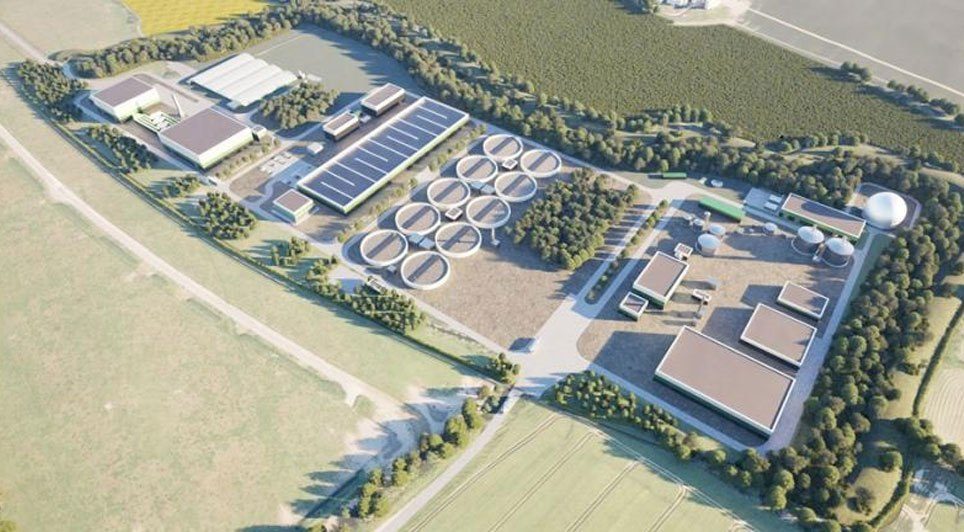
A wastewater plant first called for in a 2005 study has started construction in north Dublin. Preliminary works began at Clonshaugh in mid-November 2026, and the plant is meant to treat sewage for the equivalent of 500,000 people by 2031.

The scheme gives the Dublin region a second treatment plant alongside the overloaded Ringsend works, and Uisce Éireann says it will support up to 185,000 new homes in Dublin, Meath and Kildare. The cost is €1.9bn to €2.3bn, and main construction will not start until late 2027 or early 2028.

Why it matters

Up to 185,000 homes in the Dublin region depend on a plant that will not treat a drop of sewage until 2031.

Questions about this story

Free account needed to ask — your question is kept and asked for you right after sign-up. Answers are public.

No questions yet — be the first to ask.

Key Indicators

€2.3B
Upper cost estimate
Uisce Éireann prices the scheme at €1.9bn to €2.3bn, up sharply from early estimates.
185,000
Homes the plant is meant to support
New housing in north Dublin, Meath and Kildare that the capacity is designed to serve.
500,000
Population equivalent served
The wastewater load the plant is designed to treat.
25 km
Orbital sewer length
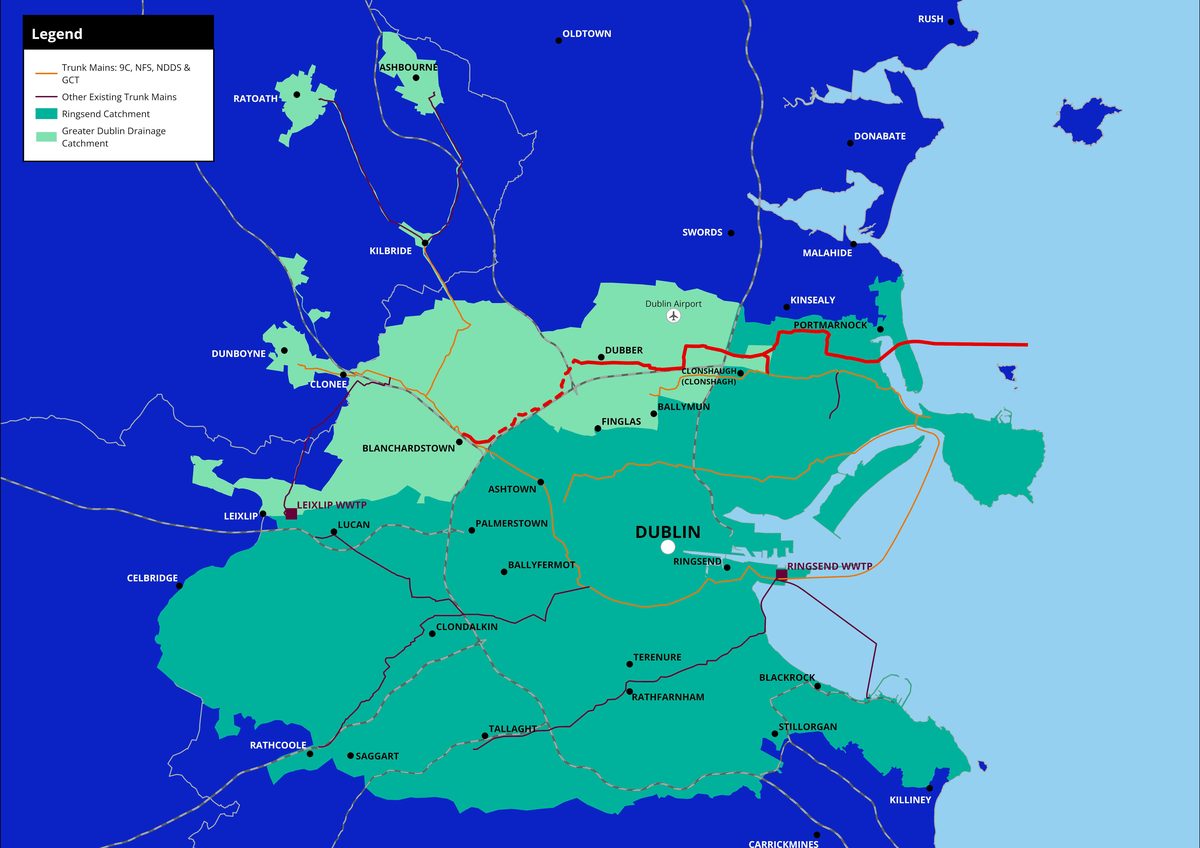
Underground pipeline carrying wastewater from Blanchardstown to Clonshaugh.
6 km
Marine outfall
Treated water discharges into the Irish Sea from Baldoyle, ending northeast of Ireland's Eye.
2031
Target operation date
Uisce Éireann expects the plant to be running by 2031.

Voices

Curated perspectives — historical figures and your fellow readers.

Sign up to generate historical perspectives on this story.

People Involved

Organizations Involved

Timeline

2005 November 2026

11 events Latest: Yesterday Showing 8 of 11
Tap a bar to jump to that date
  1. Trade press confirms cost range and 2031 target

    Latest Reporting

    Construction Review reports the scheme at €1.9bn–€2.3bn with preliminary works under way and completion targeted for 2031.

  2. Sod turned at Clonshaugh

    Construction

    Taoiseach Micheál Martin and ministers mark the start of preliminary works; main construction is not due until late 2027 or early 2028.

  3. Discharge licence sought from the EPA

    Regulatory

    The utility applies for the wastewater discharge licence the plant needs to operate.

  4. Further information filed with the board

    Planning

    Uisce Éireann updates the application for environmental, policy and legislative changes since 2018.

  5. Planning application finally lodged

    Planning

    Uisce Éireann submits the application to An Bord Pleanála, seven years after the project began and a decade after the crash emptied the exchequer.

  6. Fingal County Council starts the project

    Planning

    The council initiates the scheme on behalf of Dublin's four local authorities plus Meath, Kildare and Wicklow.

  7. Study identifies the need for a second plant

    Planning

    The Greater Dublin Strategic Drainage Study finds Ringsend and its feeder sewers cannot carry the region's growth, and calls for a new plant in north Dublin.

Scenarios

1

Plant Treats Wastewater by 2031

Possible Resolves by End of 2031

Discussed by: Uisce Éireann and the Department of Housing, which put 2031 in the project's public schedule

Preliminary works run through 2027, main construction starts at the end of that year or early 2028, and commissioning follows. The utility has already cleared planning, the compulsory purchase orders and the last legal challenge, leaving construction and licensing as the remaining hurdles. The EPA discharge licence must be in place before flows are accepted.

2

Main Construction Starts on Schedule in 2028

Likely Resolves by Q2 2028

Discussed by: Uisce Éireann infrastructure delivery director Maria O'Dwyer, and Business Post reporting on the schedule

The near-term test is not 2031 but 2028. Site preparation, fencing and access work are under way now; the heavy build depends on procurement concluding and no fresh legal action emerging. Uisce Éireann has said main works will begin at the end of 2027 or early 2028.

3

Costs Climb Past €2.3bn

Possible Resolves by End of 2031

Discussed by: The Irish Times, which noted the cost has already quadrupled since planning began, and RTÉ's reporting on the same point

The scheme's price has risen roughly fourfold over two decades of delay, and the upper bound of €2.3bn covers a build that has not yet been tendered in full. Construction inflation between now and 2031, plus any design changes tied to the environmental safeguards agreed in the 2025 settlement, would push the final figure higher.

Historical Context

2 moments from history that rhyme with this story — and how they unfolded.

2008–2018

Ireland's post-2008 capital squeeze (2008–2018)

The financial crash left the State short of cash just as the drainage project was getting organised. Work on the planning application stalled for years; the submission did not reach An Bord Pleanála until June 2018, seven years after Fingal County Council started the scheme.

Then

Projects that had been identified as necessary waited for money that was not there.

Now

The government later set up two funds intended to keep capital investment running through a future downturn.

Why this matters now

The Clonshaugh build now needs five years of steady funding. A repeat of 2008 would hit it mid-construction rather than mid-planning.

2005–2026

Ringsend reaches its limits (2005–2026)

Ringsend has carried the bulk of Dublin's wastewater while the city's population grew. The 2005 drainage study identified the plant's limited capacity, and the new scheme is explicitly designed to take pressure off it, with treated water from Clonshaugh piped to the Irish Sea rather than back through the existing Works.

Then

Successive housing and commercial developments depended on whatever headroom Ringsend had left.

Now

The region's growth has been tied to a single treatment plant for two decades.

Why this matters now

Until 2031, north Dublin's development still runs through Ringsend. The capacity constraint does not lift when the sod is turned.

Sources

(6)