

Pull to refresh
Logo
Greece begins construction of the Corinth–Kos subsea power link

Greece begins construction of the Corinth–Kos subsea power link

Built World

A 1,000 MW direct-current cable is meant to end Kos's oil-fired isolation by 2030, with Rhodes and Karpathos to follow through Kos.

Overview

Updated 52 minutes ago

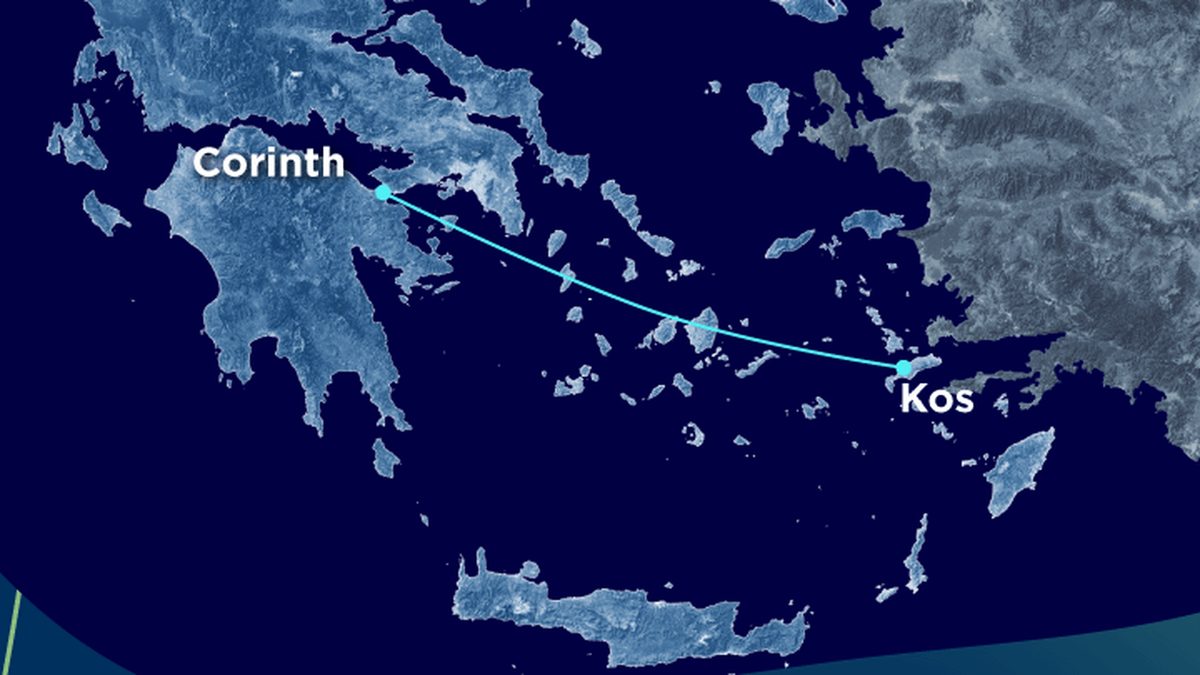
Kos, like most Greek islands off the mainland grid, makes its own electricity by burning imported oil. On 9 November 2026, Greece's transmission operator signed a contract worth about €1.48 billion to reach the island by cable instead. The link is scheduled for completion in 2030.

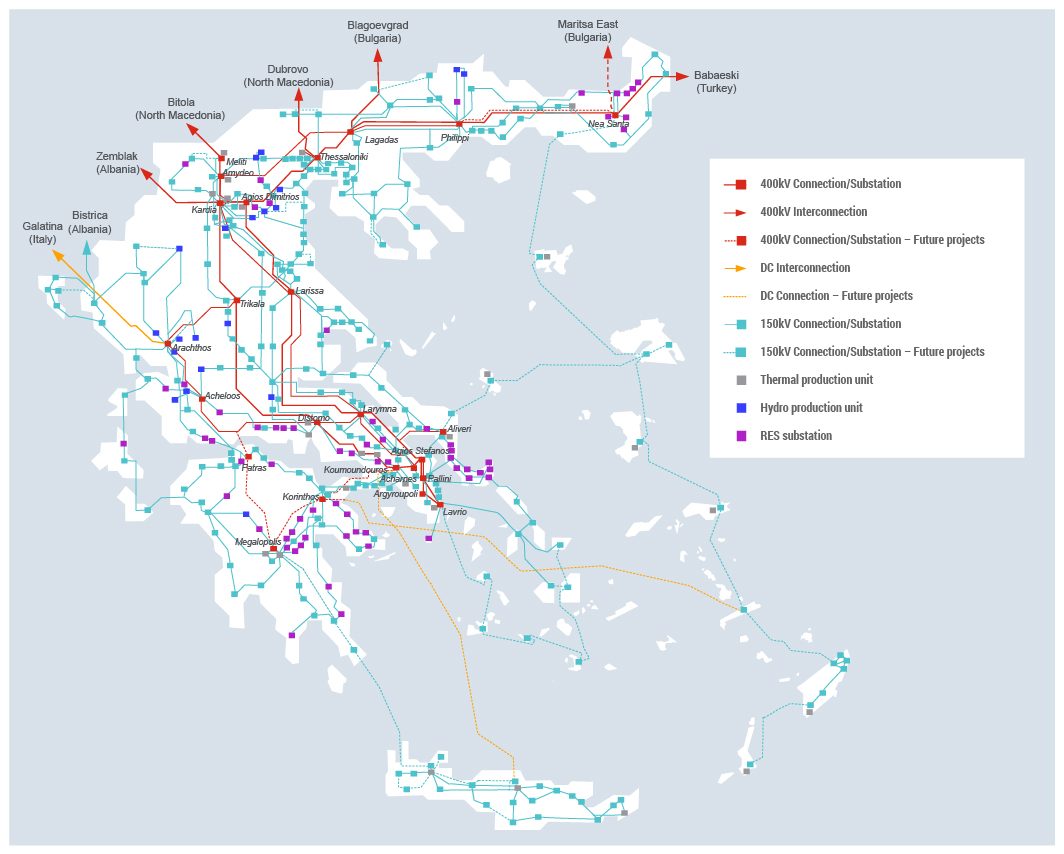
The cable is rated at 1,000 megawatts and runs roughly 1,290 kilometres from Corinth to Kos, mostly under the sea. Kos connects first; Rhodes and Karpathos follow through Kos, and 13 smaller islands join the system indirectly. Retiring island oil plants also trims a surcharge that electricity customers across Greece pay to cover the cost of non-connected islands.

Why it matters

Sixteen Greek islands eventually stop running their own oil-fired grids, and every Greek electricity bill helps pay for that oil today.

Questions about this story

Free account needed to ask — your question is kept and asked for you right after sign-up. Answers are public.

No questions yet — be the first to ask.

Key Indicators

€1.48B
Project budget
ADMIE's figure for cable supply and installation; Hellenic Cables puts the contract at about €1.5 billion.
1,000 MW
Transmission capacity
Power the direct-current link can carry between Corinth and Kos.
320 kV
Cable voltage
Voltage class of the high-voltage direct-current system.
1,290 km
Cable to be installed
About 1,260 km submarine plus 30 km underground, per the contractor.
13
Small islands joining indirectly
Kasos, Halki, Symi, Kalymnos, Pserimos, Telendos, Nisyros, Tilos, Leros, Lipsi, Gyali, Patmos and Arkioi.

Voices

Curated perspectives — historical figures and your fellow readers.

Sign up to generate historical perspectives on this story.

Organizations Involved

Timeline

August 2026 November 2026

3 events Latest: Today
  1. ADMIE signs the €1.48bn cable contract, beginning construction

    Today Contract signing

    The signature moves the project into construction, with seabed surveys due to start shortly to fix the underwater route.

  2. Nexans to supply 420 km of 110 kV cable

    Subcontract

    Nexans signed a subcontract with Hellenic Cables and began production on its lines.

  3. Hellenic Cables wins the turnkey contract

    Contract award

    The company was named contractor for engineering, procurement, construction and installation of the 320 kV link, pending statutory approvals.

Scenarios

1

Cable energized by 2030 and Kos's oil units shut down

Likely Resolves by Q2 2031

Discussed by: ADMIE and Hellenic Cables, in their contract announcements

The contract sets a fourth-quarter 2026 start and a 2030 finish. That requires the seabed survey to settle a route, the Corinth and Thiva plants to hold their manufacturing slots, and installation vessels to be available for roughly 1,260 km of submarine cable. If it holds, Kos draws mainland power and its local oil-fired units can be retired.

2

Completion slips beyond 2030

Possible Resolves by End of 2030

Discussed by: No public forecaster; the risk sits in the four-year window between a Q4 2026 start and a 2030 finish

Two long cable systems, a seabed route through the Aegean and a European cable industry with crowded order books all sit between the signature and the switch-on. A slip would extend Kos's oil dependence and delay the surcharge reduction ADMIE has promised.

3

ADMIE signs the Kos–Rhodes cable contract

Possible Resolves by End of 2029

Discussed by: ADMIE's published investment plan for the Dodecanese

Kos is described as the first landing point, with Rhodes and Karpathos connected directly to the high-voltage grid through Kos afterwards. A contract for the next leg would show the programme is advancing rather than stalling after its first cable.

Historical Context

3 moments from history that rhyme with this story — and how they unfolded.

2015

Malta–Sicily interconnector (2015)

Malta generated its electricity from oil-fired plants on an island with no link to any other grid. A submarine cable to Sicily connected it to the European network and let it import power instead.

Then

The island gained a supply route that did not depend on fuel deliveries by sea.

Now

Malta became a small island system with a mainland anchor, the same role the Corinth–Kos cable is meant to play for the Dodecanese.

Why this matters now

It is the closest example of a small island grid ending oil-only electricity supply by cable rather than by building new local plants.

2021

Crete–Attica HVDC link (2021)

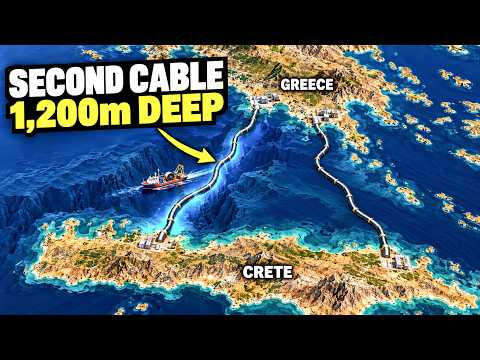
Greece's largest island was tied to the Attica grid by a 1,000 MW direct-current submarine cable, after years of planning by the same transmission operator now building the Dodecanese link.

Then

Crete could draw mainland power and send power back, reducing what its local oil-fired plants had to produce.

Now

It established the technical and contractual template ADMIE is now applying island by island.

Why this matters now

Corinth–Kos uses the same direct-current approach, at a much longer cable length and a higher price tag.

2006

Basslink, Tasmania (2006)

A 500 MW submarine cable tied the island state of Tasmania to mainland Australia's grid, making the island's power system dependent on one link for its mainland trade.

Then

The cable failed in December 2015 and stayed out for months, forcing the island back onto local generation.

Now

The operating company later went into administration, and the outage became the standard cautionary case for single-cable island systems.

Why this matters now

The Dodecanese plan routes Rhodes and Karpathos through Kos rather than direct to the mainland, which concentrates risk on the Corinth–Kos cable and its converter stations.

Sources

(6)