
Pull to refresh
Logo
Daily Brief
Following
Why Sign Up
Worst flooding in two decades swamps Oahu, triggers federal aid request

Worst flooding in two decades swamps Oahu, triggers federal aid request

Built World
By Newzino Staff |

Governor Green seeks 90% federal cost share as damage estimates top $1 billion

Yesterday: Governor Green requests presidential major disaster declaration

Overview

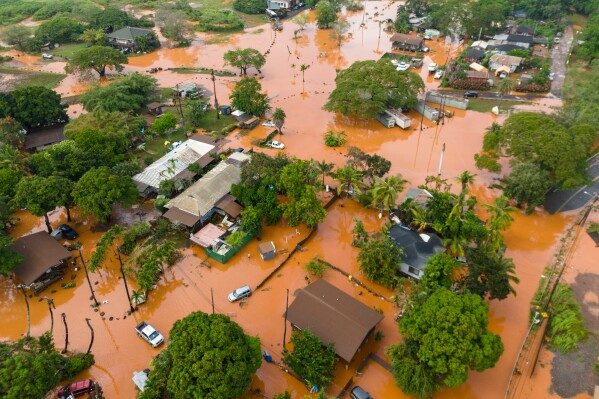
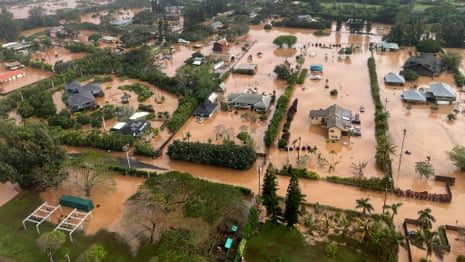
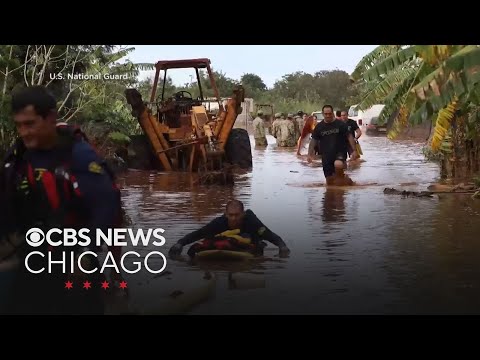
A slow-moving Kona low drenched Oahu beginning March 17, unleashing the worst flooding Hawaii has seen in over twenty years. Flash floods tore across the North Shore and southern reaches of the island, forcing thousands to evacuate and triggering rescue operations that pulled more than 230 people to safety. Damage estimates now exceed $1 billion.

Why it matters

A billion-dollar recovery hinges on whether Washington approves the disaster declaration and at what cost share.

Key Indicators

$1B+
Estimated damage
Preliminary damage estimate across Oahu from flooding, infrastructure failure, and property loss.
230+
People rescued
Individuals pulled from floodwaters by emergency responders since March 17.
90%
Requested federal cost share
The portion of recovery costs Governor Green is asking the federal government to cover.
20+ years
Since comparable flooding
The worst flooding Hawaii has experienced since at least 2006.

Interactive

Exploring all sides of a story is often best achieved with Play.

Ever wondered what historical figures would say about today's headlines?

Sign up to generate historical perspectives on this story.

Sign Up

Debate Arena

Two rounds, two personas, one winner. You set the crossfire.

People Involved

Organizations Involved

Timeline

  1. Governor Green requests presidential major disaster declaration

    Political

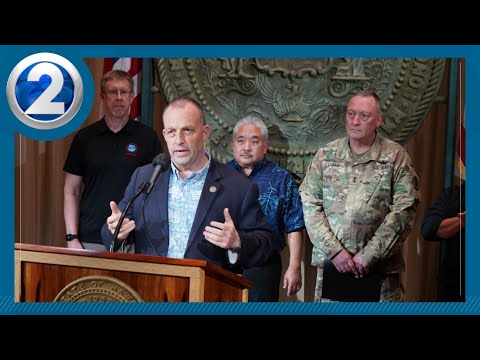
    Governor Josh Green formally submitted a request to the Trump administration for a presidential major disaster declaration, seeking a federal cost share of up to 90%. FEMA deployed damage-assessment teams to work alongside state crews.

  2. Damage estimates surpass $1 billion

    Assessment

    Preliminary damage assessments indicated total losses exceeding $1 billion, accounting for residential and commercial property damage, road and infrastructure failures, and agricultural losses.

  3. Flooding spreads to southern Oahu, rescue operations intensify

    Emergency Response

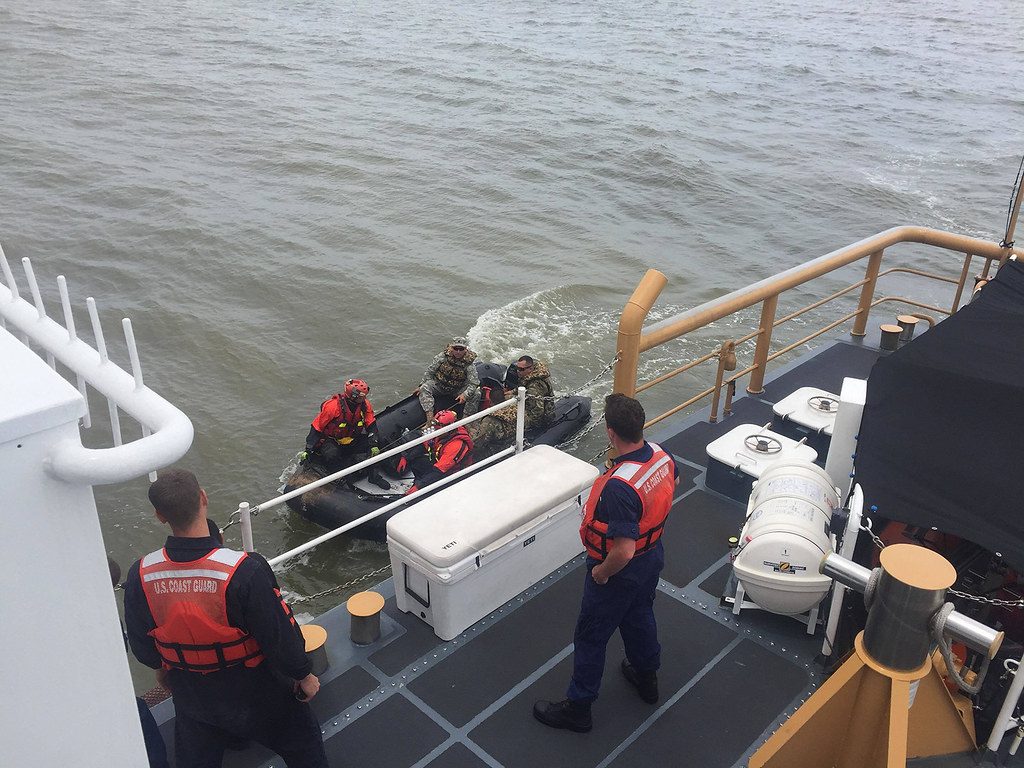
    Flooding expanded to southern regions of Oahu. Rescue teams conducted water rescues across multiple neighborhoods, ultimately saving more than 230 people over the course of the event.

  4. Flash flooding hits North Shore, evacuations begin

    Emergency Response

    Flash floods struck Oahu's North Shore communities. Emergency services began evacuating residents from low-lying areas as streams and rivers overflowed.

  5. Kona low parks over Oahu, heavy rainfall begins

    Weather Event

    A slow-moving Kona low weather system settled over the Hawaiian Islands, bringing sustained heavy rainfall to Oahu. Flash flood warnings were issued for multiple areas.

Scenarios

1

Trump approves full disaster declaration with 90% federal share

Discussed by: Emergency management analysts; precedent from prior Hawaii disaster declarations

FEMA damage assessments confirm losses well above the per-capita threshold for federal aid, and the administration approves the declaration at or near the requested 90% cost share. This would unlock Individual Assistance for affected residents and Public Assistance for infrastructure rebuilding. The scale of damage — over $1 billion — makes a strong case, and denying aid to a U.S. state after visible mass rescues would carry significant political cost.

2

Declaration approved at reduced federal cost share

Discussed by: Fiscal policy watchers; analysts tracking FEMA budget constraints

The administration approves the disaster declaration but at a lower cost share — the standard 75% rather than the requested 90%. This is the default split under the Stafford Act; the 90% rate requires a specific presidential determination that the disaster is severe enough to warrant it. The administration could argue the standard rate is sufficient, forcing Hawaii to cover 25% of costs instead of 10% — a difference of roughly $150 million on a $1 billion recovery.

3

Declaration delayed as damage assessments drag on

Discussed by: Emergency management professionals familiar with FEMA assessment timelines

FEMA's joint damage assessments with state crews take weeks to complete, delaying the presidential decision. During this period, Hawaii bears the full cost of emergency operations and temporary housing. Extended delays have occurred in past disasters when FEMA staffing was stretched thin or when political considerations complicated the timeline. Each week of delay increases pressure on state and county budgets.

4

Declaration denied, Hawaii mounts legal and political challenge

Discussed by: Political analysts; disaster law scholars

The administration denies the declaration, arguing damage does not meet federal thresholds or that the state has sufficient resources. This would be highly unusual for a disaster of this scale — denial rates for billion-dollar events are very low historically — but would force Hawaii to fund recovery from state reserves and seek congressional intervention. A denial would likely become a major political flashpoint.

Historical Context

Kauai Floods (2018)

April 2018

What Happened

Nearly 50 inches of rain fell on Kauai's north shore over 24 hours in April 2018, triggering catastrophic flooding and landslides that cut off the town of Wainiha. Hundreds of homes were damaged or destroyed, and major roads were washed out, leaving communities isolated for months.

Outcome

Short Term

Governor David Ige secured a federal disaster declaration. FEMA provided over $38 million in aid. Some residents were displaced for more than a year.

Long Term

Kuhio Highway repairs took years and cost over $100 million. The event highlighted the vulnerability of Hawaii's coastal communities and single-road-access areas to extreme rainfall.

Why It's Relevant Today

The 2018 Kauai floods are the closest recent precedent for catastrophic Hawaiian flooding and a federal disaster response. The current Oahu event is far larger in economic terms, affecting a much more populated island.

Maui Wildfires (2023)

August 2023

What Happened

Wind-driven wildfires destroyed the historic town of Lahaina on Maui, killing over 100 people and causing an estimated $5.5 billion in damage. It was the deadliest U.S. wildfire in more than a century. Governor Green led the state response and navigated a complex federal aid process.

Outcome

Short Term

President Biden approved a major disaster declaration within days. FEMA faced criticism for slow initial distribution of aid. Thousands of residents were displaced into hotels and temporary housing.

Long Term

The disaster reshaped Hawaii's approach to emergency management, prompted reforms to warning systems, and left lasting questions about rebuilding in high-risk areas. Federal aid distribution remained contentious more than a year later.

Why It's Relevant Today

The Maui disaster is the most recent test of Hawaii's relationship with FEMA and federal disaster aid. Governor Green's experience navigating that process — including its frustrations — directly shapes his approach to the current flooding declaration request.

Hurricane Iniki (1992)

September 1992

What Happened

Hurricane Iniki struck Kauai as a Category 4 storm, the most powerful hurricane to hit Hawaii in recorded history. It destroyed over 1,400 homes and damaged 5,000 more, causing $3.1 billion in damage (in 1992 dollars). The storm killed six people and left much of Kauai without power for months.

Outcome

Short Term

President George H.W. Bush declared a major disaster immediately. Federal aid flowed quickly, partly because the disaster occurred during an election year.

Long Term

Iniki reshaped Hawaii's building codes and insurance markets. It remains the benchmark against which major Hawaiian natural disasters are measured.

Why It's Relevant Today

Iniki set the precedent for large-scale federal disaster response in Hawaii. The current flooding, while different in character, approaches Iniki-level damage estimates when adjusted for inflation, underscoring the scale of the recovery challenge.

Sources

(3)