
Overview
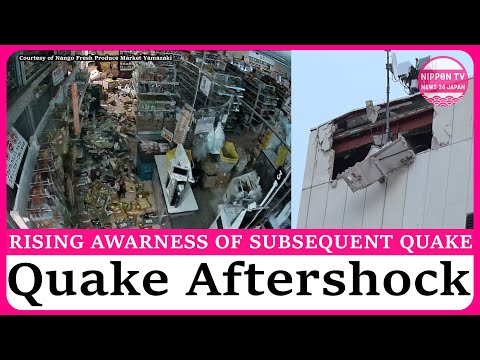
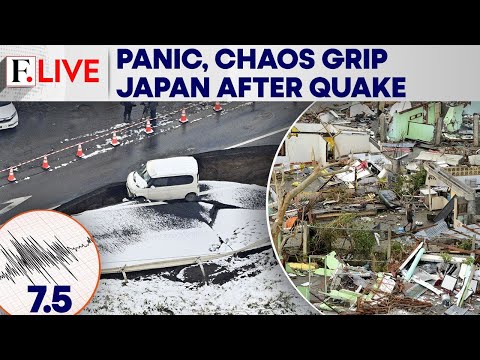
On December 8, 2025, a magnitude 7.6 offshore earthquake struck at 23:15 JST off the coast of Aomori Prefecture in Japan’s Sanriku region, shaking Hachinohe at a maximum ‘upper 6’ on Japan’s intensity scale and triggering tsunami warnings forecasting waves up to three meters for parts of Hokkaido, Aomori, and Iwate. Japan’s Meteorological Agency (JMA) and local authorities ordered or urged tens of thousands of coastal residents to evacuate; recorded tsunami heights ultimately stayed in the 20–70 cm range, and by the early hours of December 9 the initial warnings were downgraded to advisories, with at least 23 injuries reported but no deaths or large-scale structural collapse.
The quake became the first real-world test of Japan’s post‑2011 tsunami and megaquake preparedness in the Tohoku–Hokkaido corridor: within hours, JMA and the Cabinet Office issued the country’s first-ever ‘Hokkaido–Sanriku subsequent earthquake advisory’, warning that for about one week the probability of another very large earthquake along the Japan and Kuril Trenches is elevated relative to normal, and calling on residents in 182 municipalities from Hokkaido to Chiba to stay ready to evacuate quickly if strong shaking or new tsunami warnings occur. This story arc tracks how Japan, scarred by the 2011 Tōhoku catastrophe and shaped by decades of Sanriku tsunamis, is now trying to live with quantified but deeply uncertain megaquake risk while keeping daily life and economic activity running.
Key Indicators
People Involved
Organizations Involved
Japan’s national meteorological and geophysical agency responsible for weather forecasts, earthquake and tsunami monitoring, early-warning alerts, and geohazard information.
The Cabinet Office’s disaster management arm coordinates national planning, standards, and emergency response for earthquakes, tsunamis, volcanoes, and other major hazards.
Coastal city in southeastern Aomori Prefecture, central to past and present Sanriku earthquake and tsunami events.
Timeline
-
Tsunami Warnings Downgraded; Advisory Period Begins
Emergency ResponseAs observed tsunami heights remain under 1 m, JMA downgrades tsunami warnings for parts of Aomori, Iwate, and Hokkaido to advisories, later lifting some as wave activity subsides. Evacuation orders begin to be relaxed, but authorities urge residents not to dismantle preparedness during the one‑week advisory window.
-
First-Ever Hokkaido–Sanriku Subsequent Earthquake Advisory Issued
AdvisoryAfter analysing the quake’s magnitude and location, JMA and the Cabinet Office announce the first ‘Hokkaido–Sanriku subsequent earthquake advisory’ since the system’s creation, covering 182 municipalities from Hokkaido to Chiba. The advisory states that while a giant follow‑on earthquake remains unlikely in absolute terms, the risk is higher than usual for about one week, and urges residents to reconfirm evacuation plans.
-
Transport Disruption and Nuclear Checks; Rokkasho Facility Reports Minor Spill
InfrastructureTohoku Shinkansen services and several conventional rail lines are suspended while tracks and overhead lines are inspected; some airports and ports temporarily halt operations. Nuclear plants along the northern Pacific coast, including Higashidori and Onagawa, report no irregularities, while the Rokkasho nuclear fuel cycle facility notes a small water spill that does not compromise safety.
-
Tsunami Warnings Issued; Coastal Evacuations Ordered
Emergency ResponseJMA issues tsunami warnings projecting waves up to 3 m for parts of Hokkaido, Aomori, and Iwate, and advisories for a wider stretch of the Pacific coast. Authorities order or urge evacuation for roughly 90,000 residents in low‑lying coastal zones as public broadcaster NHK flashes urgent ‘Tsunami! Run!’ alerts.
-
Magnitude 7.6 Sanriku Earthquake Strikes off Aomori
DisasterA Mw 7.6 thrust earthquake occurs about 80 km off Aomori’s Pacific coast at ~44–54 km depth, shaking Hachinohe at ‘upper 6’ on the JMA scale and being felt as far as Tokyo. Initial reports cite infrastructure damage, power outages, and at least 23 injuries but no deaths.
-
2025 Kamchatka Megathrust Earthquake Sends Modest Tsunami to Japan
Regional EventAn Mw 8.8 earthquake off Russia’s Kamchatka Peninsula, the strongest globally since 2011, triggers Pacific‑wide tsunami alerts. Japan records ~40 cm waves in Hokkaido, disrupting ferries and some transport but causing little damage. The event serves as a live drill for long‑range tsunami warning and cross‑border coordination.
-
2024 Noto Earthquake Triggers First Post‑2011 Major Tsunami Warning
DisasterA powerful quake off the Noto Peninsula prompts JMA to issue a rare ‘major tsunami warning’ for parts of the Sea of Japan coast, leading to large‑scale evacuation orders. Although eventual tsunami heights are below worst‑case projections, the episode reinforces both the benefits and social costs of aggressive tsunami warnings.
-
‘Hokkaido–Sanriku Subsequent Earthquake Advisory’ System Enters Operation
PolicyThe Cabinet Office and JMA begin operational use of a new advisory that is triggered when a Mw ≥7 earthquake occurs along the Japan or Kuril Trenches, indicating that the relative probability of an even larger Mw 8‑class ‘follow‑on’ quake is elevated for about a week. Municipalities in northern and eastern Japan start public education on the system.
-
Japan Upgrades National Tsunami Warning System
PolicyJMA introduces a new tsunami warning scheme with clearer categories and color‑coded alerts, designed for faster and more accurate forecasts after large offshore earthquakes. The reforms aim to prevent both underestimation of tsunami heights and public confusion seen in 2011.
-
2011 Tōhoku Earthquake and Tsunami Devastate Northeast Japan
DisasterA magnitude 9.0 megathrust earthquake off the Tōhoku coast triggers massive tsunamis up to ~40 m in places, killing nearly 20,000 people, destroying hundreds of thousands of buildings, and causing the Fukushima Daiichi nuclear disaster. The catastrophe exposes weaknesses in tsunami defences and emergency planning, spurring a decade of reforms.
Scenarios
Heightened Week Passes Without a Major Follow‑On Quake
Discussed by: JMA guidance, domestic media explainers, seismologists noting low absolute probabilities
In this scenario, the one‑week advisory period elapses with only typical aftershocks and no Mw 8‑class ‘follow‑on’ event. The main consequences are short‑term economic disruption from transport suspensions and evacuations, localized damage repairs, and a national ‘stress test’ of the new advisory system. Debate focuses on whether such strongly worded advisories could lead to complacency or ‘warning fatigue’ if repeated without large subsequent quakes, and how to communicate probabilistic risk without triggering either panic or indifference. However, the relatively smooth evacuations and lack of casualties are cited as evidence that post‑2011 reforms are working.
Significant Aftershock or Regional Quake Causes Additional but Manageable Damage
Discussed by: JMA technical notes, academic seismologists referencing past Sanriku and Tokachi sequences
Here, a strong aftershock or separate regional event in the Mw 6–7 range occurs within days, potentially on a different segment of the trench system. Localized damage increases—especially in already weakened structures, slopes, and infrastructure—and small tsunamis may again prompt evacuations. The advisory system is seen as validated: communities were primed and evacuations proceed more efficiently. However, the event also reveals gaps—such as under‑reinforced older housing, limited vertical evacuation capacity in some fishing ports, or confusion about when to re‑evacuate—and pushes the government towards further hardening of coastal communities and critical infrastructure.
Rare but Feared: A Japan Trench Megathrust Quake During the Advisory Window
Discussed by: Long‑term hazard studies on Japan/Kuril Trench megathrusts; Cabinet Office and JMA scenario planning
In this low‑probability, high‑impact scenario, the 2025 Sanriku quake is followed within days or weeks by a much larger Mw 8‑class or greater megathrust earthquake along the Japan Trench, producing destructive tsunamis on par with or exceeding 2011 in some areas. Even with strengthened seawalls, elevated evacuation routes, and extensive drills, the scale and speed of inundation could strain defenses. This is the contingency the advisory system is explicitly designed for: an opportunity to turn a ‘foreshock’ into a life‑saving warning. Outcomes hinge on whether residents treat the advisory seriously, vertical evacuation buildings perform as designed, and nuclear and petrochemical facilities remain secure under combined shaking and flooding stress.
Policy and Infrastructure Overhaul Accelerates, Regardless of Follow‑On Quakes
Discussed by: Domestic policy commentators, disaster‑risk scholars, nuclear‑safety advocates
Even if no large follow‑on quake materializes, the first activation of the Hokkaido–Sanriku advisory could lead to a second wave of institutional reform. Possible measures include expanding advisory coverage to additional trench segments, standardizing how schools and workplaces adjust operations during advisory weeks, stepping up retrofits of older housing and seawalls in high‑risk municipalities, and revisiting nuclear restart plans along the northern Pacific coast. The 2025 Sanriku event would then be remembered less for its damage and more as the moment Japan operationalized a probabilistic, ‘living with megaquake risk’ regime that sits somewhere between routine preparedness and full crisis.
Historical Context
2011 Tōhoku Earthquake and Tsunami
2011-03-11 to 2011-03-31 (acute phase)What Happened
On March 11, 2011, a Mw 9.0 megathrust earthquake ruptured a long segment of the Japan Trench off Tōhoku, generating massive tsunamis that overtopped or destroyed coastal defenses, killed nearly 20,000 people, and triggered the Fukushima Daiichi nuclear disaster through flooding and power loss.
Outcome
Short term: Widespread destruction of towns, ports, and infrastructure; long‑term evacuations around Fukushima; emergency market support from the Bank of Japan and a massive humanitarian and reconstruction effort.
Long term: Sweeping reforms in tsunami zoning, seawall design, early warning, and nuclear regulation, with some coastal communities relocating to higher ground and national hazard models revised upward for future megathrust events.
Why It's Relevant
The 2025 Sanriku earthquake struck in the broader region scarred by 2011 and directly informed today’s systems: improved tsunami warnings, stronger seawalls like at Onagawa, more cautious nuclear oversight, and the very idea of using preceding Mw 7‑class events as potential ‘foreshocks’ for megaquakes underpins the Hokkaido–Sanriku advisory.
1933 Sanriku Earthquake and Tsunami
1933-03-02 to 1933-03-03What Happened
In March 1933, a Mw 8.4 intraplate earthquake off the Sanriku coast produced a devastating tsunami that reached nearly 29 m in places, obliterating coastal villages and killing more than 1,500 people, with over 1,500 missing.
Outcome
Short term: Thousands of homes were destroyed and many Sanriku fishing communities suffered catastrophic losses of life and livelihood.
Long term: The disaster led to early seawall construction and heightened awareness of Sanriku’s extreme tsunami amplification, forming part of the historical record that now informs Japan Trench megaquake scenarios and local memory of ‘tsunami towns.’
Why It's Relevant
The 2025 quake uses the ‘Sanriku earthquake’ label in part because this coast has repeatedly experienced disproportionate tsunami impacts. Comparing 1933’s towering waves and high death toll with the modest waves and zero fatalities so far in 2025 underscores both the randomness of rupture size and the cumulative benefits of modern defences and evacuation drills.
1994 Offshore Sanriku Earthquake
1994-12-28 to early 1995 (aftershock sequence)What Happened
On December 28, 1994, a Mw 7.7 earthquake struck offshore east of Hachinohe, producing shindo 6 shaking in Aomori cities and a small (~55 cm) tsunami. It killed three people, injured hundreds, and caused thousands of buildings to suffer varying degrees of damage, along with power outages and port‑area liquefaction.
Outcome
Short term: Significant but localized structural damage and infrastructure disruption across Aomori and Iwate, but no large‑scale tsunami catastrophe.
Long term: The event contributed to engineering and hazard‑model refinements for mid‑M7 trench earthquakes, particularly around Hachinohe. It demonstrated that strong shaking alone, even with modest tsunamis, can generate substantial economic losses.
Why It's Relevant
The 1994 offshore Sanriku earthquake is a close analogue in magnitude, location, and intensity distribution to the 2025 event. Comparing the two helps analysts distinguish what is new—such as post‑2011 tsunami awareness and the subsequent earthquake advisory—from what is recurring seismic behaviour in the Sanriku segment.
