
Pull to refresh
Logo
Chemists assemble six-substituted benzene rings from scratch

Chemists assemble six-substituted benzene rings from scratch

New Capabilities

A [3+3] benzannulation sets all six ring positions from the starting materials, opening a route to fully substituted drug analogues.

Overview

Updated 21 minutes ago

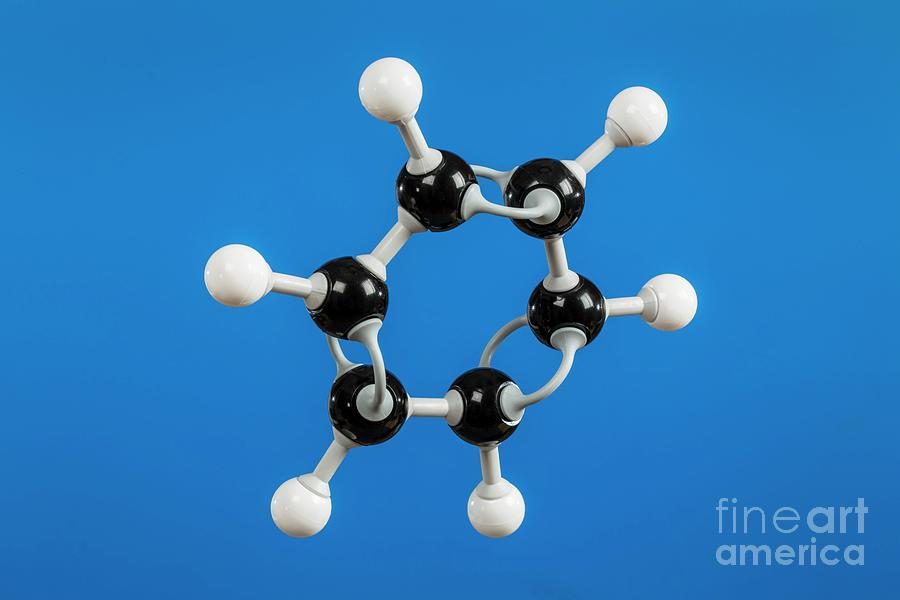
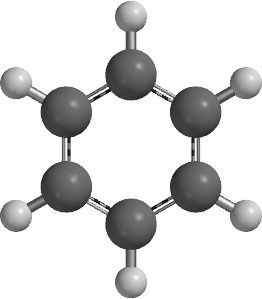
Nearly 80% of the 200 most-prescribed small-molecule drugs contain a substituted benzene ring. Fewer than 2% of those rings carry six substituents, because adding groups one at a time gets harder and less selective with each step. On 23 November 2026, chemists at the Institute of Chemical Research of Catalonia reported a way to build the ring from scratch, with all six positions set by the starting materials.

The reaction joins a cyclopropenium cation and a silylallene in a [3+3] benzannulation. Density functional theory calculations, run with Robert Paton's group at Colorado State University, showed the selectivity comes from an unusual carbocation with four-centre, four-electron bonding. The team used the method to make analogues of the cancer drug sonidegib and the blood-pressure drug telmisartan.

Why it matters

If other labs can reproduce it, medicinal chemists gain routine access to fully substituted benzene rings, a region of chemical space that has been nearly empty.

Questions about this story

Free account needed to ask — your question is kept and asked for you right after sign-up. Answers are public.

No questions yet — be the first to ask.

Key Indicators

<2%
Share of benzene rings in FDA-approved drugs that are hexa-substituted
Fully substituted rings are rare because they are hard to make selectively.
80%
Top 200 small-molecule drugs containing a substituted benzene ring
Benzene is the most common ring system in small-molecule drugs.
6
Maximum different substituents installable
Every ring position is encoded in the starting materials.

Voices

Curated perspectives — historical figures and your fellow readers.

Sign up to generate historical perspectives on this story.

People Involved

Organizations Involved

Timeline

1 event Latest: Today
  1. Nature publishes programmable benzene synthesis

    Today Publication

    ICIQ and Colorado State researchers report a [3+3] benzannulation that builds hexa-substituted benzene rings with regiocontrol, traced to a non-classical carbocation.

Scenarios

1

Independent labs reproduce the benzannulation

Likely Resolves by Nov 23, 2027

Discussed by: The ICIQ and Colorado State authors, who describe the method as a modular platform

The paper supplies a mechanistic rationale and a substrate scope, which is what other synthetic groups need to try the reaction on their own substituent patterns. Reproduction would confirm the method travels beyond the original laboratory.

2

A hexa-substituted drug analogue reaches preclinical testing

Possible Resolves by Nov 23, 2028

Discussed by: Medicinal chemists cited in the ICIQ announcement, which points to hit-to-lead and lead-optimization use

The team already made analogues of sonidegib and telmisartan. The next test is whether a company or academic group carries one of these fully substituted scaffolds into in vivo testing, where the unusual substitution pattern would face metabolism and toxicity checks.

3

The route yields a functional organic-electronic material

Possible Resolves by Nov 23, 2028

Discussed by: Materials chemists, whose interest the authors court with the triphenylene demonstration

The paper shows the benzenes can be converted into substituted triphenylenes, a class used in liquid crystals, organic light-emitting diodes and photovoltaics. A device result would show the method matters beyond pharmaceuticals.

Historical Context

2 moments from history that rhyme with this story — and how they unfolded.

1952

The non-classical carbocation debate (1952)

Saul Winstein and D. Trifan proposed that some carbocations form bridged, delocalized structures rather than flat three-bond arrangements. The proposal was contested for years, with George Olah's later work helping establish carbocations as real reaction intermediates.

Then

Chemists argued over whether bridged carbocations were genuine intermediates or artifacts of interpretation.

Now

Non-classical carbocations became an accepted feature of reaction mechanisms, invoked to explain unusual selectivity.

Why this matters now

The ICIQ selectivity traces to a four-centre, four-electron carbocation, a member of the family Winstein and Trifan first proposed.

2015

Programmed hexaarylbenzene synthesis (2015)

A Nature Chemistry paper reported making hexaarylbenzenes bearing five or six different aryl substituents, using carbon-hydrogen activation, cross-coupling and a [4+2] cycloaddition.

Then

It allowed the first isolation and characterization of hexaarylbenzenes with distinct substituents at every position.

Now

The route remained multi-step, so fully substituted benzenes stayed outside routine medicinal chemistry.

Why this matters now

It marks the prior ceiling on making fully substituted benzenes, which the new one-step [3+3] approach aims to lower.

Sources

(7)