Anchor

American Regent recalls epinephrine vials over particulate matter, sterility risk
Rule Changes Holt, MI localThree lots of a critical emergency drug pulled nationwide after customer complaints of cracked vials and contamination
3 days ago: FDA publishes recall noticeNew here? Follow stories to track developments over time. Create a free account to get updates when stories you care about change.
Overview
Updated 1 hour agoAmerican Regent, Inc. issued a voluntary nationwide recall of three lots of Epinephrine Injection, USP 30 mg/30 mL (1 mg/mL) multi-dose vials after customer complaints of leaking and cracked vials raised sterility concerns. The company's investigation found particulate matter — nylon, cellulosic, acrylic, polyethylene, and glass — in the product, which can cause blood vessel blockage, pulmonary embolism, organ damage, or death if administered intravenously.
The recalled lots were distributed across the United States between September 2025 and July 2026. Epinephrine is a critical emergency drug used to treat anaphylaxis and septic shock, so the recall affects hospitals, clinics, and first responders who rely on these vials for life-threatening situations. No adverse events linked to the recalled lots had been reported as of the September 3 announcement, and the company is arranging returns and replacements.
Why it matters
If a contaminated epinephrine vial is used intravenously, particles can block blood flow to vital organs and cause death — and this drug is often the only option during anaphylaxis or septic shock.
Questions about this story
Free account needed to ask — your question is kept and asked for you right after sign-up. Answers are public.
No questions yet — be the first to ask.
Key Indicators
3
Lots recalled
Lots 25128L1C0, 25280L1C0, and 26108L1C0, distributed nationwide September 2025 through July 2026.
30 mg/30 mL
Product strength
Multi-dose vials of 1 mg/mL epinephrine, NDC 0517-3030-01.
0
Adverse events reported
American Regent had not received any reports of adverse events related to this recall as of September 3, 2026.
11 months
Distribution window
Affected lots were distributed from September 4, 2025 to July 31, 2026.
Related Media
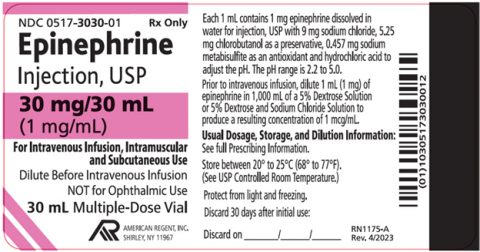
American Regent, Inc. Issues Voluntary Nationwide Recall of Three Lots of Epinephrine Injection, USP 30 mg/ 30 mL (1 mg/mL) Due to the Presence of Particulate Matter and Lack of Assurance of
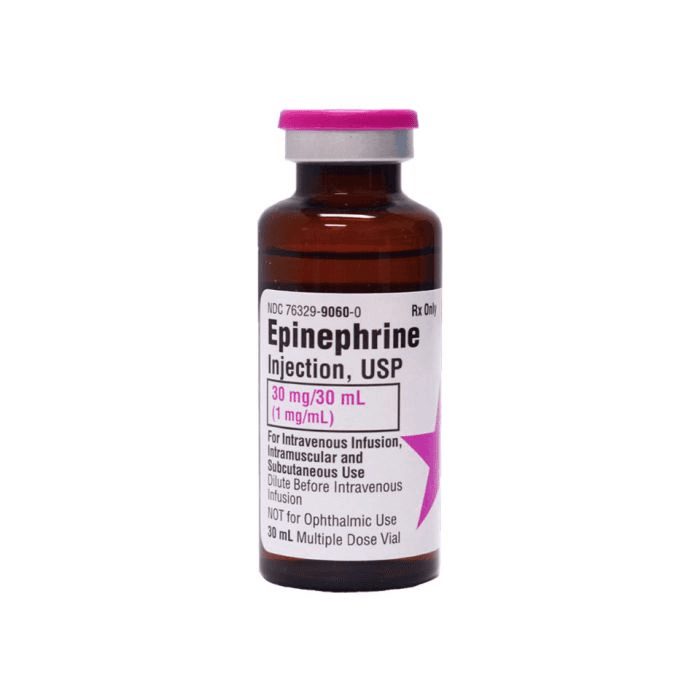
Epinephrine 1 mg/mL 30 mL Multiple-Dose Vial

American Regent recalls epinephrine injections over cracked vials
Images from Openverse under Creative Commons licenses.
Voices
Curated perspectives — historical figures and your fellow readers.
Play
Exploring all sides of a story is often best achieved with Play.
Most of these play right now — no account needed. Sign up to save scores, keep a streak, and unlock Debate and Predict.
Log in
Sign Up
Higher or Lower
A number from this story, against one from elsewhere in the news — guess which is bigger, then keep the chain going. 5 rounds, 3 strikes; a miss costs a strike and resets your streak.
Example
Anchor
EU tariff revenue
$52B
Big for this kind of number
Mystery
Pentagon AI contract
?
Round 1
Streak: 0
Mystery
?
Keyboard: ↓/L lower · ↑/H higher
0 pts
Best streak: 0 · Rounds: 0
0 points — sign up to put that on the leaderboard.
Now try on this story
Connections
Sixteen names from the news. Find the four hidden groups of four. Four mistakes max.
Loading today's puzzle…
0/4 groups
Mistakes
Sign up to keep a daily streak — a new puzzle lands every day.
Now try on this story
Exit debate?
Your progress in this debate will be lost.
How it works
- 1 Two AI personas square off on this story.
- 2 You predict who'll win each round — correct picks earn XP.
- 3 One crossfire question is yours to fire. Pick it carefully.
Couldn't generate a topic
Select Your Champions
Choose one persona for each side of the debate
DEBATE TOPIC
Choose personas with different perspectives for a more dynamic debate.
SIDE A (PRO)
Select debater for this side:
No debate personas available right now.
SIDE B (CON)
Select debater for this side:
No debate personas available right now.
VS
Get ready to make your prediction...
Round of
Claim
Evidence
Stakes
Crossfire Answer
Closing Statement
Claim
Evidence
Stakes
Crossfire Answer
Closing Statement
Your Crossfire Question
Generating arguments...
Who's Got This Round?
Make your prediction before the referee scores
The referee scores both sides on
Correct predictions earn +20 XP
· Press 1 or 2 to pick
Evidence
40%
Logic
30%
Detail
20%
Style
10%
Round Results
Your Pick
Not this time
(%)
Overall Score
/10
Your Pick
Not this time
(%)
Overall Score
/10
Set the Crossfire
Pick the question both personas must answer in the final round
Crafting crossfire questions...
Choosing a question earns +10 XP crossfire bonus
🏆
Total XP Earned
Cred Change
Predictions
Debate Oracle! You called every round!
Sharp Instincts! You know your debaters!
The Coin Flip Strategist! Perfectly balanced!
The Contrarian! Bold predictions!
Inverse Genius! Try betting the opposite next time!
XP Breakdown
Base completion
+20 XP
Rounds played ( rounds x 5 XP)
+ XP
Correct predictions ( correct x 20 XP)
+ XP
Crossfire bonus
+10 XP
Accuracy
%
Prediction History
Round
You picked:
✓
✗
Now try on this story
Keep debating to level up your credibility and unlock achievements
People Involved
Organizations Involved
American Regent, Inc.
Pharmaceutical Manufacturer
Issued voluntary recall; conducting return/replacement program
Ohio-based manufacturer of sterile injectable pharmaceuticals, including epinephrine.
U.S. Food and Drug Administration
Federal Regulatory Agency
Acknowledged and published the recall notice
Federal agency that regulates drug safety and publishes recall notices.
Timeline
September 2025 September 2026
5 events
Latest: 3 days ago
Tap a bar to jump to that date
-
FDA publishes recall notice
Latest RegulatoryFDA alerts consumers, retailers, and healthcare facilities to stop using the product.
-
American Regent issues voluntary recall
RecallCompany recalls three lots after complaints of cracked vials and particulate contamination.
-
Third affected lot begins distribution
DistributionLot 26108L1C0 begins shipping; distribution runs through July 31, 2026.
-
Second affected lot begins distribution
DistributionLot 25280L1C0 begins shipping; distribution runs through April 17, 2026.
-
First affected lot begins distribution
DistributionLot 25128L1C0 begins shipping nationwide.
Historical Context
3 moments from history that rhyme with this story — and how they unfolded.
September-October 2012
New England Compounding Center fungal meningitis outbreak (2012)
A compounding pharmacy in Massachusetts shipped contaminated steroid injections that were administered to patients across 20 states. The product had not been properly sterilized, and 753 people developed fungal meningitis, with 64 deaths.
Then
The FDA shut down the facility, and criminal charges followed against the pharmacy's operators.
Now
Congress passed the Drug Quality and Security Act in 2013, creating a new regulatory category for compounding pharmacies and giving the FDA inspection authority.
Why this matters now
This recall involves a sterility failure in an injectable drug, the same mechanism that made the 2012 outbreak fatal. It shows how sterility lapses in injectables can move from manufacturing defect to patient harm.
2014-2024
FDA particulate matter recalls in injectables (2010s-2020s)
Multiple sterile injectable recalls occurred over particulate contamination — glass, rubber, and metal fragments in vials — including several chemotherapy drugs and blood pressure medications. Each prompted FDA guidance on visual inspection and quality control.
Then
Manufacturers issued recalls and tightened visual inspection protocols, but the FDA repeatedly cited glass vials and stopper materials as recurring contamination sources.
Now
The FDA's 2024 draft guidance on particulate matter in injectables pushed manufacturers toward formal risk assessments and improved inspection technology.
Why this matters now
This recall fits a decade-long pattern of particulate contamination in sterile injectables, showing the FDA's ongoing struggle to enforce quality in vial and stopper manufacturing.
March 2017
Mylan EpiPen recall for defective auto-injectors (2017)
Mylan recalled EpiPen auto-injectors distributed between 2015 and 2016 after two complaints that the devices failed to activate properly, meaning patients in anaphylaxis could receive no dose at all.
Then
Mylan replaced recalled units and the FDA later added the product back to shortage lists.
Now
The recall underscored how fragile the epinephrine supply chain is — a single manufacturer's quality failure can leave patients without access to a life-saving drug.
Why this matters now
Epinephrine is a critical emergency drug where product reliability is a matter of life and death. This case shows the market's dependency on a small number of manufacturers.
Sources
(3)Related Stories
Boston Scientific pulls all Imager II catheters after tip-manufacturing defect
Rule Changes
Updated 4 days ago
The end of the epinephrine needle
New Capabilities
Updated May 23
Medtronic recalls reflux monitoring devices after capsule failures
Rule Changes
Updated 3 days ago
Pediatric access widens for rare immune disease therapies
Rule Changes
Updated May 31
The race to protect 27 million Americans from accidental food allergen exposure
Money Moves
Updated May 22
FDA weighs Replimune's melanoma immunotherapy RP1
Rule Changes
Updated Aug 8