


Pull to refresh
Logo
Jury convicts Huawei of trade secret theft, acquits it of racketeering

Jury convicts Huawei of trade secret theft, acquits it of racketeering

Rule Changes

A Brooklyn federal jury found the Chinese telecom giant guilty on 10 of 12 counts; sentencing is set for September 2027.

Overview

Updated 14 hours ago

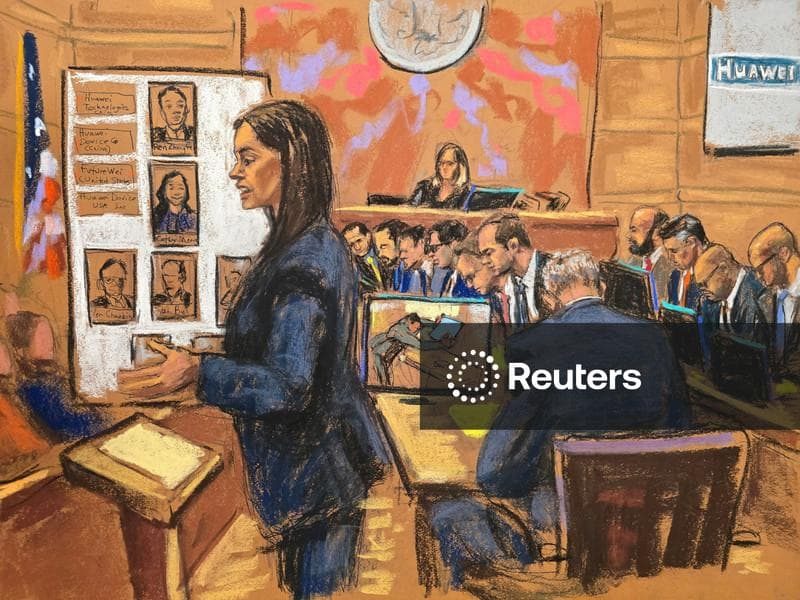
A federal jury in Brooklyn convicted Huawei of conspiring to steal American trade secrets and defrauding banks, finding the company guilty on 10 of 12 counts. Jurors acquitted Huawei of racketeering conspiracy, the charge that would have labeled it a criminal enterprise.

The convictions cover lies to banks about Huawei's Iran business and the theft of technology from rivals including T-Mobile, Cisco and Fujitsu. Sentencing is set for September 14, 2027, and Huawei says it will appeal.

Why it matters

A criminal conviction against one of the world's biggest telecom suppliers gives Washington a legal finding to cite in its tech fight with Beijing.

Questions about this story

Free account needed to ask — your question is kept and asked for you right after sign-up. Answers are public.

No questions yet — be the first to ask.

Key Indicators

10
Guilty counts
Jurors convicted Huawei on 10 of the 12 charges it faced.
12
Total charges
The counts included trade secret theft, bank fraud, sanctions violations and money laundering.
60+
Prosecution witnesses
More than 60 witnesses testified for the government during the two-month trial.
170
Countries with Huawei operations
Huawei's defense cited its global footprint at trial.

Voices

Curated perspectives — historical figures and your fellow readers.

Sign up to generate historical perspectives on this story.

People Involved

Organizations Involved

Timeline

December 2018 November 2026

4 events Latest: Yesterday
Tap a bar to jump to that date

Scenarios

1

Huawei fined and ordered to forfeit at September 2027 sentencing

Likely Resolves by Sep 15, 2027

Discussed by: The Justice Department, which said the convictions expose Huawei to criminal fines, forfeiture and restitution.

The September 14, 2027 hearing converts the verdict into a number. Prosecutors have not disclosed what penalty they will seek. Huawei's lawyers said they will push for the lowest sentence possible. Any fine would be the first direct financial cost of the convictions.

2

Second Circuit vacates at least one Huawei conviction

Possible Resolves by End of 2030

Discussed by: Huawei defense lawyer Brian Heberlig, who said he fully expects the company to appeal.

An appeal would likely challenge the trade secret counts, the sanctions charges or the jury instructions. Overturning even one count would cut Huawei's penalty exposure and narrow the precedent. Heberlig said after the verdict that 'that fight will continue.'

3

Convictions and sentence survive appeal

Possible Resolves by End of 2030

Discussed by: The Justice Department, which announced the convictions as sanctions, fraud and trade secret violations.

If the Second Circuit affirms the verdict, the convictions become final and the sentence stands. That would leave Huawei with a permanent U.S. criminal record as it sells network gear in markets outside the United States.

Historical Context

3 moments from history that rhyme with this story — and how they unfolded.

March 2017 - July 2018

ZTE Iran sanctions case (2017-2018)

Chinese telecom equipment maker ZTE pleaded guilty in a U.S. court to conspiring to violate Iran sanctions and obstructing justice, agreeing to pay $892 million. In April 2018, after the Commerce Department found ZTE had lied about disciplining employees, it barred American suppliers from selling components to the company. ZTE, which relies on U.S. chips, came close to shutting down.

Then

The ban was lifted in July 2018 after ZTE agreed to pay $1 billion and accept a U.S.-appointed compliance monitor.

Now

The case showed how export controls could be used alongside criminal prosecutions against Chinese telecom firms. Washington used similar tools against Huawei.

Why this matters now

Huawei's convictions rest on the same Iran sanctions and bank fraud statutes. ZTE shows how a criminal case can escalate into a supply cutoff.

April 2013 - December 2014

Alstom and the Pierucci case (2013-2014)

French engineering firm Alstom agreed to pay $772 million to settle U.S. Foreign Corrupt Practices Act charges. Executive Frédéric Pierucci had been arrested in the U.S. in 2013 and spent years in detention. The case became a symbol in France of American legal reach over foreign industrial champions.

Then

Alstom paid the penalty, and Pierucci was eventually released.

Now

The case fed European complaints that U.S. prosecutors wield long-arm jurisdiction over foreign companies and their executives.

Why this matters now

Meng Wanzhou's three-year detention in Canada followed a similar pattern: U.S. charges against a foreign corporate champion paired with the arrest of a senior executive.

January 2003 - July 2004

Cisco v. Huawei (2003-2004)

Cisco sued Huawei in a Texas federal court, alleging Huawei copied its router software source code and user manuals. The companies settled in July 2004, and Huawei revised some of the products at issue.

Then

The civil case ended without a criminal finding.

Now

Prosecutors later cited the Cisco code in the criminal case, saying Huawei engineers disguised copied code by spelling Cisco's name backwards.

Why this matters now

The trade secret claims behind the 2026 verdict stretch back two decades.

Sources

(9)