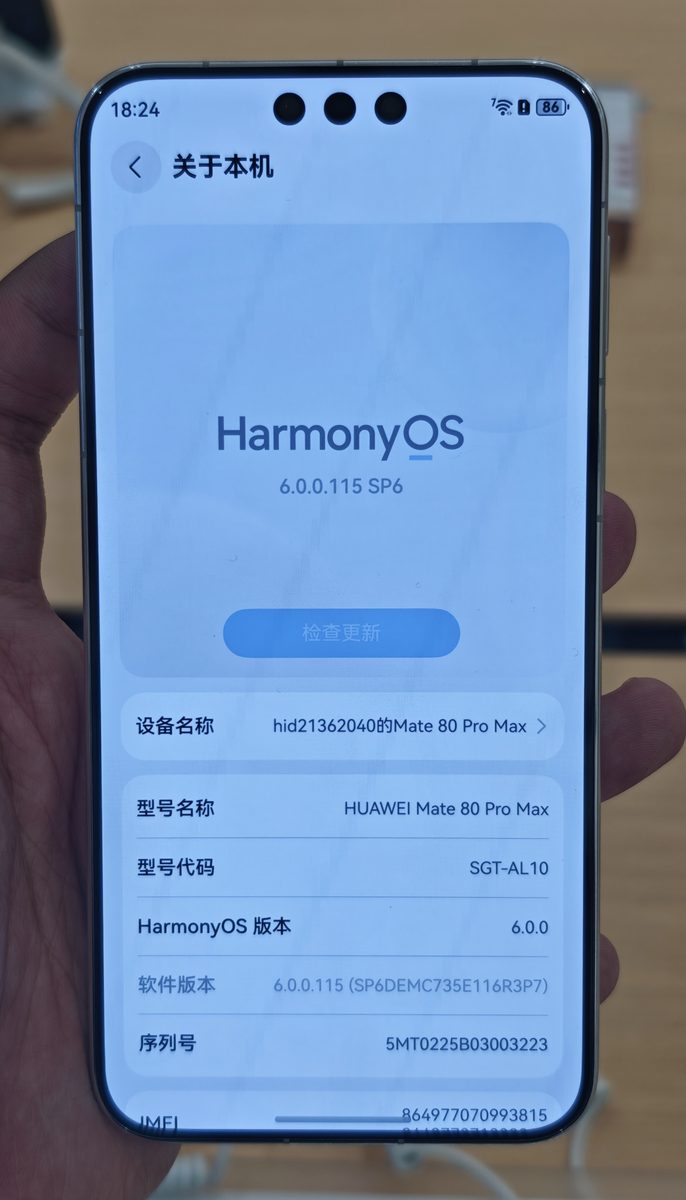
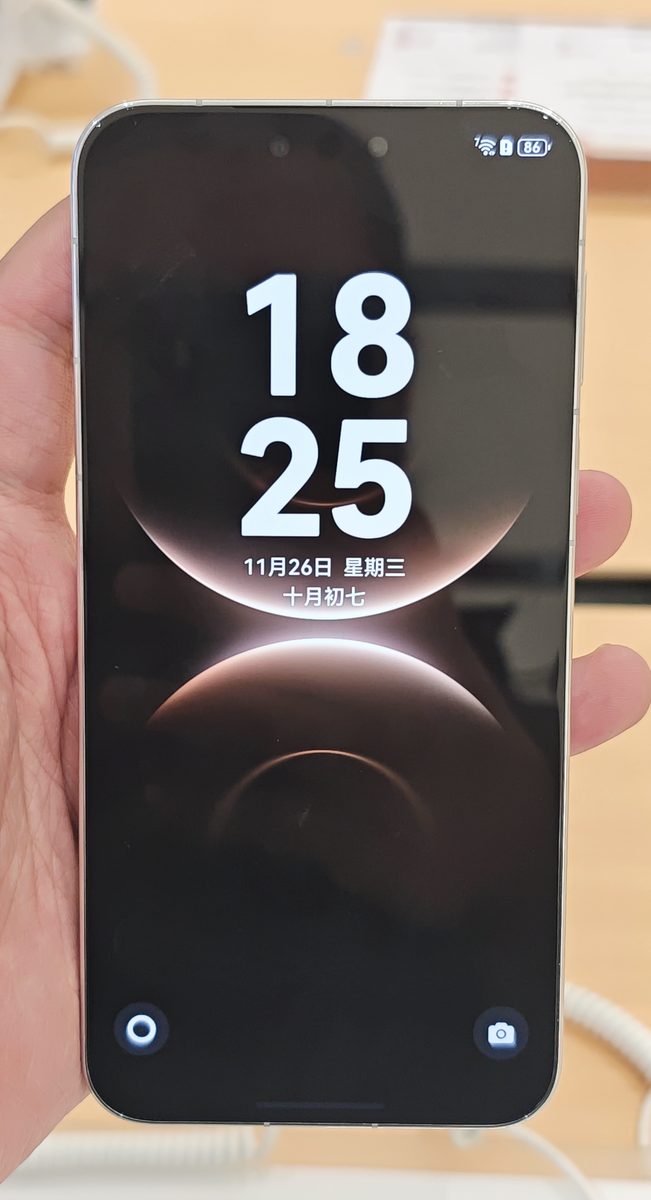
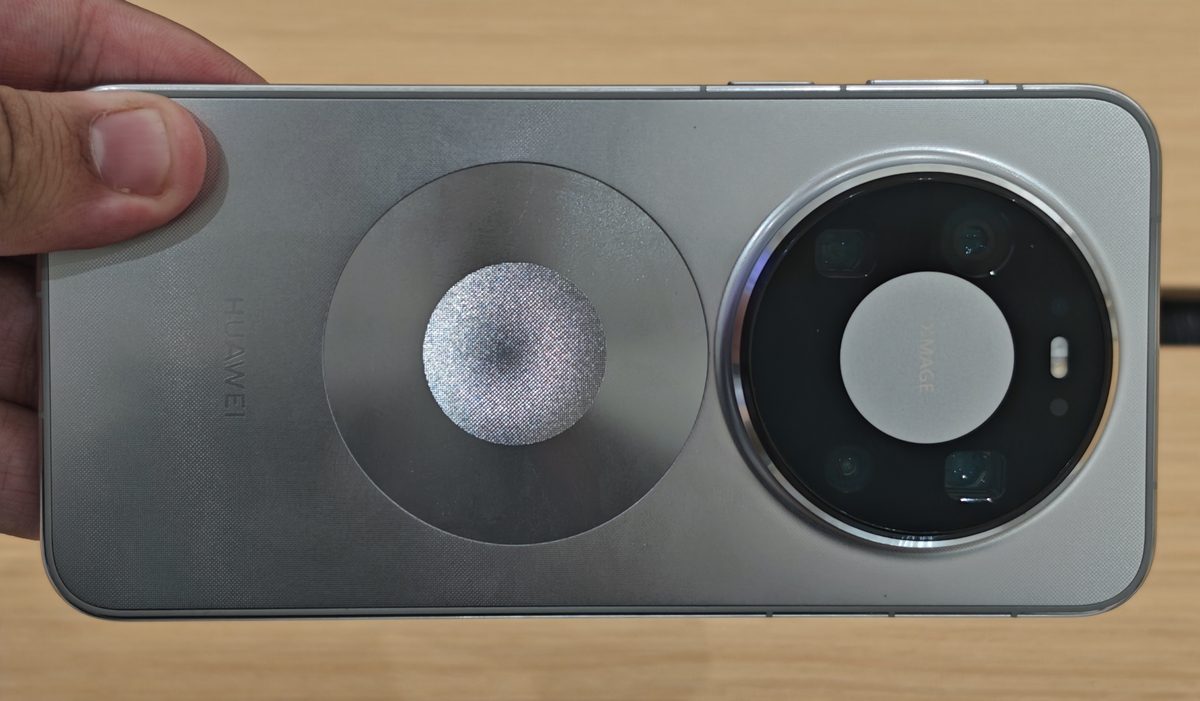
In May 2019, the United States placed Huawei, the world's largest telecom equipment maker, on an export blacklist, cutting the company off from American chips, software, and chipmaking tools. Seven years later, Huawei launched its Mate 80 Pro smartphone globally from Madrid, powered entirely by a processor designed in-house and made by China's largest chipmaker using equipment the US tried to deny.
The global launch tests whether US export controls achieved their goal of constraining Chinese semiconductor capability, or whether they accelerated the very self-sufficiency they aimed to prevent. Huawei's 2024 revenue hit $118 billion, approaching its pre-sanctions peak, and the company reclaimed the top spot in China's smartphone market in 2025. The Mate 80 Pro runs HarmonyOS, an operating system Huawei built from scratch after losing access to Google's Android services.
The Mate 80 Pro's Kirin 9030 chip, fabricated by SMIC using older deep ultraviolet lithography pushed to its physical limits, still trails the most advanced Western chips by roughly one to two generations. Yet the gap is narrowing, and Huawei is now selling the results internationally.
Questions about this story
Free account needed to ask — your question is kept and asked for you right after sign-up. Answers are public.
No questions yet — be the first to ask.
Key Indicators
$118B
Huawei 2024 revenue
Second-highest in company history, approaching the pre-sanctions peak of $122 billion in 2020
17%
China smartphone market share
Huawei reclaimed the number one position in China's smartphone market in 2025, up from sixth place in 2023
~5nm class
Kirin 9030 process node
SMIC's N+3 node approaches 5-nanometer density using only deep ultraviolet lithography, without the extreme ultraviolet tools China cannot obtain
$33B+
Estimated US firm revenue losses
Conservative estimate of sales lost by Intel, Qualcomm, Teradyne, and other American companies from Huawei export controls between 2021 and 2024
15 events
Latest: February 26th, 2026 · 7 months ago
Showing 8 of 15
JK to step
Tap a bar to jump to that date
Jump to
February 2026
Huawei debuts Mate 80 Pro globally in Madrid
LatestProduct
At its Global Innovative Product Launch event days before Mobile World Congress, Huawei introduced the Mate 80 Pro to international markets alongside the Watch GT Runner 2 and FreeBuds Pro 5, its most significant global product push since sanctions took effect.
November 2025
Huawei launches Mate 80 series in China with Kirin 9030
Product
Huawei unveiled the Mate 80 lineup domestically, powered by the Kirin 9030 processor fabricated on SMIC's N+3 process node, its most advanced yet. Richard Yu claimed a 42 percent performance improvement over the prior generation.
October 2025
Think tank concludes export controls helped Huawei
Analysis
The Information Technology and Innovation Foundation published a report finding that US export controls had strengthened Huawei while costing American firms an estimated $33 billion in lost sales between 2021 and 2024.
SMIC began testing a deep ultraviolet lithography system built by Shanghai-based Yuliangsheng, a significant step toward reducing reliance on ASML for the older lithography equipment still in use.
2025
Huawei reclaims top smartphone position in China
Market
With 46.8 million units shipped and a 17 percent market share, Huawei overtook Apple to become China's best-selling smartphone brand for the first time in five years.
September 2023
Netherlands restricts DUV lithography exports to China
Regulation
New Dutch export controls took effect, requiring licenses for ASML to sell its advanced deep ultraviolet immersion lithography systems to Chinese customers, tightening restrictions beyond the existing EUV ban.
August 2023
Huawei quietly launches Mate 60 Pro with 7nm chip
Product
Without any advance marketing, Huawei listed the Mate 60 Pro on its website. Teardowns revealed a Kirin 9000S processor manufactured by SMIC at 7 nanometers, demonstrating that Chinese firms had produced a more advanced chip than sanctions were believed to allow.
October 2022
US issues broadest semiconductor export controls in decades
Regulation
The Bureau of Industry and Security restricted China's access to advanced computing chips, chipmaking equipment, and even barred US citizens from working in Chinese semiconductor facilities. Analysts called it the most significant technology trade action since the Cold War.
2021
Huawei smartphone sales collapse globally
Market
Without access to advanced chips or Google services, Huawei fell out of the global top five smartphone vendors. Annual revenue declined from its 2020 peak as the consumer business contracted sharply.
December 2020
SMIC added to Entity List
Regulation
The US placed China's largest chipmaker on the Entity List, restricting its ability to purchase advanced manufacturing equipment including extreme ultraviolet lithography systems from ASML.
May 2020
US tightens rules to block TSMC chip supply
Regulation
The Commerce Department expanded export controls so that any chip designed using American software or manufactured with American equipment required a license before being sold to Huawei, cutting off Taiwan Semiconductor Manufacturing Company (TSMC) as a supplier.
May 2019
Google suspends Huawei's Android license
Industry
Google revoked Huawei's access to Android updates and Google Mobile Services, including the Play Store, Gmail, and Maps. Existing Huawei phones kept functioning, but new devices could no longer ship with Google apps.
Huawei placed on US Entity List
Regulation
The Bureau of Industry and Security added Huawei and 68 non-US affiliates to the Entity List, effectively banning American companies from selling chips, software, and technology to the company without a license.
December 2018
Huawei chief financial officer arrested in Canada
Legal
Canadian authorities detained Meng Wanzhou, Huawei's chief financial officer and Ren Zhengfei's daughter, on a US extradition request related to alleged sanctions violations involving Iran.
August 2018
US bans Huawei equipment from federal networks
Regulation
The National Defense Authorization Act for fiscal year 2019 prohibited US government agencies from using Huawei and ZTE equipment, citing national security concerns.
Scenarios
1
Huawei regains meaningful share in Europe and Asia, built on domestic technology
Possible
Discussed by: The Information Technology and Innovation Foundation, South China Morning Post technology analysts, and Digitimes industry researchers
Huawei's global smartphone share recovers to high single digits by 2027 as HarmonyOS matures for international use and the Kirin chip line continues narrowing the gap with Qualcomm and Apple. Markets in Southeast Asia, the Middle East, and parts of Europe where Google services are less entrenched prove receptive. This scenario depends on Huawei building a viable international app ecosystem and SMIC continuing to improve yields on its advanced process nodes. Huawei would remain locked out of the US market but reclaim a significant portion of the roughly 160 countries where it once sold phones.
2
Global expansion stalls as app ecosystem and chip limitations persist
Likely
Discussed by: TechInsights semiconductor analysts, Council on Foreign Relations technology policy researchers, and Mobile World Live industry coverage
The Mate 80 Pro sells modestly outside China because international consumers find the absence of Google Mobile Services too inconvenient, and HarmonyOS's app library remains thin for non-Chinese users. Meanwhile, SMIC's multi-patterning approach hits cost and yield ceilings that prevent Huawei from matching Apple or Samsung on price-to-performance. Huawei remains dominant domestically but its international presence stays limited to niche markets and regions with strong existing Huawei brand loyalty.
3
US escalates export controls, targeting SMIC's remaining equipment access
Possible
Discussed by: Brookings Institution semiconductor policy researchers and the Congressional Research Service
The US government, interpreting SMIC's progress as evidence that existing controls are insufficient, pressures the Netherlands, Japan, and South Korea to further restrict maintenance, spare parts, and software updates for DUV equipment already installed in Chinese fabs. This would degrade SMIC's manufacturing capability over time and slow the chip improvement trajectory. However, it would also accelerate China's parallel effort to build entirely domestic lithography equipment, currently being tested at SMIC, and further reduce American technology firms' access to the Chinese market.
4
SMIC achieves competitive 5nm production, eroding the rationale for controls
Uncertain
Discussed by: TechInsights, American Affairs Journal, and SMIC industry analysts
SMIC's N+3 process matures to commercially viable yields and the company begins qualifying a true 5-nanometer-class node, closing the gap with TSMC to a single generation. At that point, the strategic logic of export controls weakens significantly because the controls would be restricting technology that China can now produce domestically. This could trigger a policy reassessment in Washington, or alternatively a more aggressive push to maintain the remaining gap at 3-nanometer and below.
Historical Context
3 moments from history that rhyme with this story — and how they unfolded.
1 of 3
1949-1994
Cold War COCOM Technology Controls (1949-1994)
The United States and its Western allies created the Coordinating Committee for Multilateral Export Controls (COCOM) to restrict technology transfers to the Soviet Union and communist bloc. Controls covered semiconductors, computers, telecommunications equipment, and manufacturing tools. The Soviet Union responded by investing heavily in domestic alternatives, achieving breakthroughs in nuclear weapons and space technology while falling behind in commercial computing and consumer electronics.
Then
COCOM successfully slowed Soviet access to advanced Western technology, forcing costly and often inferior domestic substitutes.
Now
The Soviet Union achieved self-sufficiency in strategic military technology but never built competitive commercial technology industries. The controls contributed to a widening civilian technology gap that persisted until the Soviet collapse.
Why this matters now
The COCOM precedent shows that export controls can work in narrow strategic domains while failing to prevent targeted breakthroughs. China's approach differs from the Soviet model because Huawei operates as a commercially competitive company, not a state lab, and can sell its outputs globally to fund further development.
2 of 3
1985-1991
US-Japan Semiconductor Trade War (1985-1991)
Japanese chipmakers captured 75 percent of the global memory chip market by the mid-1980s, alarming the US semiconductor industry and defense establishment. The Reagan administration imposed 100 percent tariffs on Japanese electronics in 1985 and negotiated the 1986 Semiconductor Trade Agreement, which set price floors on Japanese chips and mandated that Japan purchase more American semiconductors.
Then
The trade agreement raised chip prices globally, hurting American computer manufacturers who relied on Japanese memory chips while protecting US chipmakers.
Now
Japan's semiconductor dominance faded by the late 1990s as South Korea and Taiwan rose. The episode demonstrated that trade restrictions can shift market share but rarely determine which country leads in the long run.
Why this matters now
The 1980s US-Japan chip conflict is the closest precedent for using trade policy to contain a rising semiconductor power. Like today's Huawei situation, it raised the question of whether restrictions protect domestic industry or simply redirect innovation elsewhere.
3 of 3
April-July 2018
ZTE Sanctions Crisis (2018)
The Commerce Department banned American companies from selling components to ZTE, China's second-largest telecom equipment maker, after the company violated the terms of a sanctions settlement related to exports to Iran and North Korea. ZTE, which depended heavily on Qualcomm chips and Google's Android, effectively ceased operations within weeks.
Then
After direct intervention by President Trump as part of broader US-China trade negotiations, ZTE paid a $1.4 billion fine, replaced its entire management team, and accepted a decade of embedded compliance monitors.
Now
ZTE's near-death experience became what Chinese media called a 'Sputnik moment,' galvanizing government and industry investment in domestic chip alternatives. Huawei explicitly cited ZTE's vulnerability as motivation for building its own supply chain.
Why this matters now
ZTE's collapse demonstrated what happens when a Chinese tech company depends on American components and loses access. Huawei learned from ZTE's experience and spent years building alternatives before similar restrictions hit, which is a key reason Huawei survived where ZTE nearly did not.