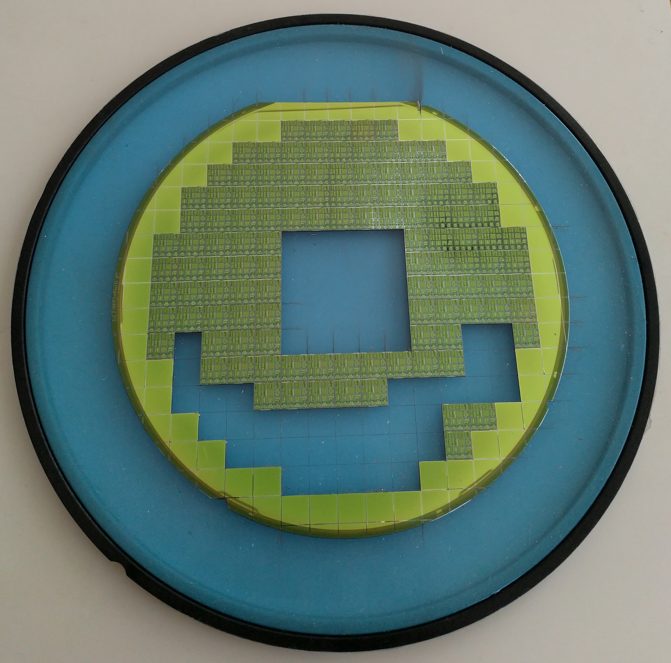
TSMC manufactures over 90% of the world's most advanced chips. On January 15, 2026, TSMC announced it would spend up to $56 billion this year (a 37% increase from 2025) to expand AI processor capacity.
Net profit jumped 35% to a record $16 billion; the company projects 30% revenue growth for 2026. That same day, the U.S. and Taiwan finalized a $250 billion trade agreement committing Taiwanese companies to expand semiconductor manufacturing in America. AI chip demand shows no sign of slowing.
Nvidia, Apple, AMD, and other customers have booked TSMC's 3nm lines through 2026 and are reserving 2nm capacity, in mass production since late 2025. Apple and Nvidia have secured all initial 2nm capacity; TSMC expects 2nm revenue to surpass 3nm and 5nm nodes combined by Q3 2026. ASML, which supplies the machines TSMC needs, hit a $500 billion market cap on the news; TSMC now plans a "gigafab cluster" in Arizona, buying additional land beyond the three fabs already under construction.
Questions about this story
Free account needed to ask — your question is kept and asked for you right after sign-up. Answers are public.
No questions yet — be the first to ask.
Key Indicators
$52-56B
2026 Capital Expenditure
Up 37% from $40.9B in 2025, the largest single-year investment in semiconductor history
90%+
Advanced Chip Market Share
TSMC's share of chips below 7nm, the processors powering AI, smartphones, and data centers
37%
January 2026 Revenue Growth
Record NT$401.26B ($12.7B), up 37% YoY and 20% MoM, driven by AI chip demand
77%
Revenue from Advanced Nodes
Share of wafer revenue from 7nm and smaller processes, up from 69% in 2024
Images from Openverse under Creative Commons licenses.
Videos from YouTube.
Voices
Curated perspectives — historical figures and your fellow readers.
Hannah Arendt
(1906-1975) ·Modernist · politics
Fictional AI pastiche — not real quote.
"The most troubling aspect of this technological arms race is not the staggering sums involved, but that an entire civilization now stakes its security and prosperity on a single Taiwanese company's capacity to etch silicon—a dependence so absolute that it makes mockery of sovereignty while dressed in the language of strategic partnership. One wonders whether those booking production capacity years in advance have paused to consider what happens when the ability to think becomes inseparable from the ability to manufacture."
100% found this insightful
Ever wondered what historical figures would say about today's headlines?
Sign up to generate historical perspectives on this story.
22 events
Latest: February 2nd, 2026 · 8 months ago
Showing 8 of 22
JK to step
Tap a bar to jump to that date
Jump to
February 2026
Broadcom and TSMC Identified as Custom AI Chip Leaders
LatestMarket
Analysts position Broadcom and TSMC as major beneficiaries of custom AI chip boom. Broadcom reports Q1 FY2026 AI semiconductor revenue surged 74% YoY, with guidance projecting doubling to $8.2B in Q1. Counterpoint Research projects Broadcom will retain 60% market share in AI Server Compute ASIC design through 2027, with TSMC holding 99% wafer fabrication share for top 10 AI chip players.
January 2026
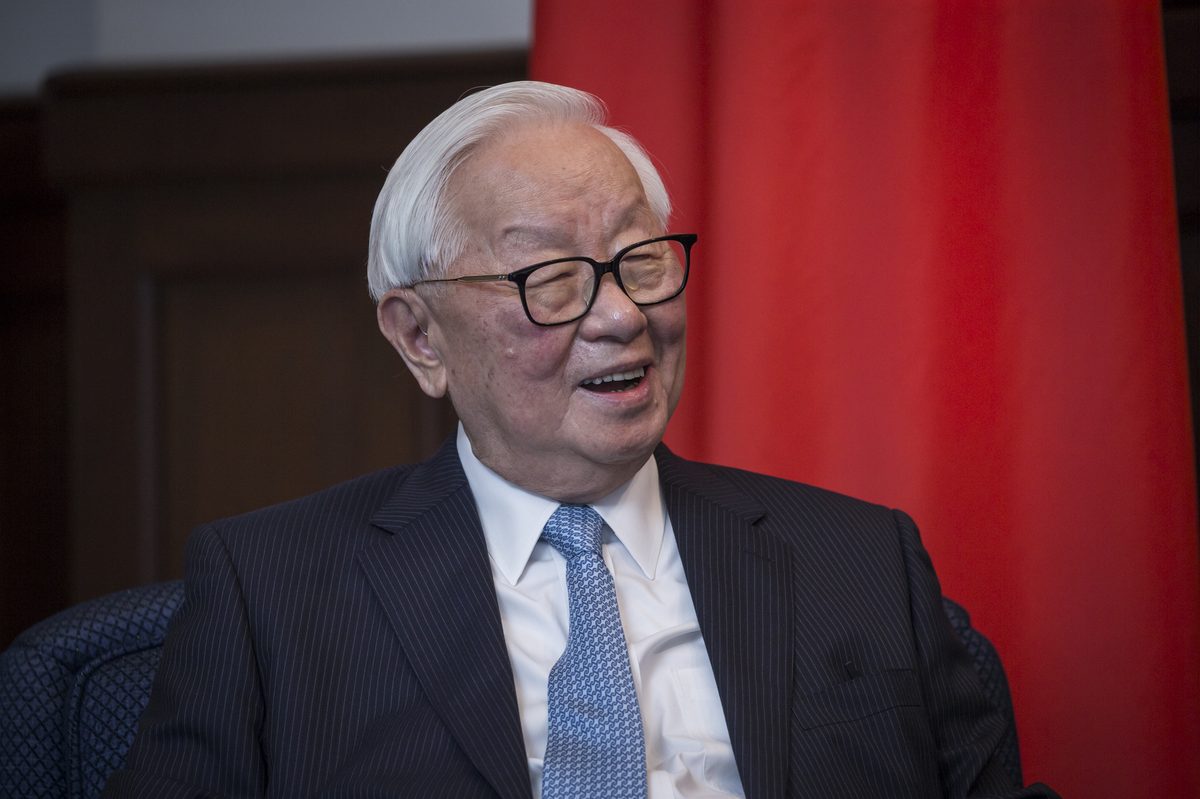
Morris Chang Makes First Public Appearance in Over a Year
Leadership
TSMC founder Morris Chang, 94, made his first public appearance in more than a year, dining with Nvidia CEO Jensen Huang at a local Taiwanese restaurant in Taipei. Huang reported Chang remains "mentally sharp" and "in good spirits," signaling continued informal influence on TSMC-Nvidia partnership.
ASML Q4 Earnings Show Record Backlog Through 2027
Financial
ASML reports 2025 full-year revenue of €32.7B and net income of €9.6B. Q4 net bookings surge to €13.2B, pushing backlog to €38.8B with orders extending through 2027. Announces 2026 revenue guidance of €34-39B (up 4-19% YoY) and €12B share buyback program.
TSMC Enters High-Volume 2nm Production
Production
TSMC confirms facilities in Hsinchu and Kaohsiung reached steady output exceeding 50,000 wafers per month for 2nm (N2) process. Apple secured over 50% of initial capacity for A20 and M6 chips; Nvidia will use 2nm for "Feynman" GPUs in H2 2026.
Reports Surface of 12-Fab Arizona Megacluster
Expansion
Internal TSMC projections suggest decade-long Arizona expansion toward $465B, 12-fab cluster. Near-term plan includes six wafer fabs (P1-P6), 3-4 advanced packaging plants, and one R&D center, with total committed investment reaching $165B.
TSMC Showcases Chiayi Advanced Packaging Fab
Production
TSMC opens Chiayi Advanced Packaging Fab 7 (AP7) to media, revealing Plant 2 equipment installation began H2 2025 with production starting in 2026. Facility will focus on WMCM packaging for Apple's iPhone 18 and advanced AI chip packaging including SoIC and 2.5D.
TSMC Plans Four New Taiwan Fabs
Expansion
TSMC announces plans to build two IC packaging plants in Chiayi Science Park and two more in Southern Taiwan Science Park in 2026, expanding domestic advanced packaging capacity amid AI chip demand.
TSMC Announces Arizona Gigafab Cluster Expansion
Expansion
CEO C.C. Wei reveals TSMC has purchased additional land in Arizona to build a "gigafab cluster" beyond the three fabs already under construction. High-volume manufacturing at the second Arizona fab now expected in H2 2027.
TSMC Reports 35% Profit Jump, Announces Record Capex
Financial
TSMC reports Q4 2025 net income of NT$505.7B ($16B), up 35% YoY. Announces 2026 capex of $52-56B and projects ~30% revenue growth. ASML hits $500B market cap on the news.
United States and Taiwan finalize trade agreement with Taiwan committing $250 billion in direct investment to U.S. semiconductor manufacturing, plus $250 billion in credit guarantees. Deal reduces reciprocal tariffs to 15% and allows chipmakers like TSMC to import equipment during fab construction without tariffs.
Apple and Nvidia Lock Up Entire 2nm Initial Capacity
Production
Apple and Nvidia secure all of TSMC's initial 2nm production capacity for 2026. Apple will use 2nm for iPhone 18's A20 chip, M6 processors, and Vision Pro R2. Nvidia will deploy 2nm for Rubin Ultra GPUs. AMD and MediaTek will access 2nm capacity as production scales.
TSMC Secures Annual U.S. Export License for China Operations
Policy
U.S. Commerce Department grants TSMC annual license to import American chipmaking equipment to Nanjing fab, replacing previous multi-year exemption. The Nanjing facility produces 16nm and mature-node chips representing ~2.4% of TSMC revenue. Annual renewal requirement introduces recurring uncertainty.
2025-Q4
2nm Production Begins
Technology
TSMC begins mass production of 2nm chips using Gate-All-Around transistor architecture. Demand from Apple, Nvidia, and AMD immediately overwhelms initial capacity.
January 2025
2024 Revenue Hits Record $87.8B
Financial
TSMC reports 2024 revenue of NT$2.9 trillion ($87.8B), up 33.9% year-over-year, driven by AI processor demand.
2025
Nvidia Overtakes Apple as Top Customer
Market
Nvidia surpasses Apple as TSMC's largest customer by revenue, reflecting the shift from smartphones to AI as the primary driver of advanced chip demand.
October 2024
Arizona Fab 1 Begins Production
Production
TSMC's first Arizona fab begins high-volume 4nm production. Early data shows yields 4% higher than comparable Taiwan fabs.
June 2024
C.C. Wei Becomes Sole Leader
Leadership
C.C. Wei assumes both chairman and CEO roles, ending TSMC's dual-leadership structure and consolidating decision-making power.
April 2024
TSMC Secures $6.6B CHIPS Act Funding
Funding
U.S. Commerce Department agrees to provide TSMC with $6.6 billion in direct funding plus $5 billion in loans for Arizona fab expansion.
November 2023
ChatGPT Turns One, AI Chip Demand Surges
Market
One year after ChatGPT's launch, AI chip demand has transformed semiconductor markets. TSMC reports AI-related revenue tripling in 2024 projections.
August 2022
CHIPS Act Signed
Policy
President Biden signs the CHIPS and Science Act, providing $52.7 billion for domestic semiconductor manufacturing. TSMC would later receive $6.6 billion in direct funding.
May 2020
TSMC Announces Arizona Expansion
Expansion
TSMC announces plans to build a $12 billion fab in Arizona, its first advanced manufacturing facility in the U.S. The investment would later grow to $165 billion.
February 1987
TSMC Founded
Founding
Morris Chang founds TSMC in Taiwan with government backing and technology licensed from Philips, creating the world's first dedicated semiconductor foundry.
Scenarios
1
AI Supercycle Extends Through 2030
Likely
Discussed by: Bank of America (Vivek Arya), TSMC management, Nvidia
AI infrastructure spending continues at current pace through the decade. Hyperscalers (Microsoft, Google, Amazon, Meta) maintain 30%+ annual capex growth. TSMC's revenue reaches $200B+ by 2028. The $1 trillion semiconductor market materializes by 2026-2027. This scenario requires AI applications to generate sufficient ROI to justify continued investment and no major technological disruption to current GPU-based training paradigms.
AI chip demand growth slows as enterprises struggle to monetize AI investments. Hyperscaler capex growth decelerates to single digits by 2027. TSMC faces overcapacity in advanced nodes, margin compression follows. This scenario would echo the 2000-2001 telecom infrastructure bubble—massive buildout followed by years of digestion. CEO Wei's comment about capex being a "disaster" if miscalculated reflects awareness of this risk.
3
Geopolitical Crisis Disrupts Taiwan Operations
Unlikely
Discussed by: Institute for Economics and Peace, Council on Foreign Relations, Chris Miller (Chip War author)
Chinese military action—ranging from quarantine to blockade to invasion—disrupts TSMC's Taiwan operations. Even a limited quarantine could halt chip exports for months. Analysts estimate a full conflict could cost $10 trillion globally. TSMC has contingency plans to disable fabs remotely. Arizona and Japan facilities could not compensate for Taiwan's 90% share of advanced chip production for years.
4
Intel Foundry Captures Significant Share
Uncertain
Discussed by: Intel management, industry analysts tracking 18A node progress
Intel's 18A node achieves competitive yields and attracts major customers beyond internal use. U.S. government contracts and CHIPS Act funding help Intel reach 10%+ foundry market share by 2028. Microsoft's Maia 2 and potential Nvidia or AMD orders validate Intel as a credible alternative. Intel becomes the Western world's hedge against Taiwan concentration risk. Current 18A yield issues and Nvidia's testing pause make this outcome uncertain.
5
US-Taiwan Trade Deal Accelerates Decoupling from Taiwan
Possible
Discussed by: Commerce Department officials, semiconductor industry analysts, Taiwan government
The $250 billion US-Taiwan semiconductor agreement succeeds in bringing 40% of Taiwan's chip supply chain to America by 2030. TSMC's Arizona gigafab cluster reaches capacity parity with individual Taiwan facilities. Combined with Intel's 18A recovery and Samsung's Texas expansion, the U.S. reduces dependence on Taiwan from 90% to under 50% for leading-edge chips. This scenario reduces geopolitical risk but may increase production costs and challenge TSMC's margin structure if U.S. yields remain below Taiwan levels.
6
Arizona Becomes World's Second-Largest Chip Hub by 2030
TSMC's 12-fab Arizona gigafab cluster reaches full buildout by 2032, producing over 1 million wafers per month across 2nm through A10 nodes. Combined with Intel's Ohio megafabs and Samsung's Texas expansion, Arizona achieves 30% of global advanced logic capacity. The $465B investment creates a complete ecosystem of equipment suppliers, packaging facilities, and R&D centers. Success requires sustained government support, continued AI demand justifying massive capex, and TSMC achieving Arizona yields within 2-3% of Taiwan facilities.
Hyperscalers' shift toward custom AI accelerators creates new revenue stream for TSMC beyond Nvidia GPUs. OpenAI's 2026 custom inference chip with Broadcom, Google's TPU v7, and Microsoft's Maia chips represent growing "beyond-Nvidia" segment. If custom chips reach 30-40% of AI accelerator TAM by 2028, TSMC's customer concentration risk decreases while Broadcom captures design share. Counterpoint projects Broadcom holds 60% of AI ASIC design market through 2027, with TSMC maintaining 99% fab share for top AI chip players. This scenario reduces TSMC's dependence on any single customer but requires Broadcom's designs to achieve competitive performance-per-watt versus Nvidia.
Historical Context
3 moments from history that rhyme with this story — and how they unfolded.
1 of 3
1986-2000
Japan's Semiconductor Decline (1980s-2000s)
Japanese companies held over 50% of global semiconductor market share in 1988. The 1986 U.S.-Japan Semiconductor Agreement, combined with the rise of the fabless model and Korean competition, eroded Japan's position. By 2000, Japanese share had fallen below 20%.
Then
Japanese memory makers lost market share to Samsung and other Korean firms.
Now
Japan retained strength in equipment and materials but lost chip manufacturing. Today, Japan has no leading-edge logic fabs and is trying to rebuild with TSMC's Kumamoto plant.
Why this matters now
Shows how quickly semiconductor leadership can shift. Also illustrates why governments now prioritize domestic chip production—losing this industry proved strategically costly for Japan.
2 of 3
1998-2001
Telecom Equipment Bubble (1998-2001)
Companies spent over $1 trillion building fiber optic networks and internet infrastructure based on projected data demand growth. Cisco, Nortel, and Lucent saw market caps exceed $200 billion. When revenue growth failed to materialize, equipment spending collapsed 80%+.
Then
Nortel, Lucent, and dozens of equipment makers went bankrupt or were acquired. Cisco lost 90% of its value.
Now
The infrastructure eventually proved useful—but took a decade longer than projected to generate returns. Survivors consolidated into a few dominant players.
Why this matters now
The AI infrastructure buildout draws comparisons. The key question: Will AI applications generate enough revenue to justify current spending, or will demand growth disappoint? CEO Wei's "nervous" comment suggests awareness of this parallel.
3 of 3
2010-2020
Intel's Foundry Pivot Failure (2010s)
Intel attempted to leverage its manufacturing lead by offering foundry services to external customers. The effort attracted few major clients. Intel's 10nm node delays allowed TSMC to catch up and surpass Intel technologically. By 2020, Apple had switched Mac chips from Intel processors to TSMC-manufactured Apple Silicon.
Then
Intel lost Apple, its largest PC customer, and ceded process leadership to TSMC.
Now
TSMC's market share grew from 50% to 64% between 2018 and 2024. Intel's foundry business remains below 5% share despite billions in investment.
Why this matters now
Intel's failure demonstrates how difficult it is to challenge TSMC's manufacturing expertise, even with substantial resources. Intel's current 18A push faces similar execution risks.