

Pull to refresh
Logo
Judge blocks ICE limits on international student internships

Judge blocks ICE limits on international student internships

Rule Changes

A Boston court pauses two August directives that narrowed who qualifies for curricular practical training

Overview

Updated 53 minutes ago

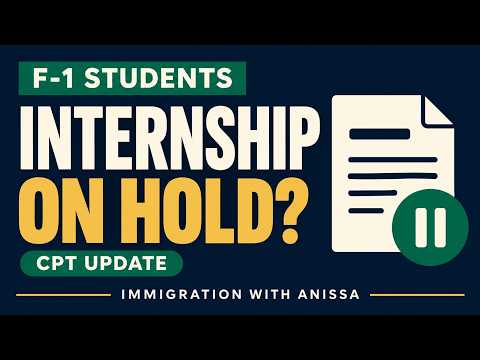
In 2024, U.S. immigration officials authorized 140,775 F-1 student visa holders to work through curricular practical training, or CPT: off-campus internships tied to a degree. In August 2026, Immigration and Customs Enforcement told universities to approve far fewer of them. On Nov. 17, a federal judge in Boston blocked that instruction while a lawsuit proceeds.

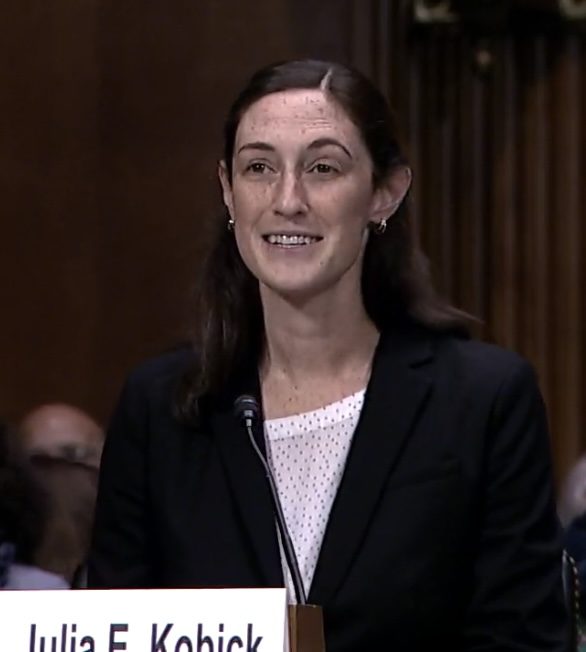
Judge Julia Kobick found the two August directives likely violated the Administrative Procedure Act. Her reason: the Department of Homeland Security imposed a fundamental change to a 35-year-old interpretation without saying it was doing so. The injunction bars enforcement of the directives, which had told schools that only placements required of every student in a program would qualify.

Why it matters

Roughly 140,000 international students a year use CPT, and the ruling decides whether universities can approve those jobs without risking their federal certification.

Questions about this story

Free account needed to ask — your question is kept and asked for you right after sign-up. Answers are public.

No questions yet — be the first to ask.

Key Indicators

140,775
CPT authorizations in 2024
Student visa holders authorized for curricular practical training, per ICE figures cited in the litigation.
2
August directives blocked
SEVP broadcast messages dated Aug. 12 and Aug. 24, 2026, now on hold.
35+
Years of the prior interpretation
The standard the plaintiffs say DHS reversed without acknowledging the shift.
4
Plaintiff organizations
Higher-education groups that sued, including the Association of American Universities.

Voices

Curated perspectives — historical figures and your fellow readers.

Sign up to generate historical perspectives on this story.

People Involved

Organizations Involved

Timeline

August 2026 November 2026

7 events Latest: Today
Tap a bar to jump to that date
  1. Universities begin pausing elective CPT

    Institutional response

    George Washington's international office stops accepting requests not required for every student.

  2. Pause spreads across campuses

    Institutional response

    NYU, UC Berkeley and the University of Washington pause pending requests; Columbia restricts approvals.

  3. Second directive narrows the test

    Policy

    SEVP says placements qualify only if the degree is impossible without them, excluding elective credit.

  4. ICE tightens CPT review

    Policy

    SEVP tells universities to authorize CPT only where it is integral to an established curriculum.

Scenarios

1

First Circuit lifts the injunction, letting ICE enforce the directives

Possible Resolves by Q2 2027

Discussed by: Unclear. DHS declined to comment; Reuters reports the ruling as the latest court loss for the administration's student-visa restrictions.

DHS appeals to the U.S. Court of Appeals for the First Circuit and asks for a stay pending appeal. If granted, the August messages take effect again and universities that paused elective CPT would face the same certification risk as in September. The appeal would turn on whether Kobick was right that the agency changed position without saying so.

2

Judge permanently sets aside the August directives

Likely Resolves by End of 2027

Discussed by: The plaintiffs' theory, as summarized in Reuters' coverage of the ruling.

The case proceeds past the preliminary stage and Kobick rules for the universities on the merits, holding that the directives were arbitrary and capricious and cannot be enforced. That would leave the pre-August reading intact: placements qualifying through academic credit or a degree requirement remain valid.

3

DHS writes the restriction into a formal rule

Possible Resolves by Q2 2028

Discussed by: Suggested by the structure of the ruling: DHS may change its interpretation if it acknowledges the change. No formal rulemaking has been announced.

DHS opens notice-and-comment rulemaking to rewrite the CPT regulation itself, converting the August guidance into binding text. That would survive an arbitrary-and-capricious challenge more easily, though it would take months and draw thousands of comments from universities and employers.

Historical Context

2 moments from history that rhyme with this story — and how they unfolded.

July 2020

ICE bars online-only students (July 2020)

ICE announced that F-1 students whose universities moved fully online during the pandemic would have to leave the country or transfer. Harvard and MIT sued within days, and dozens of universities joined.

Then

ICE rescinded the directive on July 14, 2020, eight days after issuing it, and a judge dismissed the case.

Now

The episode established that rapid student-visa guidance issued without notice can be reversed quickly under litigation pressure.

Why this matters now

Same agency, same visa category, same tactic of changing enrollment rules through sub-regulatory messages rather than formal rules.

September 2017 – June 2020

Supreme Court blocks the DACA rescission (2020)

DHS ended the Deferred Action for Childhood Arrivals program in 2017. Lower courts blocked the rescission, and the Supreme Court took up whether the agency had explained itself adequately.

Then

The Court ruled 5-4 in June 2020 that the rescission was arbitrary and capricious because DHS had not considered reliance interests or justified the change.

Now

The decision set the template courts now apply to abrupt immigration policy reversals: an agency may change course, but it must say that it is doing so and why.

Why this matters now

Kobick's reasoning follows this line: DHS was free to reinterpret CPT, but not to present the change as a clarification of what the rule always meant.

Sources

(7)