



Pull to refresh
Logo
U.S. international student enrollment posts largest drop since 2020

U.S. international student enrollment posts largest drop since 2020

Rule Changes

New overseas arrivals fell 18% in 2025-26, and a fall 2026 survey of 800-plus campuses points to a further 9% decline

Overview

Updated 58 minutes ago

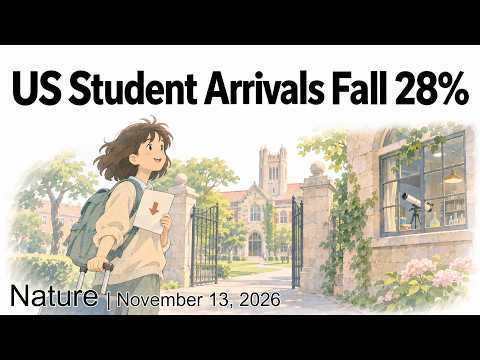
The number of international students at U.S. colleges fell 3% in the 2025-26 academic year, to 1,146,163, according to the Open Doors report released Monday. The sharper figure sits underneath: 228,123 students arrived at a U.S. campus for the first time, down 18% from the year before.

New arrivals are the pipeline. A drop there shows up in total enrollment over the following years, as current students graduate and are not replaced. A fall 2026 survey of more than 800 institutions already shows total international enrollment down 9%, with graduate numbers off 15%.

Why it matters

International students added $56 billion to the U.S. economy in 2025 and fill 6% of college seats. A sustained drop lands on public university budgets.

Questions about this story

Free account needed to ask — your question is kept and asked for you right after sign-up. Answers are public.

No questions yet — be the first to ask.

Key Indicators

1,146,163
International students in 2025-26
Total enrolled at U.S. higher education institutions, down from 1,177,766 the prior year.
228,123
First-time international students
New arrivals fell 18% year over year, the steepest drop in the report.
-3%
Change in total enrollment
The largest annual decline since the 2020-21 pandemic year.
335,785
Students on Optional Practical Training
Post-graduation work authorization rose 14%, partly offsetting the overall decline.
57%
Share studying STEM fields
Math and computer science (286,168) and engineering (214,193) are the largest fields.
$56B
Economic contribution in 2025
Figure from the U.S. Department of Commerce, cited in the Open Doors release.
-9%
Fall 2026 enrollment change
Preliminary survey of 800-plus institutions for the 2026-27 academic year.
$70,000
Proposed OPT fee per student
Department of Homeland Security proposal that institutions say they cannot absorb.

Voices

Curated perspectives — historical figures and your fellow readers.

Sign up to generate historical perspectives on this story.

People Involved

Organizations Involved

Timeline

2025 November 2026

5 events Latest: Today
Tap a bar to jump to that date
  1. Open Doors 2026 shows 18% drop in new students

    Today Data

    Total enrollment falls 3% to 1,146,163; a fall survey projects a further 9% decline.

  2. Universities put a price on the OPT fee

    Analysis

    Twenty-two major research universities estimate about $2.1 billion a year in combined costs.

  3. Homeland Security proposes $70,000 OPT fee

    Policy

    The agency estimates the rule would cost institutions $8.7 billion to $16.9 billion in total.

  4. Restrictive visa policies take hold

    Policy

    Travel bans, visa terminations and a proposed four-year cap on student stays narrow the pipeline into U.S. campuses.

  5. International enrollment peaks at 1,177,766

    Data

    The 2024-25 academic year set a record, up 5% from the year before.

Scenarios

1

Open Doors 2027 confirms a second straight annual decline

Likely Resolves by Nov 30, 2027

Discussed by: Institute of International Education's fall snapshot survey, reported by The Independent and Inside Higher Ed

The fall 2026 survey already shows a 9% drop across 800-plus institutions, with graduate enrollment down 15%. If that holds through the academic year, the November 2027 census records a second consecutive decline and the total falls below 1.1 million for the first time since the pandemic.

2

Homeland Security finalizes the OPT fee

Uncertain Resolves by Q3 2027

Discussed by: NAFSA, the Association of American Universities and Inside Higher Ed's review of university comment filings

The department said it could revise the rule after public comment but has set no deadline. Universities argue the fee would cut the number of graduates who can afford to stay and work, removing one of the main draws for prospective students. A final rule would likely face a court challenge.

3

Enrollment steadies as campuses offset federal policy

Unlikely Resolves by Nov 30, 2027

Discussed by: Institutional recruitment plans reported in the Open Doors fall snapshot

Ninety-one percent of surveyed institutions say they are prioritizing recruitment in STEM fields, including computer science and engineering, and many are expanding recruitment in countries posting record numbers, such as Bangladesh, Vietnam, Nepal and Italy. If those efforts offset losses from India and China, the slide could flatten within a year.

Historical Context

2 moments from history that rhyme with this story — and how they unfolded.

2020-2021

Pandemic border closures (2020-21)

Consulates stopped processing visas, travel from much of the world was barred, and most U.S. classes moved online. New international enrollment collapsed, and total enrollment posted its largest drop on record.

Then

Campuses lost tuition revenue and graduate programs lost applicants.

Now

Enrollment recovered over the next four years, reaching a record 1,177,766 in 2024-25.

Why this matters now

The 2025-26 decline is the largest since that year, and it shows how quickly a student pipeline drains and how slowly it refills.

2017-2020

First Trump administration travel restrictions (2017-2020)

Entry restrictions on several majority-Muslim countries and tighter visa screening slowed new arrivals. New international enrollment fell every year.

Then

New enrollment dropped 11.4% cumulatively from 2016 to 2019.

Now

Total enrollment fell less than one percentage point over the same period, because students already in the country stayed enrolled.

Why this matters now

It shows why first-time arrivals are the leading indicator, and why a full enrollment decline can lag a policy change by several years.

Sources

(9)