



Pull to refresh
Logo
Independent method confirms M87* black hole ring

Independent method confirms M87* black hole ring

New Capabilities

Closure invariants and a diffusion model reproduce the 2019 shadow without calibration priors.

Overview

Updated 1 hour ago

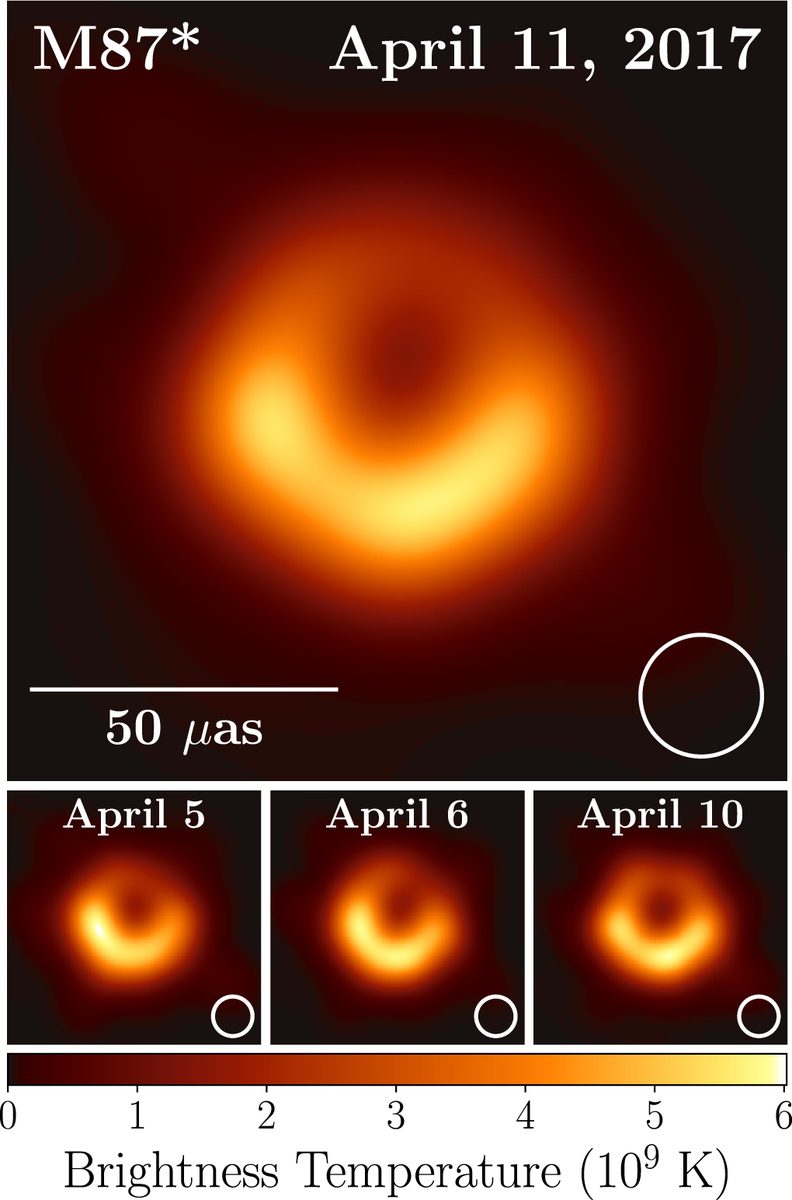
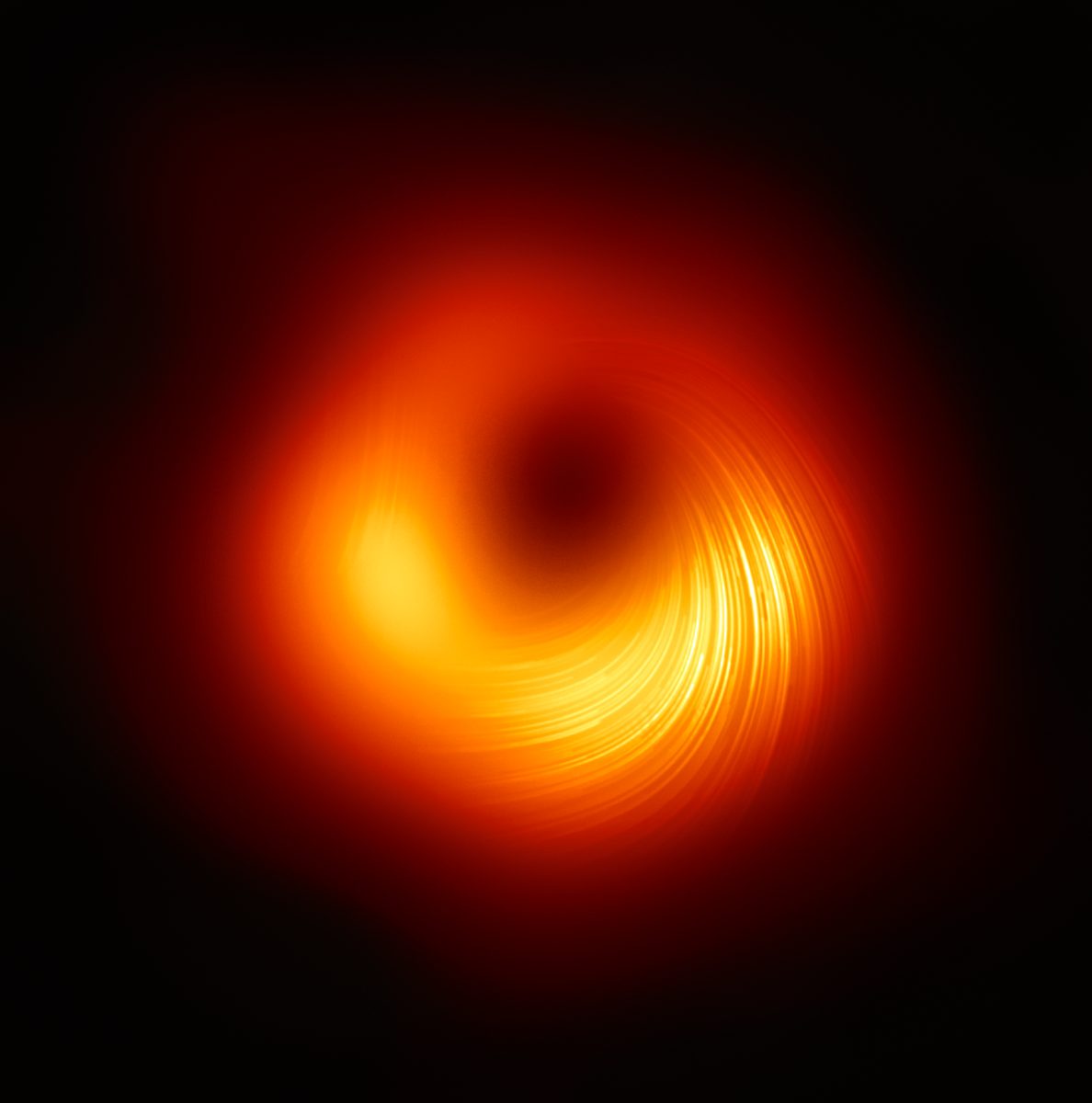
In April 2019, the Event Horizon Telescope released the first image of a black hole: a bright ring around the supermassive black hole at the center of galaxy M87. Some later reanalyses argued the ring could be an artifact of how the sparse telescope data were processed.

A team using a different method has now reproduced the ring from the same data. Their algorithm relies on closure invariants, quantities that survive calibration errors, and a diffusion model trained on ordinary photographs. It recovers a ring 42.2 microarcseconds across, implying a black hole mass of 6.5 billion Suns.

Why it matters

If the ring survives an independent method, the first black hole image is not a processing artifact—and future images can rely on calibration-free data.

Questions about this story

Free account needed to ask — your question is kept and asked for you right after sign-up. Answers are public.

No questions yet — be the first to ask.

Key Indicators

42.2 μas
Ring diameter
Angular diameter of the reconstructed ring, with a 1.5-microarcsecond uncertainty.
6.5 billion Suns
Black hole mass
Mass inferred from the ring diameter and a distance of 16.8 megaparsecs.
~20°
Inclination
Angle between the black hole spin axis and the approaching jet.
8
Observation epochs
Datasets from 2017, 2018 and 2021 used in the reconstruction.
16.8 Mpc
Distance
Distance to M87 used in the mass estimate.

Voices

Curated perspectives — historical figures and your fellow readers.

Sign up to generate historical perspectives on this story.

People Involved

Organizations Involved

Timeline

April 2017 November 2026

3 events Latest: 3 days ago
  1. Independent algorithm reproduces M87* ring

    Latest Publication

    GenDIReCT uses closure invariants to recover a 42.2-microarcsecond ring and a 6.5-billion-solar-mass black hole.

  2. EHT releases first black hole image

    Publication

    The collaboration publishes a ring-like image of M87*.

  3. EHT records M87* at 1.3 mm

    Observation

    The Event Horizon Telescope observes M87* across four epochs in April 2017.

Scenarios

1

Closure invariants become standard for EHT imaging

Possible Resolves by End of 2028

Discussed by: The GenDIReCT team and independent imaging researchers

If the method is adopted, future EHT and next-generation EHT analyses would use calibration-free closure invariants as a primary reconstruction input. That would reduce reliance on manual self-calibration and imaging priors.

2

Separate team reproduces the ring with closure invariants

Likely Resolves by End of 2027

Discussed by: Independent radio astronomy groups

A different research group applies its own closure-invariant pipeline to the public M87* data. If it recovers the same 40–45 microarcsecond ring, the result would no longer depend on one algorithm.

3

Gas-dynamics mass estimate converges on 6.5 billion Suns

Uncertain Resolves by End of 2028

Discussed by: Astrophysicists studying M87* kinematics

The new ring diameter supports a mass of 6.5 billion Suns. A gas-dynamics measurement within 1 billion Suns of that value would ease the tension with earlier lower estimates.

Historical Context

2 moments from history that rhyme with this story — and how they unfolded.

April 2019

First image of M87* (2019)

The Event Horizon Telescope released a ring-shaped image of the supermassive black hole at M87's center. The image was built from very long baseline interferometry data recorded in 2017.

Then

The image became the first direct visual evidence of a black hole shadow.

Now

It anchored mass estimates near 6.5 billion Suns and made M87* a test case for general relativity.

Why this matters now

The new study reanalyzes the same data to test whether the ring was a processing artifact.

April 2017

M87* observation campaign (2017)

The EHT recorded 1.3-millimeter radio waves from M87* on four nights in April 2017. The data were sparse and required extensive calibration.

Then

The campaign produced the 2019 image.

Now

The same data became the basis for later independent reconstructions.

Why this matters now

The new algorithm uses those public measurements, plus later 2018 and 2021 epochs.

Sources

(5)