

Pull to refresh
Logo
India approves ultra-high-voltage corridor to move western renewable power east

India approves ultra-high-voltage corridor to move western renewable power east

Built World

The 1,150-kilovolt line would be India's highest-voltage transmission network, linking Gujarat and Rajasthan to eastern industrial hubs.

Overview

Updated 33 minutes ago

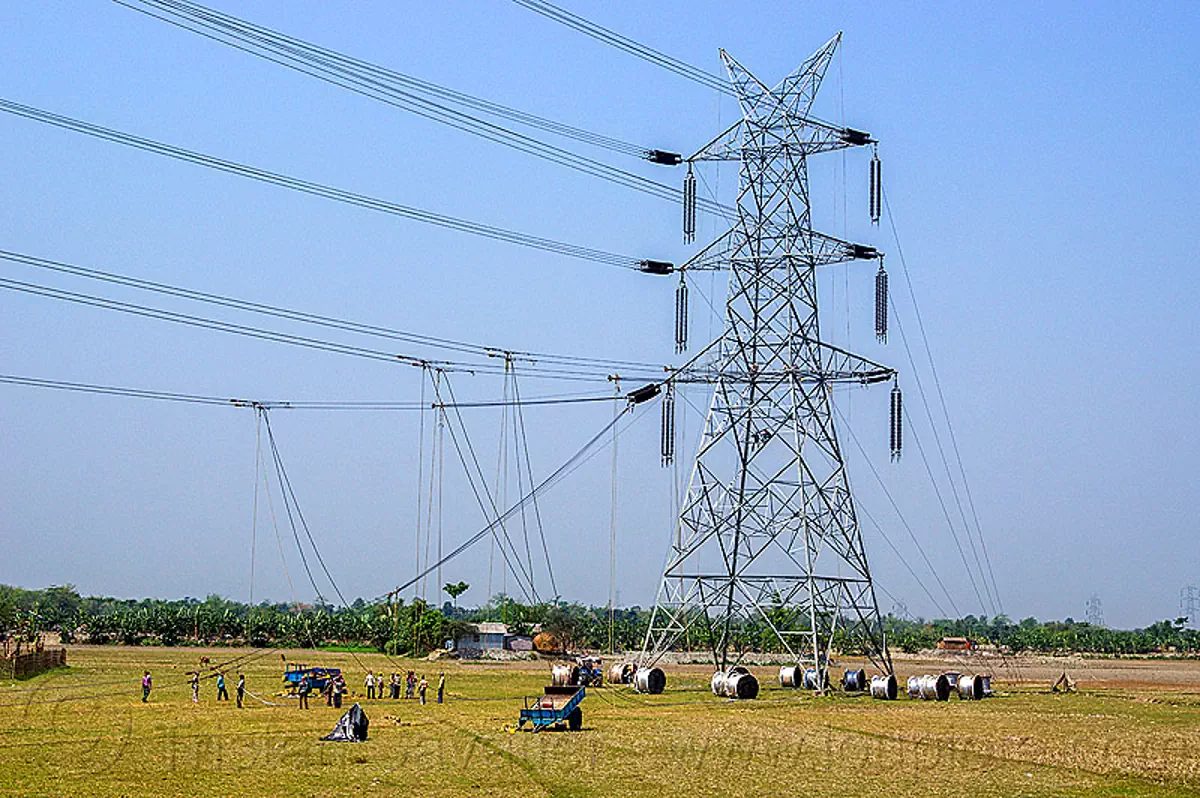
India's highest-voltage power lines currently run at 765 kilovolts. On November 9, the National Committee on Transmission approved a 1,150-kilovolt double-circuit corridor from Raigarh and Kotra to Rourkela and Kolaghat, at a cost of ₹68,816 crore, or about $7.34 billion.

The line is meant to carry solar and wind power from Gujarat and Rajasthan to industrial demand and planned green hydrogen hubs in eastern India. It would take about six years to build. One committee member objected that demand forecasts are too high and that the line could sit underused at night.

Why it matters

If built, the line would move more solar and wind power from western India to eastern factories with fewer corridors and lower losses.

Questions about this story

Free account needed to ask — your question is kept and asked for you right after sign-up. Answers are public.

No questions yet — be the first to ask.

Key Indicators

₹68,816 crore
Approved project cost
Nearly $7.34 billion at the exchange rate cited by Reuters.
1,150 kV
Highest transmission voltage
India's existing highest-voltage lines are 765 kV.
~6 years
Estimated construction time
The corridor is expected to take about six years to complete.
12 GW
Renewable capacity at Bhadla-IV and Ramgarh-II
Studies for the corridor included these western renewable additions.
124 GW
Battery storage considered in studies
The transmission studies also included about 42 GW of pumped storage.

Voices

Curated perspectives — historical figures and your fellow readers.

Sign up to generate historical perspectives on this story.

People Involved

Organizations Involved

Timeline

January 2022 November 2026

6 events Latest: Yesterday
Tap a bar to jump to that date
  1. Approval details become public

    Latest Disclosure

    Reuters reports the committee cleared the corridor; minutes record the cost and Narasimhan's dissent.

  2. NCT approves 1,150 kV west-east corridor

    Approval

    The ₹68,816 crore double-circuit line would be India's highest-voltage transmission project.

  3. Cabinet approves Green Energy Corridor Phase III

    Policy

    The ₹1.86 trillion scheme targets 135 GW of renewable evacuation and 50 GWh of battery storage by FY33.

  4. India's non-fossil capacity reaches 304 GW

    Energy data

    Installed renewable capacity was 295.55 GW, with 20.87 GW added between April and August 2026.

  5. Grid constraints restrict 12 GW of renewable output

    Grid operations

    About 21 GW was being evacuated through temporary access; 12 GW faced restrictions during peak solar generation.

  6. Green Energy Corridor Phase II approved

    Policy

    The scheme aimed to add 10,750 circuit km and 27,500 MVA to evacuate about 20 GW across seven states.

Scenarios

1

First 1,150 kV line is energized by 2032

Possible Resolves by End of 2032

Discussed by: Reuters, citing the six-year construction estimate

If land, clearances and equipment supply hold, the first phase linking Chhattisgarh, Odisha and West Bengal could carry power by the early 2030s. The test is whether at least one line enters commercial service, not whether the full route is finished.

2

NCT switches to 765 kV or HVDC before construction

Unlikely Resolves by End of 2027

Discussed by: S R Narasimhan, expert member of the National Committee on Transmission

Narasimhan argued a 765 kV line or an HVDC extension would be more practical. If load forecasts weaken or green hydrogen demand stalls, the committee could reopen the voltage choice.

3

Approved cost rises before first line is energized

Possible Resolves by End of 2030

Discussed by: Down To Earth reporting on transmission delays

GEC-II showed that land, right-of-way and forest clearances can stall projects. A revised cost estimate above ₹68,816 crore would signal the same pattern.

Historical Context

2 moments from history that rhyme with this story — and how they unfolded.

January 2022

Green Energy Corridor Phase II (January 2022)

The scheme was designed to add about 10,750 circuit kilometres of transmission lines and 27,500 megavolt-amperes of substation capacity to evacuate about 20 GW of renewable energy across seven states. Its original completion target was FY26.

Then

The scheme was approved to ease renewable evacuation bottlenecks across several states.

Now

Implementation lagged, with land acquisition, right-of-way constraints, forest clearances and court cases holding up construction.

Why this matters now

The new 1,150 kV corridor faces the same execution risks that slowed GEC-II, so approval is not the same as a working line.

2020s

Raigarh-Pugalur high-voltage direct current link

The 8,000 MW Raigarh-Pugalur high-voltage direct current corridor demonstrated the scale of infrastructure required to move large quantities of electricity between regions in India.

Then

It enabled bulk inter-regional power transfer between western and southern India.

Now

It became a benchmark for long-distance, high-capacity links in the Indian grid.

Why this matters now

The new 1,150 kV alternating-current corridor extends the same west-east logic, but at a higher voltage and with more dependence on future green hydrogen demand.

Sources

(5)