
India builds domestic quantum chip manufacturing capacity
Built WorldQpiAI opens a Bengaluru foundry that fabricates superconducting quantum processors from start to finish
Today: QpiAI opens Bengaluru quantum foundryNew here? Follow stories to track developments over time. Create a free account to get updates when stories you care about change.
Overview
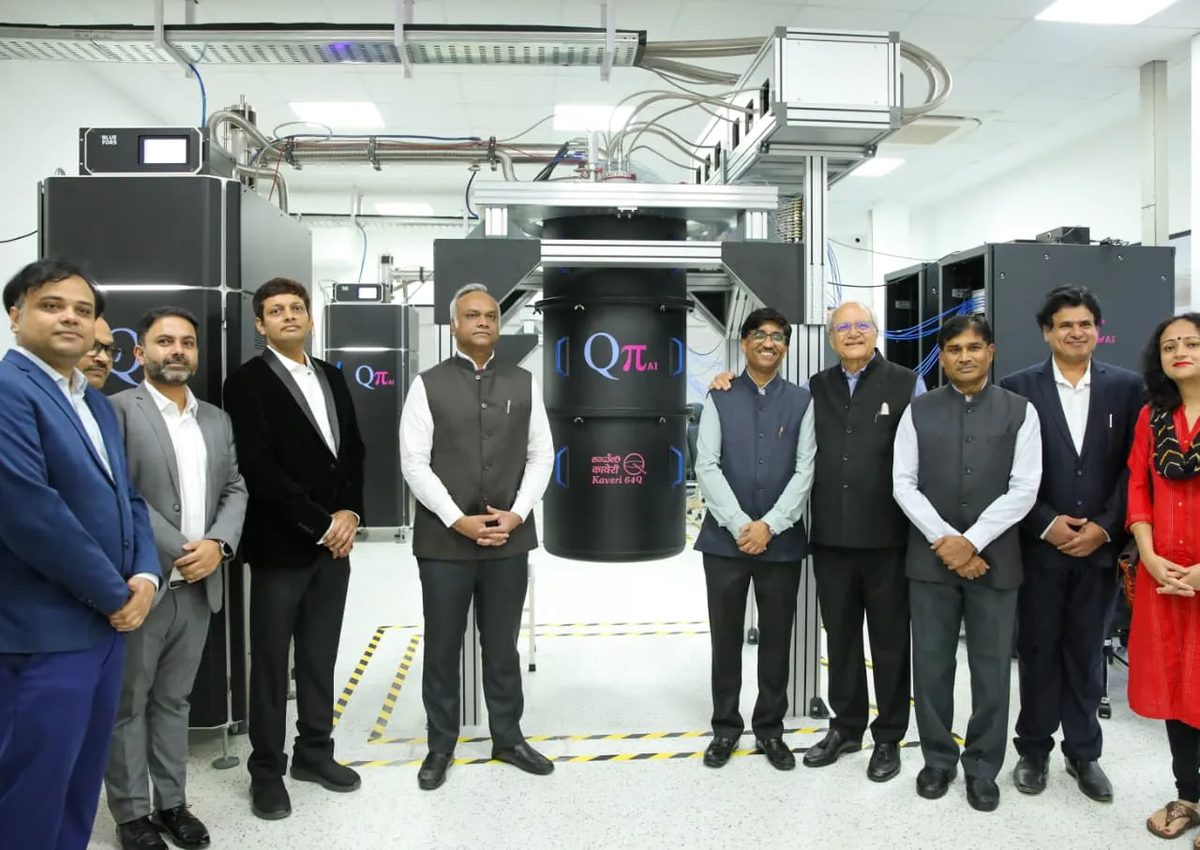
Updated 2 hours agoFewer than ten countries can both design and build a quantum processor. On August 17, 2026, an Indian startup added its country to that list, opening a Bengaluru factory that makes superconducting quantum chips from bare wafer to packaged device.
QpiAI's foundry can fabricate chips with up to 128 qubits today, the basic units that let a quantum computer run calculations a normal computer cannot. The company wants to reach 10,000 physical qubits by 2027. If it holds, India stops importing this hardware and starts making its own.
Why it matters
Only a handful of countries can make quantum chips. India just built a factory that could turn it from a buyer into a supplier.
Questions about this story
Free account needed to ask — your question is kept and asked for you right after sign-up. Answers are public.
No questions yet — be the first to ask.
Key Indicators
Voices
Curated perspectives — historical figures and your fellow readers.
Play
Exploring all sides of a story is often best achieved with Play.
Higher or Lower
A number from this story, against one from elsewhere in the news — guess which is bigger, then keep the chain going. 5 rounds, 3 strikes; a miss costs a strike and resets your streak.
Keyboard: ↓/L lower · ↑/H higher
0 points — sign up to put that on the leaderboard.
Connections
Sixteen names from the news. Find the four hidden groups of four. Four mistakes max.
Sign up to keep a daily streak — a new puzzle lands every day.
Exit debate?
Your progress in this debate will be lost.
- 1 Two AI personas square off on this story.
- 2 You predict who'll win each round — correct picks earn XP.
- 3 One crossfire question is yours to fire. Pick it carefully.
Couldn't generate a topic
Select Your Champions
Choose one persona for each side of the debate
DEBATE TOPIC
Choose personas with different perspectives for a more dynamic debate.
Select debater for this side:
No debate personas available right now.
Select debater for this side:
No debate personas available right now.
Who's Got This Round?
Make your prediction before the referee scores
The referee scores both sides on
Round Results
Set the Crossfire
Pick the question both personas must answer in the final round
Debate Oracle! You called every round!
Sharp Instincts! You know your debaters!
The Coin Flip Strategist! Perfectly balanced!
The Contrarian! Bold predictions!
Inverse Genius! Try betting the opposite next time!
XP Breakdown
Prediction History
People Involved
Organizations Involved
A Bengaluru startup that designs and now fabricates superconducting quantum processors.
India's eight-year, roughly $726 million program to build a domestic quantum industry.
Timeline
April 2023 August 2026
-
QpiAI opens Bengaluru quantum foundry
Today InfrastructureThe eight-inch plant fabricates superconducting chips of up to 128 qubits and runs the full process from lithography to packaging.
-
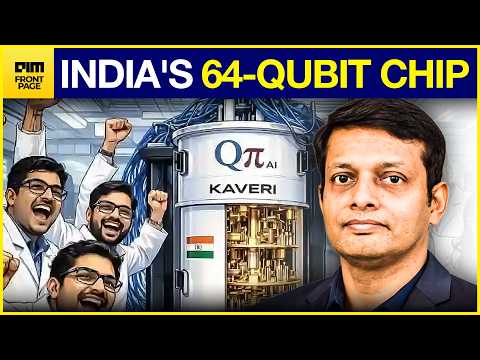
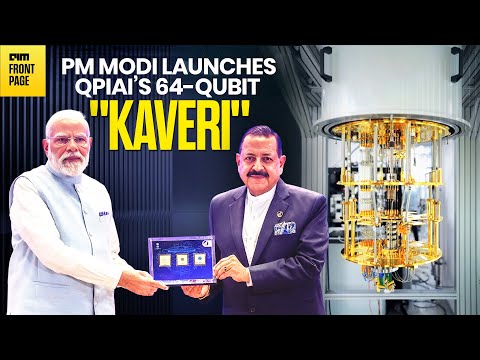
QpiAI launches 64-qubit Kaveri chip
ProductThe flip-chip superconducting processor is set for commercial availability by the third quarter of 2026.
-
QpiAI raises about $32 million
FundingA Series A round led by Avataar Ventures and the National Quantum Mission funds the hardware push.
-
QpiAI ships 25-qubit Indus system
ProductThe company unveils Indus, described as India's first full-stack quantum computer, selected under the National Quantum Mission.
-
India approves National Quantum Mission
PolicyThe cabinet backs an eight-year program worth about $726 million to build a domestic quantum industry.
Historical Context
3 moments from history that rhyme with this story — and how they unfolded.
TSMC founded as a pure-play foundry (1987)
Morris Chang founded Taiwan Semiconductor Manufacturing Company to make chips designed by others, rather than sell its own. The dedicated-foundry model let a mid-size economy enter advanced chipmaking.
TSMC gave fabless design firms a place to build, seeding a new layer of the chip industry.
It became the world's largest contract chipmaker and made Taiwan central to global electronics.
QpiAI is betting the same logic works for quantum: own the fabrication line and you can supply chips to a field that mostly lacks factories.
India's low-cost Mars mission (2014)
India's Mangalyaan probe reached Mars orbit on the country's first try, built for about $74 million, a fraction of comparable Western missions. It showed India could hit advanced-tech targets cheaply.
The mission became a point of national pride and proof of frugal engineering.
It reinforced India's strategy of indigenizing high technology at low cost rather than importing it.
QpiAI's roughly $35 million foundry follows the same playbook: reach a capability held by a few rich nations, but for far less money.
IBM unveils 1,121-qubit Condor (2023)
IBM revealed Condor, the first superconducting quantum chip to pass 1,000 qubits. Its performance, measured by coherence time and gate fidelity, stayed roughly level with IBM's 433-qubit predecessor.
The milestone drew headlines, but IBM soon shifted its public roadmap toward smaller, error-corrected chips rather than raw qubit counts.
The field learned that adding qubits is easier than keeping them accurate, and quality became the harder benchmark.
It tempers QpiAI's 10,000-qubit goal. Raw count is a start; a machine that computes reliably at that scale is a much harder thing.
