
Pull to refresh
Logo
India's fiscal deficit runs ahead of annual target at midyear

India's fiscal deficit runs ahead of annual target at midyear

Money Moves

The central government used 42.1% of its 2026-27 deficit target in April-September, up from 36.5% a year earlier.

Overview

Updated 1 hour ago

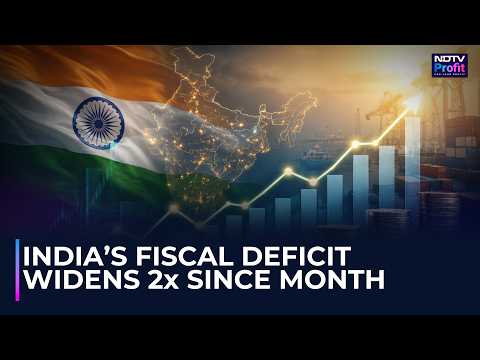
India’s central government spent ₹7.14 lakh crore more than it received in April-September. That is 42.1% of its full-year fiscal deficit target, up from 36.5% at the same point last year.

Spending grew faster than receipts. Total expenditure rose 10.7%, capital spending reached 53.6% of the annual budget, and major subsidies climbed 10.1%. Gross tax revenue grew 6.1%, held back by excise duty cuts on petrol and diesel.

Why it matters

If the Centre misses its 4.3%-of-GDP deficit target, it must borrow more or cut spending, which affects bond yields and public investment.

Questions about this story

Free account needed to ask — your question is kept and asked for you right after sign-up. Answers are public.

No questions yet — be the first to ask.

Key Indicators

42.1%
Share of FY27 deficit target used by September
The central government had used 36.5% of its target at the same point a year earlier.
₹7.14 lakh crore
Fiscal deficit in April-September 2026
The gap between central government spending and receipts in the first half of the fiscal year.
₹16.96 lakh crore
Full-year FY27 deficit target
The Centre’s budgeted fiscal deficit for 2026-27, equal to 4.3% of GDP.
4.3%
Deficit target as share of GDP
The government’s fiscal consolidation target for 2026-27.
47.7%
Share of annual expenditure budget spent by September
Total expenditure reached ₹25.49 lakh crore in the first half.
53.6%
Share of annual capex budget spent by September
Capital expenditure reached ₹6.55 lakh crore, ahead of last year’s pace.
6.1%
Gross tax revenue growth, year on year
Excise collections fell after cuts to fuel duties, while customs grew strongly.
10.1%
Major subsidy growth, year on year
Food subsidy rose 16%, while petroleum subsidy fell almost 83%.
36.5%
Share of FY26 target used by September 2025
The year-earlier comparison shows less fiscal room was used by the same point.

Voices

Curated perspectives — historical figures and your fellow readers.

Sign up to generate historical perspectives on this story.

People Involved

Organizations Involved

Timeline

September 2026 October 2026

3 events Latest: Today
  1. April-September deficit rises to 42.1% of target

    Today Fiscal data

    Higher capex and subsidies pushed the half-year gap to ₹7.14 lakh crore.

  2. ICRA flags steep second-half targets

    Today Analysis

    Aditi Nayar said second-half capex must grow 16.2% to meet budget.

  3. April-August deficit reaches 41.9% of target

    Fiscal data

    The Centre’s fiscal gap hit ₹7.1 lakh crore, with August alone at ₹2.5 lakh crore.

Scenarios

1

Centre meets 4.3% deficit target with second-half capex slowdown

Possible Resolves by May 31, 2027

Discussed by: ICRA and Controller General of Accounts data

Capital spending is the budget line most likely to give way. Capex growth fell to 2.8% in the second quarter from 23.7% in the first, and the Centre can slow approvals to keep the headline deficit at 4.3% of GDP. The cost is weaker public investment and slower GDP growth.

2

Deficit overshoots 4.3% as subsidies and weak excise receipts force more borrowing

Possible Resolves by May 31, 2027

Discussed by: ICRA and EY Economy Watch

Food and fertiliser subsidies are sticky, and excise collections are down after fuel tax cuts. If direct taxes and customs cannot fill the gap, the Centre could miss the target or borrow more than planned. The government has already cut market borrowing by ₹1.2 lakh crore.

3

Centre meets target while holding capex above 90% of budget

Uncertain Resolves by May 31, 2027

Discussed by: EY Economy Watch and ICRA

Direct tax collections grew 13.4% in April-August and customs rose 16.5% in the first half. If those trends hold and subsidies stay near budget, the Centre could meet the target without a sharp capex cut. That would require personal income tax and excise collections to beat modest first-half growth.

Historical Context

2 moments from history that rhyme with this story — and how they unfolded.

2020-2021

COVID-19 deficit surge (2020-21)

The pandemic hit tax receipts and forced emergency health and welfare spending. India’s fiscal deficit widened far beyond the budgeted target, and the April-August 2026 deficit was later described as the widest five-month print since COVID.

Then

The government borrowed more and missed its original deficit estimate.

Now

The episode showed how fast a revenue shock can consume a year’s fiscal room.

Why this matters now

Today’s midyear print is smaller, but the pattern is similar: spending is front-loaded while tax receipts lag.

April-September 2025

FY26 midyear deficit (2025-26)

The Centre used 36.5% of its FY26 deficit target in the first half, with the fiscal gap at ₹5.73 lakh crore. That left more room for second-half spending than the FY27 print does.

Then

The lower midyear share gave the government a larger cushion.

Now

It became the baseline for judging the FY27 deterioration.

Why this matters now

The FY27 share is 5.6 percentage points higher, which is why ICRA calls the second-half path challenging.

Sources

(8)