



Pull to refresh
Logo
Federal budget deficit hits $2 trillion, largest since COVID

Federal budget deficit hits $2 trillion, largest since COVID

Money Moves

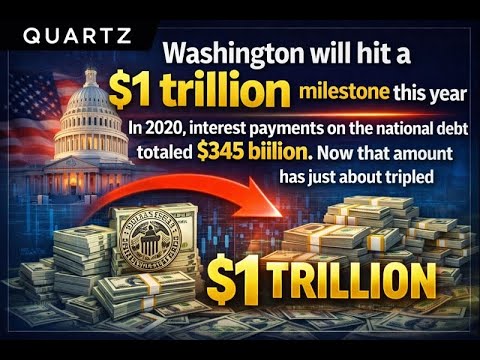
Interest payments on the national debt top $1.1 trillion as spending outpaces revenue

Yesterday: Deficit story reaches national attention

Overview

Updated Yesterday

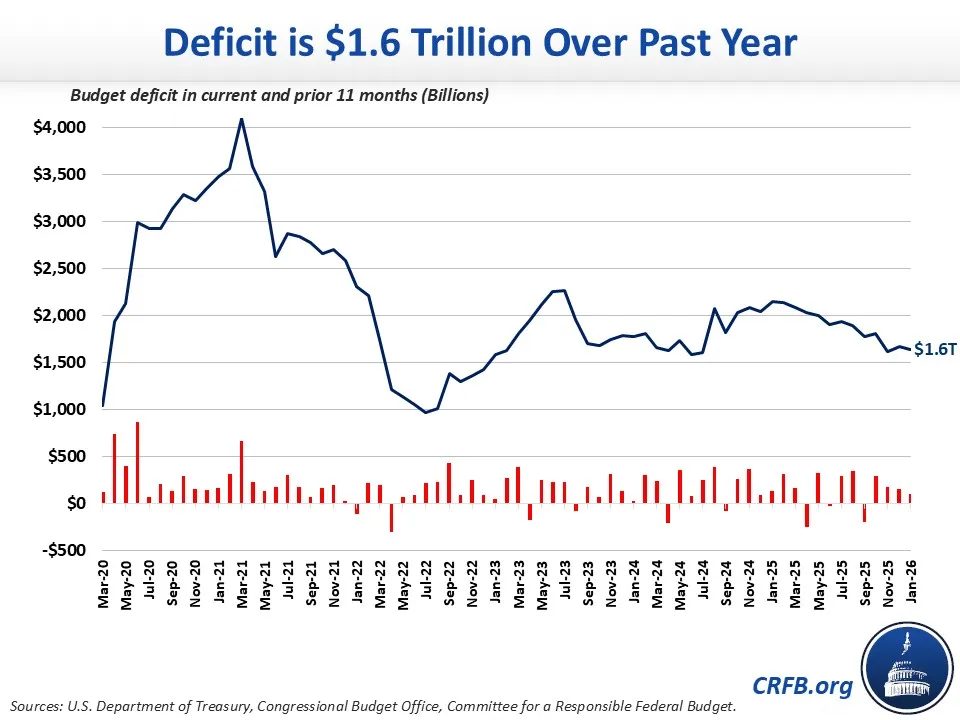
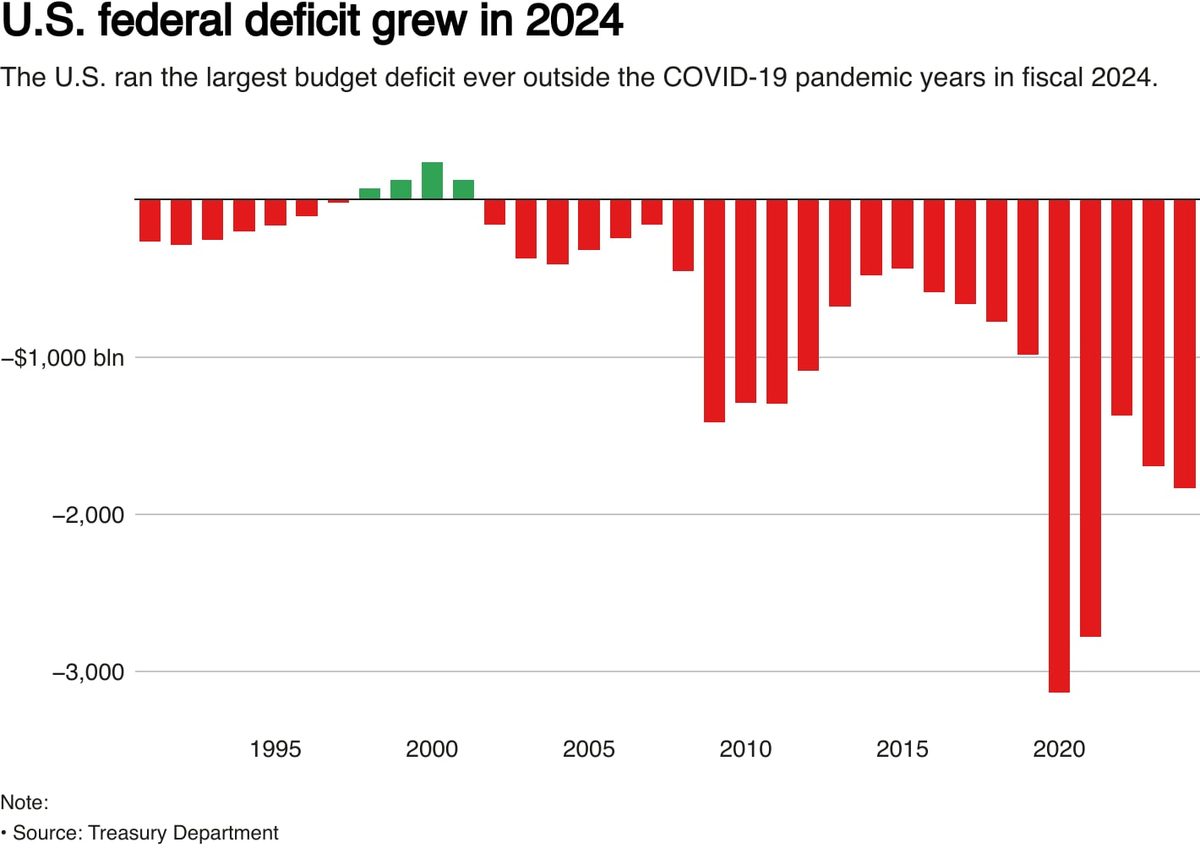
The federal government ran a $1.993 trillion budget deficit in fiscal year 2026, which ended September 30. It is the third-largest deficit in American history, behind only the two COVID-19 pandemic years, and the largest ever recorded outside a war or recession.

Spending grew twice as fast as revenue: outlays rose 6% to $7.4 trillion while receipts climbed 3% to $5.4 trillion. The single biggest driver was net interest on the national debt, which hit $1.143 trillion, up 11% and now larger than what the government spent on defense or Medicare.

Why it matters

If interest costs keep climbing, the government will spend more on debt service than on defense or Medicare, crowding out every other priority in the budget.

Questions about this story

Free account needed to ask — your question is kept and asked for you right after sign-up. Answers are public.

No questions yet — be the first to ask.

Key Indicators

$1.993T
FY 2026 budget deficit
Third-largest in history, behind only FY 2020 ($3.1T) and FY 2021 ($2.8T).
$1.143T
Net interest payments
Up 11% from FY 2025; now exceeds defense and Medicare spending.
6.2%
Deficit as share of GDP
Up from 5.8% of GDP in FY 2025.
$32.4T
Debt held by the public
Up $2.3 trillion from the end of FY 2025; roughly 100% of GDP.
$130B
Tariff refunds issued
Refunds to businesses that paid IEPA tariffs the Supreme Court ruled illegal.

Voices

Curated perspectives — historical figures and your fellow readers.

Ever wondered what historical figures would say about today's headlines?

Sign up to generate historical perspectives on this story.

People Involved

Organizations Involved

Timeline

2025 October 2026

6 events Latest: Yesterday
Tap a bar to jump to that date
  1. Deficit story reaches national attention

    Latest Media

    Reason and other outlets report the deficit as the largest since COVID.

  2. CBO releases Monthly Budget Review

    Report

    CBO estimates the FY 2026 deficit at $1.993 trillion, $218 billion above FY 2025.

  3. Fiscal year 2026 ends

    Administrative

    The government closes the books on a year of $7.4 trillion in spending and $5.4 trillion in revenue.

  4. Fiscal year 2026 begins

    Administrative

    The Trump administration starts the year expecting tariffs and fraud cuts to narrow the deficit.

  5. One Big Beautiful Bill signed into law

    Legislation

    The 2025 tax law cut corporate rates and included Medicaid spending reductions set to take effect later.

Scenarios

1

Interest rates stay high, deficit tops $3 trillion by 2030

Likely Resolves by Oct 1, 2027

Discussed by: CBO, American Enterprise Institute

With 10-year Treasury yields at 5.3% versus the CBO's February forecast of 4.1-4.4%, net interest costs could far exceed projections. AEI estimates that if rates run 150 basis points above the February forecast, the 10-year deficit grows by $6 trillion and debt reaches 133% of GDP by 2036. This scenario unfolds if the Federal Reserve holds rates high and long-term bond yields keep climbing.

2

Medicaid cuts take effect, spending growth slows

Possible Resolves by Oct 1, 2027

Discussed by: American Enterprise Institute, Trump administration

The One Big Beautiful Bill's Medicaid spending reductions have not yet gone into effect. If they materialize as planned, and if stronger economic growth boosts revenue, the deficit could narrow in coming years. AEI notes this is the administration's stated expectation, but warns it would be risky to count on it given current interest rate pressures.

3

Congress adopts PAYGO rules and a fiscal commission

Unlikely Resolves by Q2 2027

Discussed by: Committee for a Responsible Federal Budget

CRFB is urging policymakers to adopt a 'Super PAYGO' rule requiring any new costs to come with double the savings, and to create a bipartisan fiscal commission to address Social Security insolvency. This scenario requires a shift in congressional priorities, which CRFB acknowledges is difficult but necessary given the trust fund timelines.

Historical Context

2 moments from history that rhyme with this story — and how they unfolded.

FY 2020-FY 2021

COVID-19 pandemic deficits (2020-2021)

The federal government ran $3.1 trillion and $2.8 trillion deficits in the first two pandemic years, funding stimulus checks, expanded unemployment benefits, and emergency health spending as revenue collapsed.

Then

The deficits were widely seen as justified emergency spending to keep the economy afloat during lockdowns.

Now

They added roughly $5 trillion to the national debt and set the stage for the current interest cost spiral.

Why this matters now

FY 2026's $2 trillion deficit is the largest since those pandemic years, but it came during a period of economic growth, not emergency. That makes it structurally different and harder to justify.

FY 2009-FY 2012

Post-2008 financial crisis deficits (2009-2012)

The Great Recession produced the first trillion-dollar deficits in American history, peaking at $1.4 trillion in FY 2009 as the government bailed out banks and auto companies and passed the stimulus package.

Then

The 2011 Budget Control Act and the 2013 sequester imposed spending caps that helped narrow the deficit to $438 billion by FY 2015.

Now

The episode showed that bipartisan deficit reduction was possible, but required sustained political will.

Why this matters now

The post-2008 period demonstrates that large deficits can be brought down through policy action. The question is whether today's entitlement and interest cost pressures allow a similar response.

Sources

(10)