



Pull to refresh
Logo
Pasqua First Nation and SMARTBUILD form majority Indigenous-owned tech subsidiary

Pasqua First Nation and SMARTBUILD form majority Indigenous-owned tech subsidiary

Money Moves

New Regina-based software firm reserves 52.5% of shares for Indigenous organizations as Canadian defence spending rises

Yesterday: MOU signed with Pasqua First Nation at MSPO 2026

Overview

Updated 1 hour ago

Canada's federal government requires departments to direct at least 5% of contracting value to Indigenous-owned businesses. A southern Saskatchewan First Nation is using that mandate to take majority control of the software that tracks the country's infrastructure and defence projects.

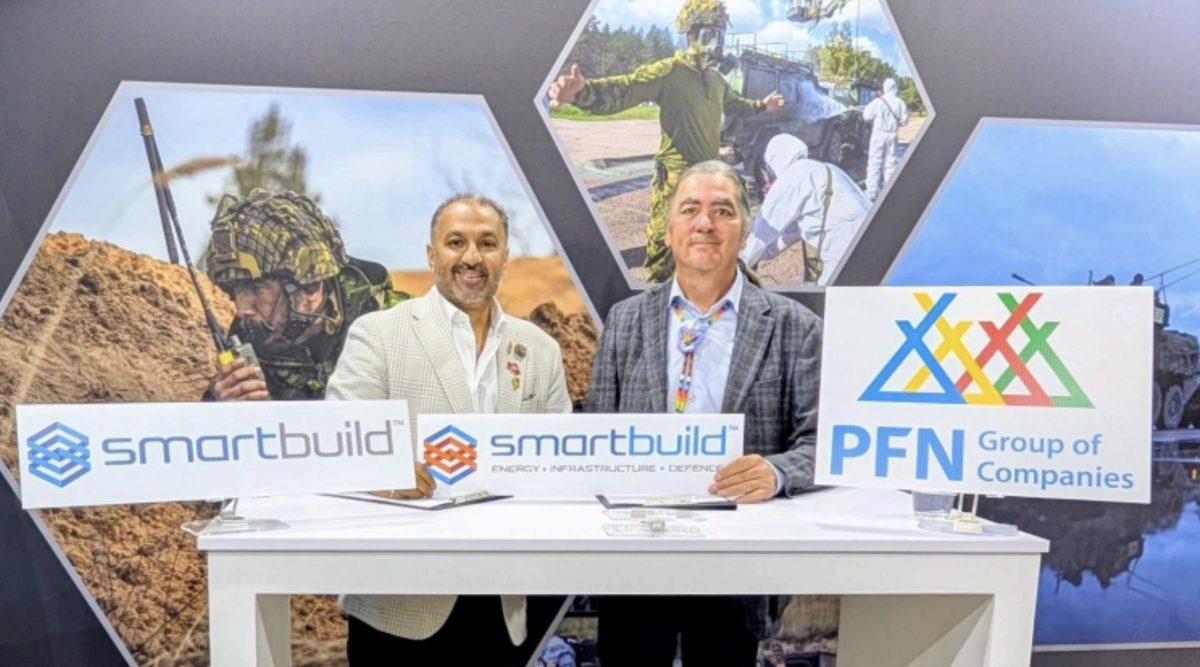
SMARTBUILD Energy Infrastructure Defence (EID), a new Regina-based subsidiary of construction software firm SMARTBUILD Construction Solutions Inc., reserves a minimum of 52.5% of its shares for First Nations, Métis, and Inuit organizations. Pasqua First Nation, through its business arm PFN Group of Companies, is the founding partner — evaluating an equity investment, holding a seat on the subsidiary's board of advisors, and helping shape strategy. The MOU was signed September 16 at the 34th International Defence Industry Exhibition in Kielce, Poland.

Why it matters

If this ownership model holds, Indigenous communities gain voting control over the software running Canada's infrastructure and defence projects — not just a share of profits.

Questions about this story

Free account needed to ask — your question is kept and asked for you right after sign-up. Answers are public.

No questions yet — be the first to ask.

Key Indicators

52.5%
Minimum share of SMARTBUILD EID reserved for Indigenous organizations
The subsidiary is structured so at least 52.5% of shares go to First Nations, Métis, and Inuit groups.
5%
Federal contracting value mandated for Indigenous businesses
Canadian departments and agencies must award 5% of contract value to Indigenous-owned firms.
$250M
Public infrastructure managed via SMARTBUILD platform
SMARTBUILD has handled $250 million across 54 projects in 31 Canadian communities.
200 MW
Capacity of Enbridge's Seven Stars Energy Project, with Pasqua among six Indigenous partners
The proposed southern Saskatchewan project pairs Pasqua First Nation with five other Indigenous partners.

Voices

Curated perspectives — historical figures and your fellow readers.

Ever wondered what historical figures would say about today's headlines?

Sign up to generate historical perspectives on this story.

People Involved

Organizations Involved

Timeline

2019 September 2026

3 events Latest: Yesterday
  1. MOU signed with Pasqua First Nation at MSPO 2026

    Latest Partnership

    SMARTBUILD and Pasqua First Nation sign an agreement at a Polish defence exhibition, making the First Nation a founding equity partner in the new majority Indigenous-owned subsidiary.

  2. BUY CANADIAN TECHNOLOGY campaign launched

    Policy Campaign

    SMARTBUILD urges governments to extend Buy Canadian and Buy Ontario procurement rules to software and digital platforms.

  3. SMARTBUILD founded in Brampton

    Founding

    Zulq Malik launches the construction software company in Ontario.

Scenarios

1

Pasqua First Nation closes equity deal with SMARTBUILD EID

Likely Resolves by Sep 16, 2027

Discussed by: Both parties stated in the MOU that the investment will proceed following due diligence; industry observers including Canadian trade press expect completion.

PFN Group completes due diligence, signs a definitive agreement, takes its equity stake, and seats a board advisor. The subsidiary begins operating as a majority Indigenous-owned Microsoft cloud provider for public sector and commercial customers, and starts the talent pipeline program through Saskatchewan schools.

2

Due diligence fails and the MOU lapses

Possible Resolves by Sep 16, 2027

Discussed by: Legal analyses of Indigenous equity deals note that valuation, governance, and risk-allocation disputes commonly derail memorandum-stage partnerships.

Valuation disagreements, governance terms, or financing constraints prevent a definitive agreement. The subsidiary continues as a SMARTBUILD entity but without the 52.5% Indigenous ownership structure — or the venture is shelved entirely.

3

Model scales to additional Indigenous partners

Possible Resolves by End of 2028

Discussed by: Federal procurement mandates and prime contractors' Industrial and Technological Benefits obligations create demand for more majority Indigenous-owned suppliers; RBC research sizes Indigenous equity opportunity at $51 billion.

Other First Nations, Métis, and Inuit organizations take up the remaining 47.5% of SMARTBUILD EID's shares, or SMARTBUILD replicates the ownership model in other sectors and regions.

Historical Context

3 moments from history that rhyme with this story — and how they unfolded.

2016-2025

Federal Procurement Strategy for Indigenous Business (2016)

Canada launched a procurement strategy that grew into a mandate requiring federal departments and agencies to award at least 5% of the total value of their contracts to Indigenous-owned businesses.

Then

The mandate created structural demand for Indigenous-owned suppliers in federal contracting.

Now

It gave Indigenous firms a market lever, and gave prime contractors a reason to seek Indigenous partners.

Why this matters now

A majority Indigenous-owned software company satisfies both the 5% procurement mandate and prime contractors' Industrial and Technological Benefits obligations — the exact demand this deal is built to capture.

2016

Meadow Lake Tribal Council takes over NorSask Forest Products (2016)

Meadow Lake Tribal Council, representing nine First Nations in Saskatchewan, took ownership of the NorSask sawmill after it went into receivership, creating one of the largest 100% Indigenous-owned forest product operations in Canada.

Then

The mill resumed operations and became a significant regional employer.

Now

It demonstrated that Saskatchewan Indigenous communities could operate industrial assets at full ownership rather than contract for a slice of the work.

Why this matters now

A Saskatchewan precedent for Indigenous communities taking full industrial ownership — the same principle Pasqua First Nation is now applying to infrastructure software.

2022-2024

Cedar LNG — Haisla Nation (2024)

The Haisla Nation of British Columbia took a 50.1% stake in the Cedar LNG export facility with pipeline company Pembina, and reached a final investment decision in 2024. It was the first majority Indigenous-owned LNG project in Canada.

Then

The project passed its financing milestone and moved into construction.

Now

It established a legal and financial template for majority Indigenous equity control of major energy infrastructure.

Why this matters now

Cedar LNG showed that majority Indigenous ownership — not just minority participation — could work on multi-billion-dollar projects. The SMARTBUILD deal applies the same ownership logic to software.

Sources

(7)