
Logo
Daily Brief
Following
Why
From Barren Ranch to Living Forest: Instituto Terra's 2.5 Million Tree Proof-of-Concept

From Barren Ranch to Living Forest: Instituto Terra's 2.5 Million Tree Proof-of-Concept

How a photographer and his wife turned 1,700 acres of degraded Brazilian pastureland into a federally recognized nature reserve

Overview

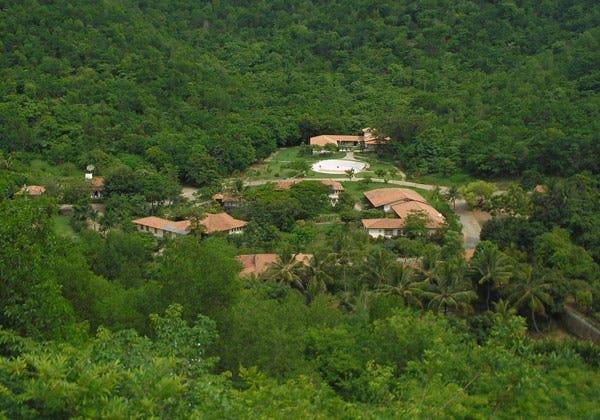
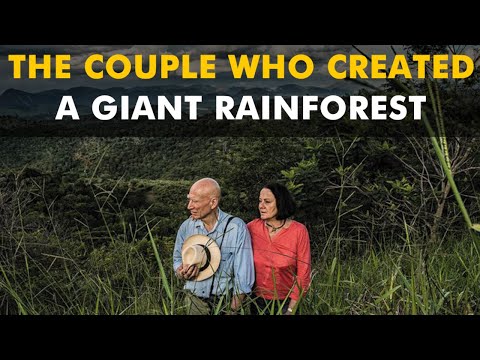
In 1998, renowned photographer Sebastião Salgado returned from documenting the Rwandan genocide to find his family's Brazilian cattle ranch stripped bare—just 0.5% of its original Atlantic Forest remained. His wife Lélia proposed something audacious: rebuild the entire ecosystem from scratch. By January 2026, Instituto Terra had planted over 2.5 million trees from 293 native species, transforming 1,700 acres of eroded pastureland into a forest dense enough to see from space.

The numbers tell a story of full ecosystem recovery. Seven years after the first planting, monitoring teams counted 172 bird species, 33 mammal species including endangered ocelots, and over 2,000 restored springs. What started as a personal healing project became a proof-of-concept that degraded tropical landscapes can be brought back—if you're willing to wait, study the science, and let nature do most of the heavy lifting. Now other projects across Brazil's Atlantic Forest, which has lost 88% of its original cover, are following Instituto Terra's playbook.

Key Indicators

2.5M+
Trees planted
From 293 native Atlantic Forest species across 1,700 acres since 1999
172
Bird species returned
Including six threatened species, seven years after restoration began
2,000+
Springs restored
Watershed recovery bringing water back to the Rio Doce Valley
0.5%
Forest remaining in 1998
Decades of cattle ranching had stripped the land nearly bare

People Involved

Sebastião Salgado
Sebastião Salgado
Co-founder, Instituto Terra (Died May 23, 2025 in Paris at age 81)
Lélia Deluiz Wanick Salgado
Co-founder and Director, Instituto Terra (Leading Instituto Terra following Sebastião's death in 2025)

Organizations Involved

Instituto Terra
Instituto Terra
Environmental NGO
Status: Active, operating reforestation and education programs in Rio Doce Valley

Brazilian nonprofit turning degraded Atlantic Forest land into federally protected nature reserves through scientific reforestation.

AT
Atlantic Forest Restoration Pact
Multi-stakeholder Coalition
Status: Active, coordinating restoration across 15 million hectares by 2050

Coalition of governments, NGOs, researchers, and private sector partners coordinating Atlantic Forest restoration across Brazil.

Timeline

  1. 2.5 Million Trees Milestone Reached

    Achievement

    Instituto Terra surpassed 2.5 million trees planted, with 293 native species covering 1,700 acres—a forest now visible from space.

  2. Sebastião Salgado Dies

    Leadership

    Co-founder Sebastião Salgado died in Paris at age 81. Lélia Salgado and a team of ecologists continue leading the institute.

  3. Documentary Brings Global Attention

    Media

    Film 'The Salt of the Earth' showcased Salgado's photography career and Instituto Terra's reforestation work to international audiences.

  4. Olhos D'Água Water Program Launched

    Expansion

    Instituto Terra began protecting and revitalizing Rio Doce springs, expanding beyond forest restoration to watershed recovery.

  5. Atlantic Forest Restoration Pact Formed

    Organization

    Multi-stakeholder coalition established to coordinate restoration of 15 million hectares by 2050, using projects like Instituto Terra as models.

  6. First Biodiversity Survey Shows Recovery

    Research

    Seven years after initial planting, monitoring identified 172 bird species (six threatened), 33 mammals (five endangered), and 15 amphibian species.

  7. Government Expands Nursery Capacity

    Funding

    Brazilian Ministry of Environment donated a 522,000-seedling nursery, dramatically increasing planting capacity.

  8. Major Nursery Infrastructure Donated

    Funding

    Atlantic Forest Conservation Alliance donated a 128,000-seedling capacity nursery to scale up production.

  9. First Trees Planted

    Action

    First planting ceremony conducted with students from Aimorés schools, beginning the restoration process.

  10. First Federal Recognition for Degraded Land Restoration

    Legal

    Bulcão Farm became Brazil's first Private Natural Heritage Reserve granted to a completely degraded property, based on commitment to reforest.

  11. Instituto Terra Founded

    Organization

    Sebastião and Lélia Salgado founded Instituto Terra as a nonprofit dedicated to reforestation, conservation, and environmental education in the Rio Doce Valley.

  12. Salgado Returns to Devastated Ranch

    Origin

    After covering the Rwandan genocide, photographer Sebastião Salgado inherited his father's cattle ranch in Minas Gerais. He found just 0.5% forest cover remaining—decades of ranching had stripped the land bare.

Scenarios

1

Instituto Terra Model Scales Across Atlantic Forest Hotspots

Discussed by: Atlantic Forest Restoration Pact, Nature Communications researchers, UNEP reports

Instituto Terra's success provides a replicable blueprint for the 270+ organizations in the Atlantic Forest Restoration Pact. If funding barriers ease—the biggest constraint cited by 95% of restoration teams—Brazil could hit its 22-million-hectare restoration target by 2030. This would create up to 2.5 million jobs (restoration generates 30 jobs per $1M invested, five times more than oil and gas) and restore critical water supplies for São Paulo and other cities dependent on Atlantic Forest watersheds. The key unlock: convincing landowners that restored forests deliver economic returns through ecotourism, carbon credits, and watershed payments.

2

Restoration Gains Reversed by Fire, Development, and Funding Collapse

Discussed by: Mongabay reporting on Brazilian restoration challenges, Nature Communications land tenure studies

Brazil's restoration efforts face brutal headwinds. Fire destroyed 2,700 hectares of regenerating forest in Rondônia in 2021. Land tenure conflicts block scaling on the 95.5 million hectares of degraded pasture awaiting restoration. Small farmers can't afford the high upfront costs that only mining companies and large-scale funded projects can manage. Political shifts could defund environmental programs, as happened under Bolsonaro. Without permanent protections and consistent revenue streams, newly planted forests get cleared again—research shows many Atlantic Forest gains don't last beyond a decade.

3

Natural Regeneration Outpaces Active Planting as Primary Strategy

Discussed by: Frontiers in Forests and Global Change research, Atlantic Forest restoration economics studies

Active planting is expensive—Instituto Terra required major donations and 28 years to restore 1,700 acres. Emerging research suggests protecting degraded land and letting natural regeneration take over costs far less and often delivers comparable biodiversity outcomes. Brazil could shift focus to securing the 95.5 million hectares of degraded pasture against clearing, then stepping back. This approach works where seed sources exist nearby, but fails in severely degraded areas lacking colonizing fauna and seed dispersers—exactly the problem Instituto Terra solved through intensive intervention.

Historical Context

China's Loess Plateau Restoration (1999-2017)

1999-2017

What Happened

The Loess Plateau spanning 640,000 km² was considered Earth's most eroded landscape by the late 20th century. In 1999, China launched the Grain for Green Project, converting marginal croplands back to forest through coordinated government action and community partnerships. Simple soil conservation techniques and time transformed the region.

Outcome

Short Term

Forest cover increased by 15,000 km² from 2007-2017, with visible greening from satellite imagery.

Long Term

Lifted millions out of poverty within a decade while restoring ecosystem function and water resilience across one of the world's most degraded regions.

Why It's Relevant Today

Proves that even severely degraded ecosystems at massive scale can recover with sustained political will, community buy-in, and patience—the same formula Instituto Terra applied at smaller scale.

Black Lion Tamarin Recovery in São Paulo State

1970s-present

What Happened

The black lion tamarin, a football-sized primate, was thought extinct for 65 years until rediscovered in São Paulo's Atlantic Forest fragments. Conservationists began restoring forest corridors connecting isolated populations, combining habitat restoration with wildlife management.

Outcome

Short Term

Population grew from near-zero to around 1,800 individuals swinging through restored corridors.

Long Term

Demonstrated that Atlantic Forest fauna will return if you rebuild connected habitat—exactly what Instituto Terra's monitoring showed with 172 bird species and 33 mammal species returning.

Why It's Relevant Today

Shows that biodiversity recovery follows forest restoration in the Atlantic Forest, validating Instituto Terra's approach of focusing on trees first and letting wildlife follow.

Guapiaçu Ecological Reserve Forest Restoration

2000s-present

What Happened

Over two decades, this Brazilian reserve planted 750,000 trees and pioneered rewilding by reintroducing the lowland tapir to Rio de Janeiro for the first time in 100 years. The project combined active planting with fauna reintroduction.

Outcome

Short Term

Hundreds of bird species returned; tapirs successfully reestablished breeding populations.

Long Term

Created a model showing that Atlantic Forest restoration can accelerate by strategically reintroducing key seed-dispersing species rather than waiting for natural return.

Why It's Relevant Today

Raises the question of whether Instituto Terra's passive approach—plant trees, wait for animals—could be enhanced by active fauna reintroduction to speed ecosystem recovery.

12 Sources: