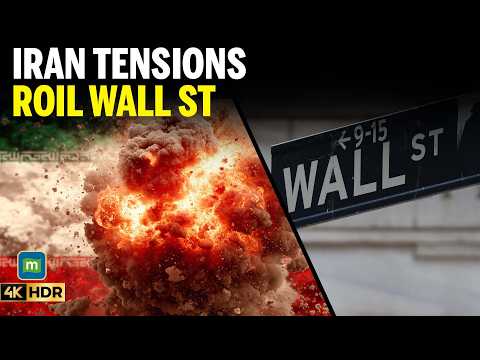
The S&P 500 sat near record highs at the end of February 2026. The index fell nearly 10% to a late-March trough after U.S. and Israeli forces launched air strikes against Iran on February 28. The strikes closed the Strait of Hormuz and sent Brent crude above $113 a barrel.
The market has since staged a dramatic V-shaped recovery to new all-time highs above 7,100, erasing every war-related loss and turning positive for the year. The catalyst was a two-week ceasefire announced April 7, brokered by Pakistan, which halted 40 days of strikes. On April 17, Iran's foreign minister declared the strait 'completely open' for commercial vessels, and Brent crude plunged more than 10% to below $90 a barrel.
The recovery is sharp but fragile: the ceasefire expires April 21, and every major bank that cut its S&P 500 target during the conflict has kept those lower forecasts in place. Peace talks in Islamabad collapsed April 12; each side accused the other of shifting demands on Iran's nuclear enrichment and ballistic missile programs, and the United States Navy briefly blockaded Iran's ports before diplomacy resumed. The Federal Reserve meets April 29; Chicago Fed President Austan Goolsbee warned on April 14 that 'the longer the war goes on, the more a rate cut gets pushed off' — potentially to 2027.
Why it matters
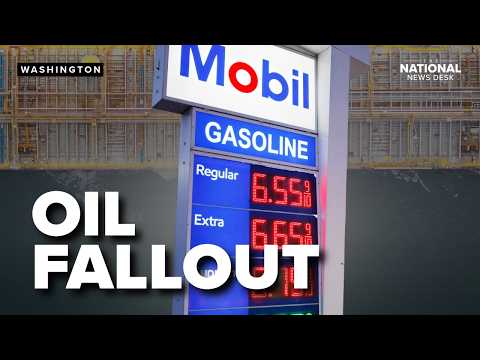
Oil below $90 could start cutting gas bills, but the ceasefire expires April 21—any breakdown sends prices and inflation right back up.
Questions about this story
Free account needed to ask — your question is kept and asked for you right after sign-up. Answers are public.
No questions yet — be the first to ask.
Key Indicators
~$90
Brent crude per barrel
Plunged more than 10% on April 17 as Iran declared Hormuz fully open—down from the $126 peak in early March and the ~$113 level at the story's last update on April 7
+3.2%
S&P 500 gain since Feb 28
Index at new all-time highs above 7,100 on April 17, having fully recovered from a ~10% wartime trough in late March; up more than 10% from that low
7,500
UBS year-end S&P 500 target
Reaffirmed after the April 7 ceasefire; with the index now at 7,100+, this implies roughly 5–6% additional upside by December
~$3.75
National average gas price per gallon
Easing from the $3.84 peak as oil falls toward $90, but still roughly 28% above the pre-war level of $2.92
$310
UBS 2026 S&P 500 earnings-per-share forecast
Unchanged; Q1 2026 earnings season beginning April 13 is tracking roughly 12–13% year-over-year growth, broadly consistent with this forecast
20 events
Latest: April 17th, 2026 · 6 months ago
Showing 8 of 20
JK to step
Tap a bar to jump to that date
Jump to
April 2026
Iran declares Strait of Hormuz 'completely open' for commercial vessels
LatestDiplomacy
Iranian Foreign Minister Abbas Araghchi formally declared the Strait of Hormuz open to all commercial shipping for the remaining ceasefire period, sending Brent crude plunging more than 10% to below $90 per barrel—the lowest level since before the war began.
S&P 500 closes above 7,000 for the first time
Market
The S&P 500 closed at 7,022.95, crossing 7,000 for the first time in its history, powered by Iran ceasefire optimism and a strong opening week of Q1 2026 earnings.
Goolsbee warns prolonged war could push Fed rate cuts to 2027
Policy
Chicago Fed President Austan Goolsbee told the Semafor World Economy conference that 'the longer the war goes on, the more a rate cut gets pushed off,' warning the energy shock could delay any easing 'to 2027 at the earliest' if inflation does not improve.
Wells Fargo sees S&P 500 at 7,300 by July in 'market sugar high'
Market
Wells Fargo strategist Ohsung Kwon published a note projecting the S&P 500 could reach its full-year target of 7,300 as early as July on ceasefire optimism, while cautioning that building inflation pressure in the second half of 2026 could limit further gains.
S&P 500 erases all Iran war losses as Q1 earnings season begins
Market
The S&P 500 recovered to its February 28 pre-war level, eliminating all conflict-driven losses. Goldman Sachs kicked off the quarter with record-breaking equities trading revenue of $5.33 billion—the highest in the firm's history—and investment banking fees up 48% year over year.
Islamabad peace talks collapse; U.S. Navy blockades Iran's ports
Escalation
U.S.-Iran negotiations in Islamabad ended without agreement after both sides accused each other of shifting demands on nuclear enrichment and ballistic missiles. The United States Navy formally blockaded Iran's ports in response, briefly pushing oil back above $100 per barrel before diplomacy resumed.
First formal U.S.-Iran peace talks open in Islamabad
Diplomacy
Vice President JD Vance, special envoy Steve Witkoff, and Jared Kushner arrived in Islamabad for the first formal negotiations since the war began, meeting with Iranian Foreign Minister Abbas Araghchi and Parliament Speaker Mohammad Bagher Ghalibaf.
Oil prices fell sharply on the ceasefire announcement, with Brent dropping from above $110 to below $96 in a single session. UBS Chief Investment Officer Mark Haefele issued a CIO Alert reaffirming the 7,500 year-end S&P 500 target as 'attractive' at roughly 10% upside from then-current levels.
UBS cuts S&P 500 year-end target to 7,500 from 7,700
Market
UBS Global Wealth Management lowered both its mid-year and year-end targets, citing sustained high oil prices, but maintained its 'attractive' rating on U.S. equities and kept its $310 earnings-per-share forecast.
U.S. and Iran agree to two-week ceasefire brokered by Pakistan
Diplomacy
After 40 days of U.S.-Israeli strikes against Iran, both sides agreed to a two-week ceasefire with Pakistan serving as mediator. Iran agreed to allow Strait of Hormuz transit during the truce, with the ceasefire set to expire April 21.
Wells Fargo drops rate cut expectations for 2026 entirely
Policy
Wells Fargo became the first major bank to forecast zero Federal Reserve rate cuts in 2026, citing the persistence of war-driven inflation pressures.
March 2026
Wells Fargo slashes S&P 500 target by 500 points to 7,300
Market
Wells Fargo equity strategist Ohsung Kwon issued the steepest Wall Street target cut of the conflict, warning that economic damage was building 'exponentially' with each day the war continued.
Federal Reserve holds rates steady, raises inflation outlook
Policy
The Fed kept interest rates unchanged and revised its 2026 inflation projections higher, citing energy price uncertainty. Chair Powell described the oil shock as potentially temporary.
Iran's IRGC vows 'not a litre of oil' will pass through Hormuz
Statement
The Islamic Revolutionary Guard Corps publicly doubled down on its blockade, warning that no oil would transit the strait while hostilities continued.
Brent crude surpasses $126 per barrel
Market
Oil prices hit their highest level in the conflict as markets absorbed the full impact of the Hormuz closure. Brent crossed $100 for the first time in four years on the same day.
Iran declares Strait of Hormuz closed to shipping
Escalation
The Islamic Revolutionary Guard Corps began attacking ships attempting to transit the strait, effectively shutting down the passage through which roughly 20% of the world's oil supply flows.
S&P 500 opens sharply lower on first trading day after strikes
Market
U.S. equities sold off as investors priced in the risk of a wider conflict and potential oil supply disruptions. Oil prices surged above $90 per barrel.
February 2026
U.S. and Israel launch Operation Epic Fury against Iran
Military
Joint U.S.-Israeli forces struck nearly 900 targets in the first 12 hours, hitting military facilities, nuclear sites, and leadership compounds. Supreme Leader Ali Khamenei was killed in an Israeli air attack.
Omani diplomat announces nuclear 'breakthrough' with Iran
Diplomacy
Omani foreign minister Badr Al-Busaidi said Iran had agreed to never stockpile enriched uranium and to accept full International Atomic Energy Agency verification. The deal collapsed within 24 hours.
Iran accelerates oil exports ahead of expected conflict
Escalation
Iran tripled its oil export rate between February 15 and 20, drawing down storage to reduce vulnerability to infrastructure strikes.
Scenarios
1
Ceasefire restores Hormuz transit, oil drops below $80, stocks rally to meet original targets
If hostilities end in April or early May and shipping through the Strait of Hormuz resumes, oil prices could fall sharply toward pre-war levels. This would remove the inflation overhang, allow the Fed to resume rate cuts, and restore the earnings-driven bull case. Wall Street's 1990 Gulf War playbook—where the S&P 500 jumped 3.7% the day Desert Storm launched and rallied 26% over the following year—is the template bulls are citing. UBS keeping its $310 earnings forecast and 'attractive' rating suggests this is close to its base case.
2
War drags past summer, oil stays above $100, S&P 500 stalls below 7,000
If the conflict persists and Hormuz remains effectively closed through mid-2026, elevated energy prices would compress consumer spending, erode corporate margins outside the energy sector, and force the Fed to hold rates steady or even consider hikes. Wells Fargo's decision to abandon all rate cut expectations for 2026 reflects this risk. In this scenario, earnings estimates would need to come down, and the current ~4% drawdown could deepen into a proper correction of 10% or more.
3
Oil spikes above $150 as conflict expands, triggering stagflation and a bear market
Unlikely
Discussed by: Bloomberg scenario analysis, Dallas Federal Reserve research, Congressional Research Service
The worst case involves escalation beyond Iran—Houthi attacks on shipping, damage to Saudi infrastructure, or a broader regional conflict that keeps Hormuz closed indefinitely. Analysts have modeled oil at $200 per barrel in extreme scenarios. This would push the U.S. economy toward stagflation: simultaneous rising prices and slowing growth, the combination most hostile to equity valuations. The International Energy Agency has already called this the largest supply disruption in the history of the global oil market.
Even with oil above $100, the artificial intelligence investment cycle could power enough earnings growth in the technology sector to pull the broader index higher. UBS's decision to maintain its $310 earnings-per-share forecast despite cutting the price target implicitly relies on this dynamic. If the Magnificent Seven tech stocks deliver on AI monetization while energy companies benefit from high crude prices, the S&P 500 could grind higher even without a peace dividend—though gains would be narrower and more concentrated.
5
Ceasefire breaks down April 21, Hormuz closes again, market gives back its gains
Possible
Discussed by: Wells Fargo strategist Ohsung Kwon ('building inflation pressure in H2 2026'), UBS CIO Mark Haefele (flagged risk that deal without nuclear-program coverage creates 'longer-term risks'), Bloomberg scenario analysis
If the two-week ceasefire expires April 21 without a follow-on agreement, the Strait of Hormuz could close again, sending oil prices back above $100 and unwinding the entire April market rally. The S&P 500's gain from its late-March trough has been almost entirely driven by peace optimism; a breakdown would test whether the underlying earnings case can hold the market above pre-war levels without a peace premium. Wells Fargo's Ohsung Kwon has already flagged 'building inflation pressure in the second half of 2026' as a risk even in the best-case ceasefire scenario, and Chicago Fed President Goolsbee warned on April 14 that a prolonged conflict could push rate cuts to 2027—the same Fed headwind that would compound any renewed oil shock.
Historical Context
3 moments from history that rhyme with this story — and how they unfolded.
1 of 3
August 1990 – February 1991
Iraq's invasion of Kuwait and the Gulf War oil shock (1990–1991)
When Iraqi forces invaded Kuwait on August 2, 1990, oil prices doubled from roughly $21 to $46 per barrel within weeks as markets feared Saddam Hussein would next target Saudi Arabia's oil fields. The S&P 500 fell 18% between July and October 1990.
Then
The Fed cut rates six times as a mild eight-month recession took hold. Oil prices crashed 33% the day Operation Desert Storm launched in January 1991.
Now
The S&P 500 rebounded 26% in 1991 once the conflict ended and crude collapsed. The rapid recovery cemented the Wall Street playbook that geopolitical sell-offs are buying opportunities.
Why this matters now
Wall Street strategists are explicitly citing the 1990 playbook to argue that the Iran war drawdown is temporary. The key difference: the Strait of Hormuz handles four times more oil traffic than Kuwait's exports did, making the current supply disruption structurally larger.
2 of 3
October 1973 – March 1974
The 1973 Arab oil embargo (1973–1974)
After the United States supported Israel during the Yom Kippur War, the Organization of Arab Petroleum Exporting Countries imposed an embargo that quadrupled oil prices from about $3 to $12 per barrel. The S&P 500 fell 48% from January 1973 to October 1974.
Then
The U.S. entered a severe recession with unemployment rising above 9%. Gas lines and rationing became symbols of the crisis.
Now
The shock ended the postwar economic boom, triggered a decade of stagflation, and permanently elevated energy security as a national priority. It took the S&P 500 until 1980 to sustainably recover.
Why this matters now
The International Energy Agency's characterization of the Hormuz closure as the largest oil supply disruption since the 1970s energy crisis draws a direct line to this precedent. The critical question is whether the disruption lasts months (1990 playbook, limited damage) or becomes prolonged (1973 playbook, structural damage).
3 of 3
February – October 2022
Russia-Ukraine war and energy price shock (2022)
Russia's invasion of Ukraine in February 2022 sent Brent crude briefly above $130 per barrel and natural gas prices to record highs in Europe. The S&P 500 fell roughly 25% peak-to-trough during 2022, driven by both the energy shock and aggressive Federal Reserve rate hikes to combat inflation.
Then
European nations scrambled to find alternative energy supplies. The Fed raised rates at the fastest pace in four decades.
Now
Europe largely weaned itself off Russian gas within 18 months. The S&P 500 recovered fully by early 2024, helped by the AI investment boom.
Why this matters now
The 2022 precedent shows how an energy shock can compound with Fed tightening to produce extended equity pain. UBS's bet that the Fed will eventually cut rates—rather than hike—is the key difference from 2022, but Wells Fargo's abandonment of rate cut expectations suggests this assumption is fragile.