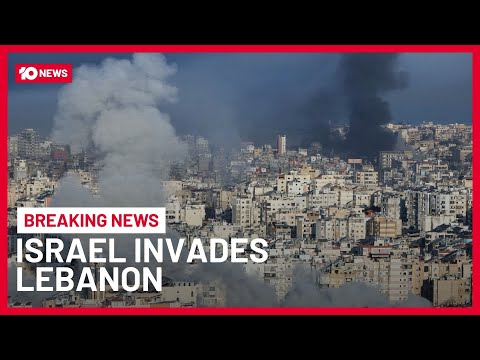
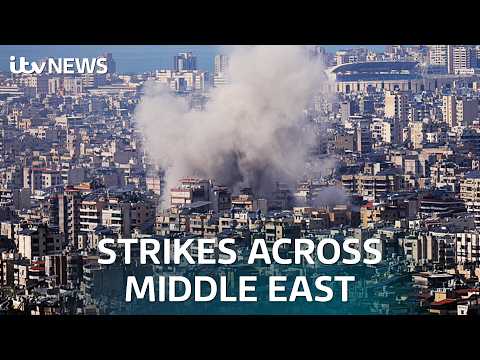
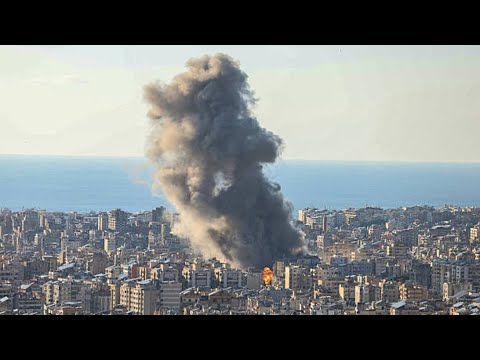
Israel's ground invasion of Lebanon, launched March 1, has systematically destroyed Litani River bridges. Strikes on April 4 targeted the Sohmor and Mashghara connections in eastern Lebanon.
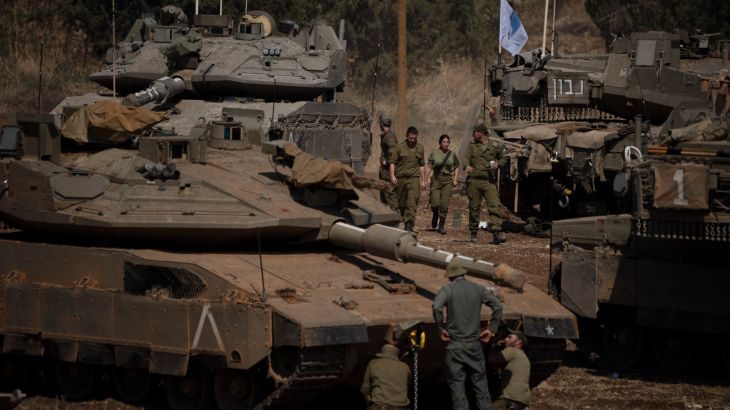
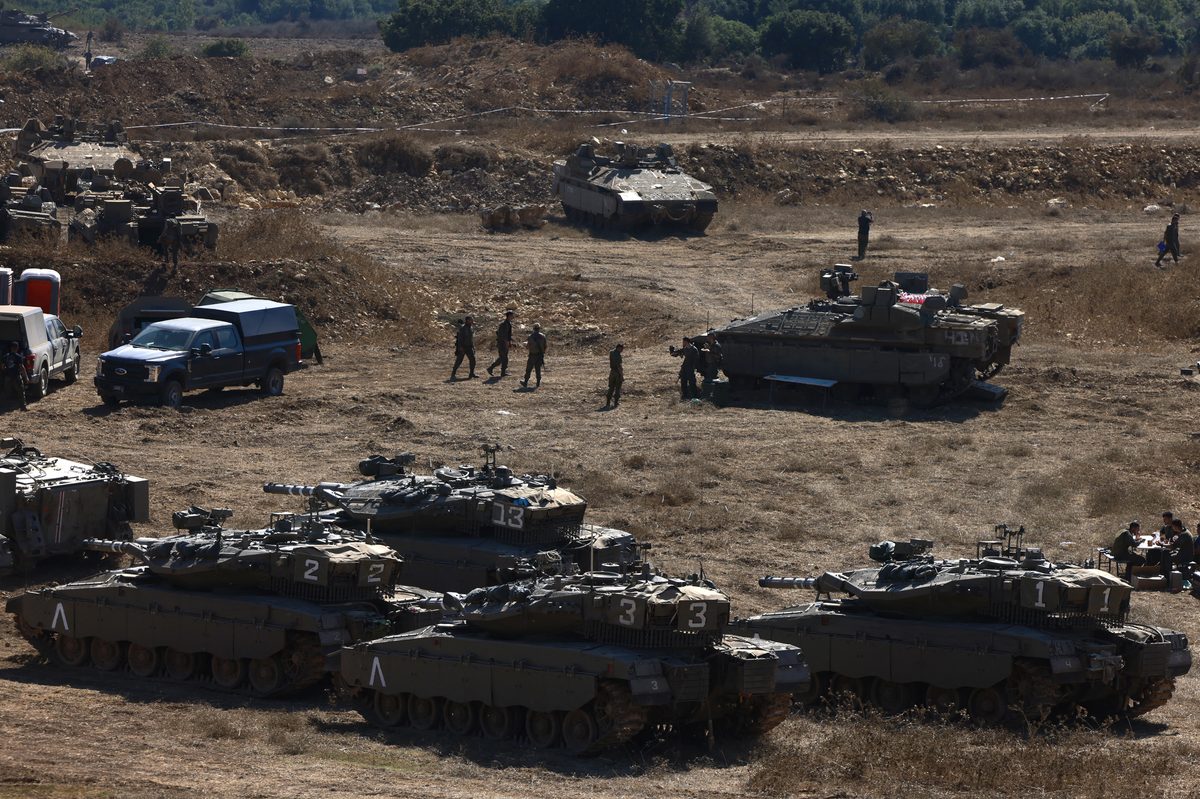
By late March, the IDF had struck over 500 Hezbollah targets, killed 70 operatives, and seized roughly 850 square kilometers using three armored and infantry divisions. The campaign severed seven major bridges, expanded evacuation zones north of the Litani, destroyed key infrastructure, and killed six IDF soldiers in clashes.
Why it matters
The bridge destruction risks isolating southern Lebanon, deepening the humanitarian crisis and potential regional escalation.
Questions about this story
Free account needed to ask — your question is kept and asked for you right after sign-up. Answers are public.
No questions yet — be the first to ask.
Key Indicators
1,200+
Lebanese civilians displaced (thousands)
UN and Lebanese reports confirm over 1.2 million fled homes due to IDF operations south and beyond Litani; main routes now severed by bridge strikes.
7+
Litani River bridges destroyed by IDF
Strikes through April 4 cut off eastern and southern access, isolating regions amid ground push toward buffer zone.
1,200+
Killed in Lebanon since March 1
Civilian and combatant toll rising with airstrikes on Beirut, peacekeeper incidents, and infrastructure campaign.
3
IDF divisions in ground operations
Armored and infantry forces advancing toward Litani amid rising casualties and UNIFIL tensions.
3
UNIFIL peacekeepers killed
Indonesian troops killed March 30-31 near IDF zones; Security Council session held amid demands for accountability.
24 events
Latest: April 4th, 2026 · 6 months ago
Showing 8 of 24
JK to step
Tap a bar to jump to that date
Jump to
April 2026
Israel destroys bridges in eastern Lebanon, severing southern supply lines
LatestMilitary
IDF warplanes struck bridges linking Sohmor and Mashghara, part of seven+ Litani crossings destroyed to cut Hezbollah routes. Over 1.2M displaced as President Aoun warns of 'prelude to invasion.'
March 2026
Three UNIFIL peacekeepers killed, triggering emergency Security Council session
Legal/Humanitarian
Three Indonesian UNIFIL peacekeepers died in 24 hours: one from projectile strike near Adchit al-Qusayr, two in vehicle explosion near Bani Hayyan. France/Indonesia demand accountability as IDF reports sixth soldier killed and airstrikes hit Beirut beachfront.
Al Jazeera reports intensified Israeli airstrikes targeting civilian areas in southern Lebanon
Military
South Lebanon faces intensified military attacks with airstrikes targeting civilian buildings, main routes cut off by Israeli forces, and hundreds of thousands displaced. France continues mediation attempts.
UN reports some Israeli strikes on Lebanon could amount to war crimes
Legal/Humanitarian
UN officials assess that certain Israeli military operations may violate international humanitarian law, though formal investigation status unclear.
Israel reveals plans for largest ground invasion of Lebanon since 2006
Military
Israeli officials disclosed plans for a massive ground invasion to seize the entire area south of the Litani River and dismantle Hezbollah's military infrastructure, using three divisions already positioned on the border.
Israel destroys Litani River bridge; IDF chief says campaign 'will not be short'
Military
The IDF struck the Zrarieh Bridge over the Litani River, the first acknowledged strike on civilian infrastructure in the current offensive. IDF Chief Zamir declared Lebanon a co-equal front with Iran and warned of a prolonged campaign.
IDF expands evacuation zone to 37 additional locales north of Litani River
Military
Third IDF evacuation warning expands danger zone to additional 37 locales, many north of the Litani River, signaling potential expansion of ground operations beyond initial southern Lebanon target zone.
IDF issues general evacuation order for all Lebanese locales south of Litani River
Military
Fourth IDF evacuation warning demands general northward evacuation of all Lebanese locales south of the Litani River, with special emphasis on cities of Tyre and Bint Jbeil. Order repeated March 5 at 8:03 am.
Hezbollah and Iran launch coordinated 200-missile barrage on Israel
Military
Hezbollah fired approximately 200 rockets at northern Israel while Iran simultaneously launched ballistic missiles at central, northern, and southern Israel. Israeli air defenses intercepted the Iranian missiles; two Israelis were lightly injured by Hezbollah fire.
Lebanon asks the US for direct peace talks with Israel
Diplomatic
The Lebanese government proposed direct negotiations with Israel through Washington, offering talks without preconditions. Trump adviser Massad Boulos was tasked with facilitating.
Mojtaba Khamenei elected Iran's new supreme leader
Political
Ali Khamenei's son Mojtaba was elected to replace his father as Iran's supreme leader, inheriting a country under active military assault.
Hezbollah issues 5-kilometer evacuation warning to northern Israel
Military
Hezbollah mimics IDF evacuation orders by issuing 5-kilometer evacuation warning to northern Israel residents, demonstrating continued capability to impose terms on Israel despite leadership losses.
Lebanese government orders detention and deportation of Iranian IRGC personnel
Political
Beirut orders immediate detention and deportation of any Iranian Islamic Revolutionary Guard Corps (IRGC) personnel operating within Lebanon, though enforcement remains sporadic.
IDF Chief of Staff Eyal Zamir states the IDF 'will not desist until Hezbollah is disarmed,' signaling indefinite military commitment to the campaign.
Naim Qassem rejects Lebanese cabinet disarmament order; vows to fight 'until victory or martyrdom'
Political
Hezbollah Secretary-General Qassem clarifies the group will not heed Lebanese government's decision to cease hostilities or disarm, and demands Beirut 'defend the right of the resistance' to continue fighting.
Israel orders troops to seize new positions inside Lebanon
Military
Defense Minister Katz, with Netanyahu's approval, ordered the IDF to expand beyond its five ceasefire positions and enter additional strategic locations in southern Lebanon.
Hezbollah formally re-enters war with strikes on Israel
Military
In response to the killing of Khamenei, Hezbollah launched strikes on Israel, formally breaking the November 2024 ceasefire and opening a second front in the broader US-Israel war on Iran.
Lebanese government proscribes Hezbollah's military wing; orders weapon surrender
Political
In emergency cabinet meeting, Lebanese government formally proscribes Hezbollah's 'military and security' activities and orders the group to 'surrender its weapons to the Lebanese state.'
IDF initiates military operation within Lebanese borders; ground troops deployed
Military
Assessment Capacities Project (ACAPS) humanitarian briefing confirms Israel initiated military operation within Lebanese borders on March 1, concentrating on southern Lebanon and deploying ground troops beyond at least five positions occupied since November 2024.
February 2026
US and Israel launch strikes on Iran; Khamenei killed
Military
US and Israeli forces launched nearly 900 strikes in 12 hours targeting Iranian military infrastructure and leadership. Supreme Leader Ali Khamenei was killed along with several family members.
January 2025
US extends ceasefire deadline; Israel retains five forward positions
Diplomatic
The United States extended the ceasefire agreement to February 18. Israel withdrew from populated areas but declared it would remain in five strategic positions along the border.
Joseph Aoun elected president of Lebanon
Political
The former Lebanese Armed Forces commander won the presidency with broad domestic and international backing, taking on the task of enforcing Hezbollah disarmament.
November 2024
Israel-Lebanon ceasefire agreement takes effect
Diplomatic
A US-brokered ceasefire required a 60-day halt to hostilities, Israeli withdrawal from southern Lebanon, Hezbollah disarmament south of the Litani River, and deployment of 5,000 Lebanese troops. A five-country monitoring panel was established.
September 2024
Israel kills Hezbollah leader Hassan Nasrallah
Military
An Israeli airstrike in Beirut killed Hezbollah Secretary-General Hassan Nasrallah, who had led the organization for 32 years, along with several senior commanders.
Scenarios
1
Israel seizes southern Lebanon, Hezbollah retreats north of the Litani
Possible
Discussed by: Israeli defense officials, Washington Institute for Near East Policy analysts
Israel's three divisions push through southern Lebanon within weeks, taking advantage of Hezbollah's degraded command structure and the loss of many of its senior and mid-level commanders since September 2024. Hezbollah withdraws its remaining forces north of the Litani rather than risk annihilation in a fixed battle. Israel establishes a buffer zone but faces the question of occupation duration—the same dilemma that produced an 18-year presence after 1982. The Trump administration pushes for direct Israel-Lebanon negotiations to convert military gains into a formal peace agreement.
2
Ground invasion bogs down in guerrilla warfare, casualties mount
Possible
Discussed by: Al Jazeera analysts, Atlantic Council, Carnegie Endowment for International Peace
Hezbollah follows the playbook that stymied Israel in 2006: dispersed fighters, tunnel networks, anti-tank missiles, and close-quarters combat in built-up areas. Israeli casualties mount while the military struggles to hold cleared ground. International pressure grows as civilian deaths rise and the humanitarian crisis worsens. The IDF, already stretched across the Iran front, finds itself in the protracted war Chief of Staff Zamir warned about, without a clear exit strategy. Haaretz has reported that the government has "no plan for Lebanon" beyond the military operation.
3
Diplomatic intervention produces ceasefire before full invasion launches
Unlikely
Discussed by: Lebanese government officials, Massad Boulos via Axios, NPR reporting on Lebanese peace overtures
The Lebanese government's offer of unconditional direct talks gains traction as international alarm grows. Massad Boulos brokers a framework that combines an immediate ceasefire with a strengthened Lebanese army deployment and a timeline for Hezbollah disarmament backed by international guarantees. Israel accepts, calculating that diplomatic gains may outlast military ones—particularly the possibility of formally ending the state of war between Israel and Lebanon that has existed since 1948. This scenario requires Hezbollah to accept terms it has so far rejected.
4
Conflict escalates into full-scale regional war across multiple fronts
Possible
Discussed by: International Crisis Group, ACLED conflict analysis, UN Security Council briefings
The ground invasion triggers an escalation spiral: Iran increases its missile strikes on Israel, Hezbollah activates deeper cells and longer-range weapons, and the conflict draws in additional actors. UNIFIL peacekeepers, already under threat, face direct harm. The simultaneous demands of the Iran war and a Lebanon ground campaign stretch Israeli military resources to their limit. The conflict destabilizes Lebanon's fragile state institutions further, potentially collapsing the Lebanese government that both Washington and Riyadh invested in supporting.
Historical Context
3 moments from history that rhyme with this story — and how they unfolded.
1 of 3
March 1978
Operation Litani (1978)
Israel sent 25,000 troops into southern Lebanon to push the Palestine Liberation Organization away from its border—the exact same geographic objective as the 2026 plan. The operation followed the PLO's Coastal Road massacre, in which militants killed 38 Israeli civilians. Israeli forces seized territory up to the Litani River within days.
Then
The PLO was pushed north of the Litani, and Israel established an allied militia, the South Lebanon Army, to hold the buffer zone. The UN deployed UNIFIL peacekeepers, who remain in the area 48 years later.
Now
The PLO resumed attacks from deeper inside Lebanon, and Israel invaded again in 1982 with far more ambitious goals. The buffer zone strategy bought time but did not resolve the underlying threat.
Why this matters now
Israel's 2026 plan mirrors Operation Litani's geographic scope almost exactly—seize everything south of the Litani. The 1978 experience shows that holding territory temporarily did not prevent the threat from reconstituting further north.
2 of 3
June 1982 – June 1985
Operation Peace for Galilee / First Lebanon War (1982)
Israel invaded Lebanon with the aim of destroying the PLO, installing a friendly government, and securing its northern border. The operation expanded far beyond its initial scope, reaching Beirut. Israeli forces besieged the capital for two months before the PLO evacuated. An estimated 18,000–19,000 people were killed, most of them civilians.
Then
The PLO was expelled from Lebanon, and Israel's preferred candidate, Bashir Gemayel, was elected president—then assassinated weeks later, unraveling Israel's political strategy.
Now
Israel created a 9-mile security zone in southern Lebanon and did not fully withdraw until 2000—an 18-year occupation. The invasion also catalyzed the creation of Hezbollah itself, backed by Iran's Revolutionary Guard.
Why this matters now
The 1982 war is the cautionary template: a limited operation that expanded, achieved its immediate military objective, but generated an occupation and ultimately created the very adversary Israel now seeks to destroy.
3 of 3
July–August 2006
Second Lebanon War (2006)
After Hezbollah captured two Israeli soldiers in a cross-border raid, Israel launched a 33-day war combining airstrikes and a ground invasion. Israeli forces struggled less than a mile into Lebanese territory, bogged down by Hezbollah's tunnel networks, anti-tank missiles, and guerrilla tactics. Over 1,100 people in Lebanon and 165 Israelis were killed.
Then
The Israeli government-appointed Winograd Commission concluded Israel had "initiated a long war which ended without its clear military victory." UN Security Council Resolution 1701 established the ceasefire framework that lasted until 2024.
Now
Hezbollah rebuilt and expanded its arsenal from an estimated 13,000 rockets in 2006 to over 150,000 by 2024, while Israel overhauled its ground forces and intelligence capabilities to avoid repeating 2006's failures.
Why this matters now
Israeli military planners cite 2006 as the operation they intend not to repeat. The IDF has spent two decades degrading Hezbollah's leadership and stockpiles before committing ground forces—but Hezbollah's surviving fighters are explicitly invoking close-quarters combat as their advantage.