


Pull to refresh
Logo
Pro-Russian hackers publish Italian foreign minister's data on dark web

Pro-Russian hackers publish Italian foreign minister's data on dark web

Force in Play

NoName057(16) targets Tajani and Italian investigators over Ukraine support

Overview

Updated 48 minutes ago

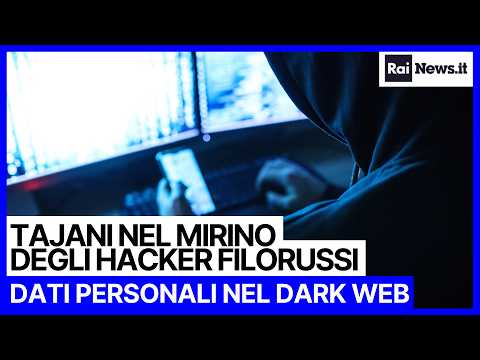
Italian Foreign Minister Antonio Tajani said on Nov. 7 that his personal data had been published on the dark web over several days, along with an offer to pay for more information about him and his family. Prime Minister Giorgia Meloni blamed pro-Russian hackers. Tajani linked the targeting to Italy's support for Ukraine.

The data sits on a Tor-accessible page run by the group NoName057(16), which calls it a 'Tribunal' and lists 18 'citizens hostile to the Russian Federation.' The list includes Rome's chief prosecutor and the head of Italy's Postal Police, the officials overseeing the investigation into the group. Rome prosecutors have opened a new probe, and Tajani has asked the G7 presidency to put hybrid threats on the agenda for a foreign ministers' meeting in Paris on Nov. 9-10.

Why it matters

GRU-linked hackers are moving from disrupting government websites to naming and pricing the officials who investigate them.

Questions about this story

Free account needed to ask — your question is kept and asked for you right after sign-up. Answers are public.

No questions yet — be the first to ask.

Key Indicators

18
People on NoName's 'hostile' list
The dark-web page names 18 individuals across Europe it calls hostile to Russia.
4
Named Italian targets
Tajani, prosecutor Francesco Lo Voi, police chief Ivano Gabrielli and Aviano mayor Paolo Tassan-Zanin.
12
Countries in Operation Eastwood
The 2025 Europol and Eurojust action against NoName057(16) involved twelve countries.

Voices

Curated perspectives — historical figures and your fellow readers.

Sign up to generate historical perspectives on this story.

People Involved

Organizations Involved

Timeline

February 2023 November 2026

10 events Latest: Today
Tap a bar to jump to that date
  1. G7 foreign ministers meet in Paris

    Upcoming Diplomacy

    Italy has asked the presidency to put hybrid threats on the agenda.

  2. Tajani's data found on dark web; Rome opens probe

    Today Data leak

    NoName's 'Tribunal' page lists Tajani and 17 others; Meloni blames pro-Russian hackers.

  3. Brenner Base Tunnel company hit by cyberattack

    Cyberattack

    BBT SE isolates systems; initial reports point to the pro-Russian group Everest.

  4. Zakharova dismisses interference claims; Farnesina hit

    Statement

    Russia's foreign ministry spokesperson calls Tajani's claims unfounded; NoName hits the ministry site.

  5. NoName targets Tajani during Milan Cortina Olympics

    Cyberattack

    The group publishes Tajani's complaint about attacks on Italian embassy and Olympic hotel sites.

  6. Airport sites hit, then Farnesina blocked

    Cyberattack

    Malpensa and Linate websites are targeted, followed by the first block on the foreign ministry.

  7. Hackers target European election infrastructure

    Cyberattack

    NoName announces attacks on internet infrastructure in several European countries, including Italy.

  8. New wave of cyberattacks hits Italian sites

    Cyberattack

    NoName returns with another round of attacks on Italian government and institutional websites.

  9. NoName launches first mass attack on Italy

    Cyberattack

    The group hits Italian ministry websites shortly after Prime Minister Meloni visits Kyiv.

Scenarios

1

G7 foreign ministers add hybrid threats to Paris agenda

Likely Resolves by Nov 10, 2026

Discussed by: Italian foreign ministry, which requested the agenda item

Italy has formally asked the G7 presidency to put hybrid threats on the agenda for the Nov. 9-10 foreign ministers' meeting in Paris. If the item appears in the chair's statement or the meeting's public agenda, it would mark a formal step toward coordinating a response among the seven governments. A mention in the final communiqué would be the clearest signal.

2

Rome prosecutors charge NoName-linked individuals over the leak

Possible Resolves by Q2 2027

Discussed by: Rome Prosecutor's Office and Italian legal analysts

Rome's prosecutor's office has opened an investigation following a criminal complaint. The office already oversees Italy's side of Operation Eastwood, which identified about ten people linked to the collective. A formal indictment or arrest warrant would require Italian investigators to tie specific individuals to the dark-web publication, a higher bar than identifying the group.

3

NoName publishes more Italian targets or leaks additional data

Possible Resolves by Feb 28, 2027

Discussed by: Italian cybersecurity officials and the Il Sole 24 Ore reporting on the 'Tribunal' page

The 'Tribunal' page is designed to collect and publish more information, and NoName has escalated repeatedly since 2023. A new list, additional leaked data, or a fresh DDoS wave against Italian institutions would show the group is widening its campaign rather than pausing after the Tajani leak.

Historical Context

3 moments from history that rhyme with this story — and how they unfolded.

April-May 2007

Estonia cyberattacks (2007)

After Estonia moved a Soviet war memorial, distributed denial-of-service attacks knocked out government, bank and media websites for about three weeks. The attacks were widely attributed to pro-Russian actors, though direct state involvement was never proven in court.

Then

Estonia restored services and pushed NATO and the European Union to treat cyberattacks as a security issue.

Now

NATO opened its cyber defense center in Tallinn, and the episode became the template for pro-Russian hacktivist campaigns.

Why this matters now

NoName057(16) follows the same playbook: punish a government for a political decision with sustained DDoS attacks.

April-May 2015

German Bundestag hack (2015)

Hackers linked to Russia's GRU breached the German parliament's network, stealing data from about 20,000 accounts and roughly 16 gigabytes of documents. Germany later attributed the attack to APT28, a GRU unit.

Then

Germany rebuilt its parliamentary network and expelled Russian diplomats.

Now

The hack became a reference case for GRU operations against legislatures and for the difficulty of deterring them.

Why this matters now

It shows GRU-linked units targeting elected officials directly, the same shift now visible in Italy.

March-July 2016

Democratic National Committee hack (2016)

GRU units breached the Democratic National Committee and other political organizations, then released stolen emails through WikiLeaks and other outlets during the U.S. presidential campaign. U.S. intelligence later concluded Russia ran the operation to influence the election.

Then

The leaks dominated news coverage and led to the resignation of DNC chair Debbie Wasserman Schultz.

Now

The U.S. indicted twelve GRU officers in 2018, and the case established data leaks as a tool of political coercion.

Why this matters now

NoName's 'Tribunal' page uses the same logic: publish personal data to intimidate officials and invite others to pile on.

Sources

(10)