




Pull to refresh
Logo
Moldova suspects foreign state behind breach of government databases

Moldova suspects foreign state behind breach of government databases

Force in Play

Attackers queried about a million national ID numbers and extracted data on roughly 750,000 people

Overview

Updated 1 hour ago

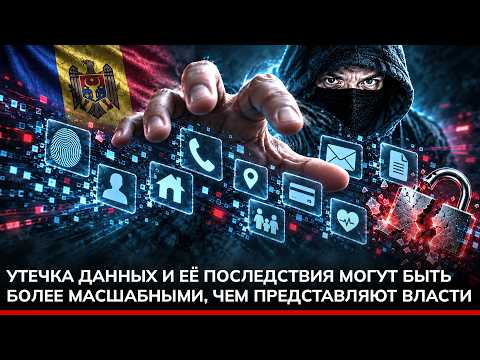
Between October 19 and 23, attackers queried about one million Moldovan personal identification numbers and pulled at least one data element for roughly 750,000 people. Moldova's prime minister says a foreign state is likely behind it.

The breach hit the digital services citizens use for government business and exposed a design choice: Moldova reused the same national ID number across many registers. Investigators have not named a suspect, and they have not shown that any accounts were taken over.

Why it matters

A small state's citizen registry was queried at industrial scale, and the same reused-ID design exists in many governments.

Questions about this story

Free account needed to ask — your question is kept and asked for you right after sign-up. Answers are public.

No questions yet — be the first to ask.

Key Indicators

750,000
People with at least one data element extracted
Preliminary figure; means at least one field was pulled, not that every record was fully exposed.
1,000,000
National ID numbers queried
Unique personal identification numbers (IDNPs) targeted between October 19 and 23.
11,000,000
Access requests recorded
Requests logged by authorities aiming to obtain personal data unlawfully.
30
Public services disconnected as a precaution
Out of 82 services assessed after the breach was detected.
700
Distinct IP addresses involved
Figure cited by a Moldovan official; no country or group has been publicly attributed.

Voices

Curated perspectives — historical figures and your fellow readers.

Sign up to generate historical perspectives on this story.

People Involved

Organizations Involved

Timeline

October 2026 November 2026

7 events Latest: Today
Tap a bar to jump to that date
  1. PM tells Euronews a state actor is suspected

    Today Statement

    Tofan says a foreign state is suspected and the list of likely culprits is "not very long."

  2. PM flags foreign-state and AI angles

    Statement

    Tofan says investigators are weighing foreign-state involvement and AI-assisted exploitation, without naming a country.

  3. Further attempts fail; 11 services return

    Response

    More extraction attempts are blocked, AGE publishes preliminary figures, and 11 tested services come back online.

  4. New access attempt blocked

    Cyberattack

    A fresh attempt to force access is detected and stopped.

  5. Incident made public

    Statement

    AGE, STISC and the Cyber Security Agency announce the breach; police and the data protection center are notified.

  6. Extraction stopped, services cut

    Response

    Authorities halt unauthorized data extraction and disconnect 30 of 82 assessed services as a precaution.

  7. Mass ID queries begin

    Cyberattack

    Attackers start querying national ID numbers across government services, logging about 11 million access requests through October 23.

Scenarios

1

Moldova publicly names a foreign state as the attacker

Possible Resolves by Q2 2027

Discussed by: Prime Minister Vasile Tofan and Moldovan security services

Tofan has said a state actor is suspected and that the suspect list is short. If forensic work links the access path to a government, Moldova could formally attribute the attack, which would likely trigger diplomatic expulsions and requests for allied support.

2

Prosecutors charge named individuals in the breach

Unlikely Resolves by End of 2027

Discussed by: Prosecutor General's Office

A criminal case is already open into privacy violations and disclosure of investigation data. If investigators trace the 700 IP addresses to identifiable operators, prosecutors could announce charges against named people, regardless of whether a state is named.

3

Investigation ends without public attribution

Possible Resolves by Q2 2027

Discussed by: Moldovan officials cautioning that attribution is premature

Officials have said it is too early to assign blame, and no technical indicator has been released. The case could close with containment and remediation but no named perpetrator, leaving the breach as a lesson in system design rather than a diplomatic confrontation.

Historical Context

3 moments from history that rhyme with this story — and how they unfolded.

April-May 2007

Estonia cyberattacks (2007)

After a dispute over a Soviet war memorial, Estonia's banks, government ministries and media were hit by a wave of distributed denial-of-service attacks. Estonia accused Russia; Moscow denied involvement.

Then

Websites and banking services were disrupted for weeks.

Now

Estonia became one of the first states to treat cyberattacks as a national security matter and helped pioneer NATO cyber defense policy.

Why this matters now

A small state blaming a larger neighbor for a digital assault, and the difficulty of proving attribution, mirrors Moldova's current dilemma.

2014-2015

US Office of Personnel Management breach (2015)

Hackers breached the US Office of Personnel Management and accessed records on more than 20 million people, including security-clearance files. The US attributed the intrusion to China.

Then

The agency's director resigned and the US overhauled federal cybersecurity.

Now

The breach became a benchmark for how much personal data governments hold and how exposed it is.

Why this matters now

Shows what a mass extraction of government-held personal records looks like and why the 750,000 figure matters even without account takeovers.

June 2017

NotPetya wiper attack (2017)

A piece of malware spread from Ukrainian accounting software to companies worldwide, wiping data and causing billions of dollars in damage. Western governments attributed it to Russia.

Then

Shipping, banks and manufacturers were disrupted for days.

Now

It pushed governments to treat cyber operations as acts of force and to harden supply chains.

Why this matters now

Illustrates how an attack on one country's systems can be framed as state coercion, the category Moldova is now weighing.

Sources

(7)