
Pull to refresh
Logo
Daily Brief
Following
Why
JFK Airport's $19 billion overhaul

JFK Airport's $19 billion overhaul

Built World
By Newzino Staff |

America's Largest Airport Reconstruction Project Takes Shape

October 1st, 2024: Terminal 6 Reaches Steel Topping-Out

Overview

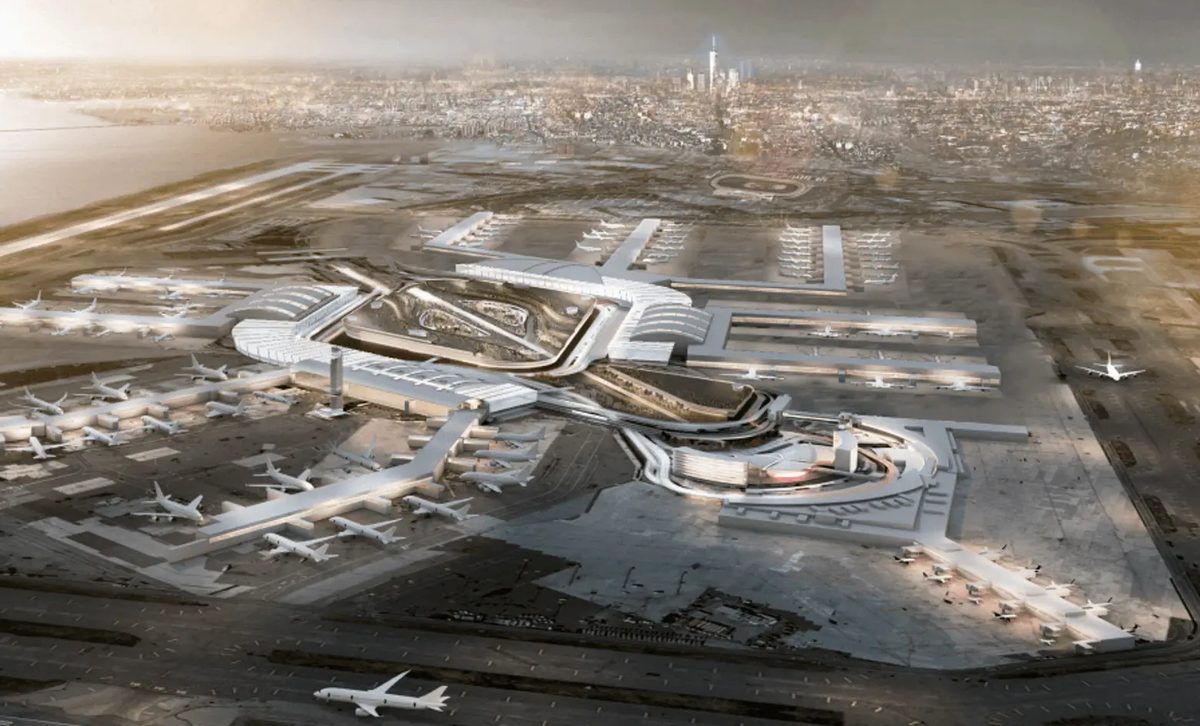
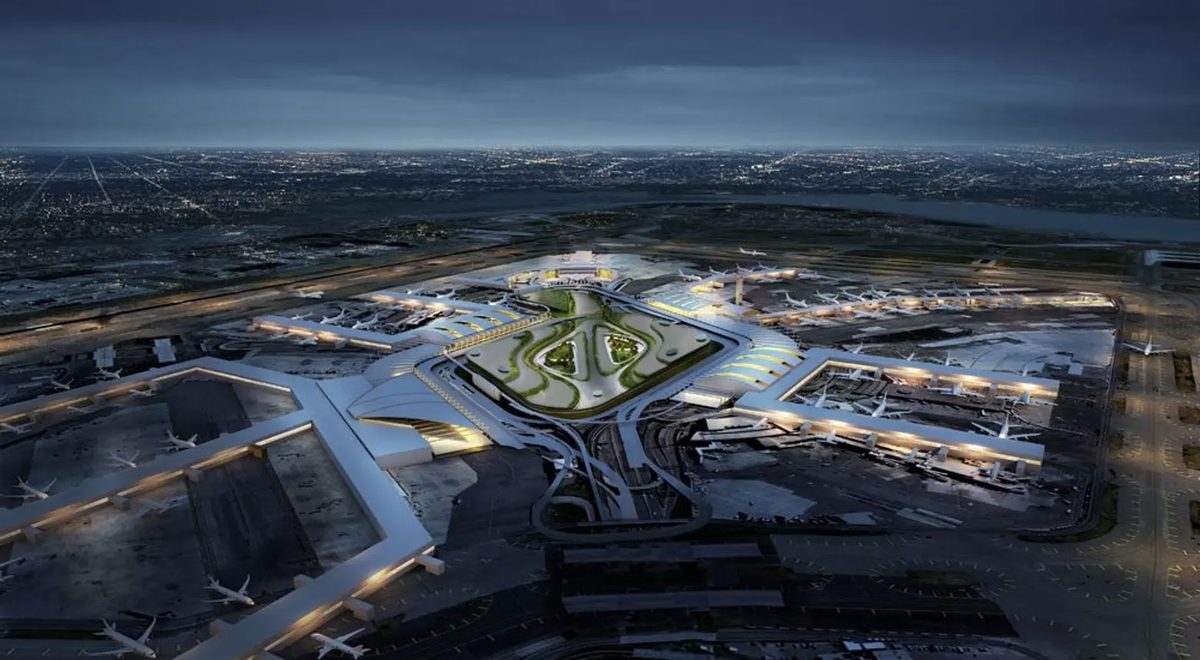
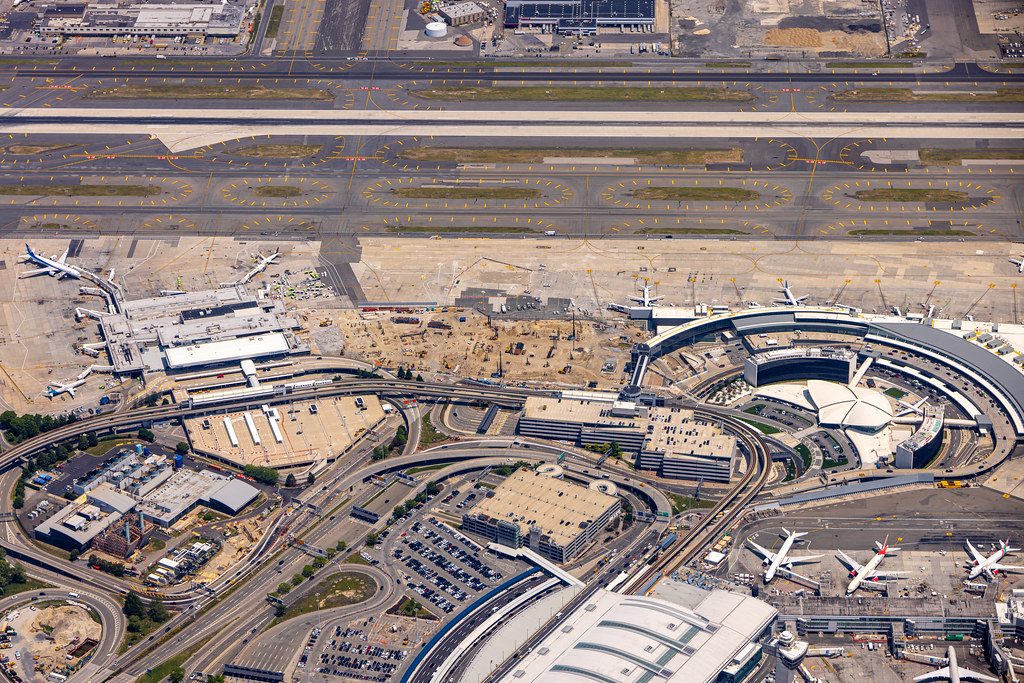
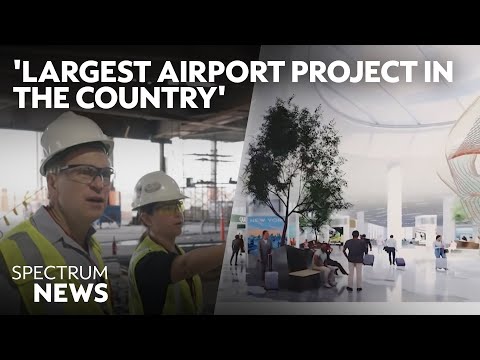
JFK's original terminals opened in the 1960s as architectural showpieces—each airline building its own statement. Sixty years later, most of that infrastructure has become obsolete. New York is now replacing it with two massive new terminals, redesigned roadways, and modernized transit connections in what has become the largest airport project in the United States.

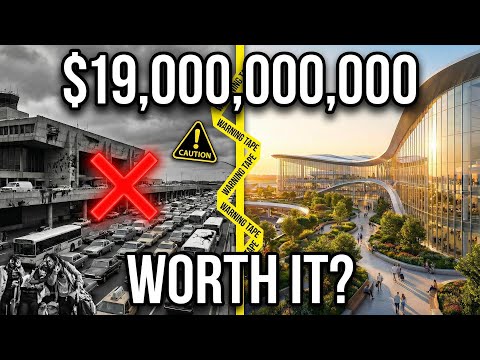
The $19 billion effort relies on an unusual model: $15 billion from private consortiums building and operating the terminals, with $3.9 billion from the Port Authority for shared infrastructure. Terminal 6 reached its steel topping-out milestone in October 2024, meaning structural steel is complete and interior work can accelerate toward a 2026 opening. The New Terminal One, a 2.6-million-square-foot international hub, is also targeting 2026 for its first phase. When complete in 2030, JFK will have consolidated from eight aging terminals into four modern ones serving over 62 million passengers annually.

Key Indicators

$19B
Total Investment
Combined public and private investment in the transformation
62M+
Annual Passengers
Current passenger volume JFK serves annually
10,000+
Construction Jobs
Total jobs created across the terminal construction projects
$2.3B
MWBE Contracts
Record contracts awarded to minority- and women-owned businesses

Interactive

Exploring all sides of a story is often best achieved with Play.

Ever wondered what historical figures would say about today's headlines?

Sign up to generate historical perspectives on this story.

Sign Up

Debate Arena

Two rounds, two personas, one winner. You set the crossfire.

People Involved

Kathy Hochul
Kathy Hochul
Governor of New York (Leading state oversight of JFK transformation)
Kevin J. O'Toole
Kevin J. O'Toole
Chairman, Port Authority of New York and New Jersey (Serving eighth term as chairman)
Joanna Geraghty
Joanna Geraghty
Chief Executive Officer, JetBlue Airways (First female CEO of a major U.S. airline)

Organizations Involved

Port Authority of New York and New Jersey
Bi-State Government Agency
Status: Lead agency overseeing JFK transformation

Bi-state agency that owns and operates JFK, LaGuardia, Newark, and other regional transportation infrastructure.

JFK Millennium Partners
Private Development Consortium
Status: Building Terminal 6

Consortium of Vantage Group, RXR, JetBlue Airways, and American Triple I developing the $4.2 billion Terminal 6.

The New Terminal One
Private Development Consortium
Status: Building Terminal 1

Consortium led by Ferrovial, JLC Infrastructure, and Ullico developing the $9.5 billion New Terminal One.

Timeline

  1. Terminal 6 Reaches Steel Topping-Out

    Milestone

    Workers hoisted the final structural steel beam for Terminal 6's first phase, marking a major construction milestone toward the 2026 opening.

  2. AirTrain Fare Cut 50% During Peak Construction

    Operations

    The Port Authority reduced AirTrain fares by half through Labor Day to encourage transit use during summer roadway construction.

  3. Terminal 6 Breaks Ground

    Construction

    Governor Hochul and JFK Millennium Partners broke ground on the $4.2 billion Terminal 6 on JFK's north side.

  4. Delta Consolidates at Terminal 4

    Operations

    Delta moved all operations from Terminal 2 to the expanded Terminal 4, completing a $1.5 billion upgrade with 10 new gates.

  5. Terminal 8 Expansion Complete

    Completion

    American Airlines completed its $400 million expansion of Terminal 8, adding gates and improving passenger facilities.

  6. New Terminal One Breaks Ground

    Construction

    Construction began on the $9.5 billion New Terminal One, which will replace former Terminals 1, 2, and 3.

  7. Hochul Announces $9.5B New Terminal One

    Announcement

    Governor Kathy Hochul announced the revised agreement for a 2.4-million-square-foot international terminal on JFK's south side.

  8. Cuomo Announces $13B JFK Transformation

    Announcement

    Governor Andrew Cuomo unveiled an initial $13 billion plan to modernize JFK, calling it a vision to build a 21st-century airport.

Scenarios

1

First Terminals Open on Schedule in 2026

Discussed by: Port Authority officials, Governor Hochul's office, construction industry publications

Terminal 6's first five gates and New Terminal One's arrivals hall and initial gates open in 2026 as planned. Lufthansa Group airlines relocate to Terminal 6. This outcome would demonstrate that the public-private partnership model can deliver large-scale airport projects without the delays that plagued earlier megaprojects like Denver International or Berlin Brandenburg.

2

Construction Delays Push Openings to 2027-2028

Discussed by: Industry analysts, construction trade publications

Labor shortages, supply chain issues, or unforeseen construction problems delay the first phase openings by 12-24 months. Airlines would need to extend operations at temporary facilities. Given typical patterns in major infrastructure projects—where 44-50% run over budget and 65% run over schedule—some delay would not be unusual.

3

Full Transformation Complete by 2030

Discussed by: Port Authority planning documents, Vantage Group, Ferrovial

All phases complete as scheduled: Terminal 6 fully operational in 2028, New Terminal One's final nine gates open in 2030, roadway redesign complete. JFK operates with four consolidated terminals instead of eight, handling increased passenger volume with modern facilities. The project becomes a model for other aging U.S. airports facing similar modernization needs.

4

Cost Overruns Strain Private Consortiums

Discussed by: Bond market analysts, infrastructure finance publications

Rising construction costs or lower-than-projected airline revenues stress the private financing structure. Consortiums may seek lease renegotiations or additional public support. The reliance on bond financing—including nearly $3.2 billion in green bonds between the two projects—means financial stress could ripple through municipal bond markets.

Historical Context

Denver International Airport Opening (1995)

1989-1995

What Happened

Denver built a new airport to replace aging Stapleton, budgeted at $1.7 billion with a 1993 opening. An experimental automated baggage system failed spectacularly during testing—journalists watched luggage tossed onto tracks. The airport opened 16 months late at $4.8 billion, and the baggage system was eventually scrapped entirely in 2005.

Outcome

Short Term

The $300 million in additional interest costs and reputational damage made Denver the cautionary tale for airport megaprojects.

Long Term

Denver eventually thrived, but the lesson was clear: untested technology and compressed timelines create compounding failures. Most large airports now take phased approaches.

Why It's Relevant Today

JFK's phased opening strategy—first gates in 2026, completion in 2028-2030—directly reflects lessons from Denver. Both terminal consortiums are using proven construction methods rather than experimental systems.

Berlin Brandenburg Airport (2006-2020)

2006-2020

What Happened

Berlin's new airport was budgeted at €2.8 billion with a 2011 opening. Construction revealed 66,500 defects including a nonfunctional fire safety system built to the wrong code. The airport opened nine years late at €7.9 billion—almost triple the original budget—and only after stripping out much of the automated technology.

Outcome

Short Term

Berlin became a global symbol of infrastructure failure. Multiple officials resigned. Corruption investigations followed.

Long Term

The airport finally operates successfully, but the political and financial damage reshaped German infrastructure policy.

Why It's Relevant Today

JFK's use of private consortiums with airport development experience (Vantage at LaGuardia, Ferrovial globally) represents an alternative to the government-led model that failed in Berlin. The consortiums bear construction risk, not taxpayers.

LaGuardia Airport Transformation (2016-2024)

2016-2024

What Happened

The Port Authority and the same Vantage-led consortium that now leads Terminal 6 rebuilt LaGuardia's Terminal B while keeping the airport operational. The project delivered new terminals on schedule despite pandemic disruptions, and set a New York State record for minority business participation with $2.2 billion in contracts.

Outcome

Short Term

LaGuardia transformed from an airport regularly ranked worst in America to one with modern, functional terminals.

Long Term

The project proved the public-private partnership model could work in New York's complex regulatory environment and established the template for JFK.

Why It's Relevant Today

JFK's Terminal 6 uses the same development team and financing structure that succeeded at LaGuardia. The MWBE participation model at JFK has already surpassed LaGuardia's record, reaching $2.3 billion in contracts.

8 Sources: